Japandi Style: 18 Ideas for a Calm, Warm, Wabi-Sabi Home
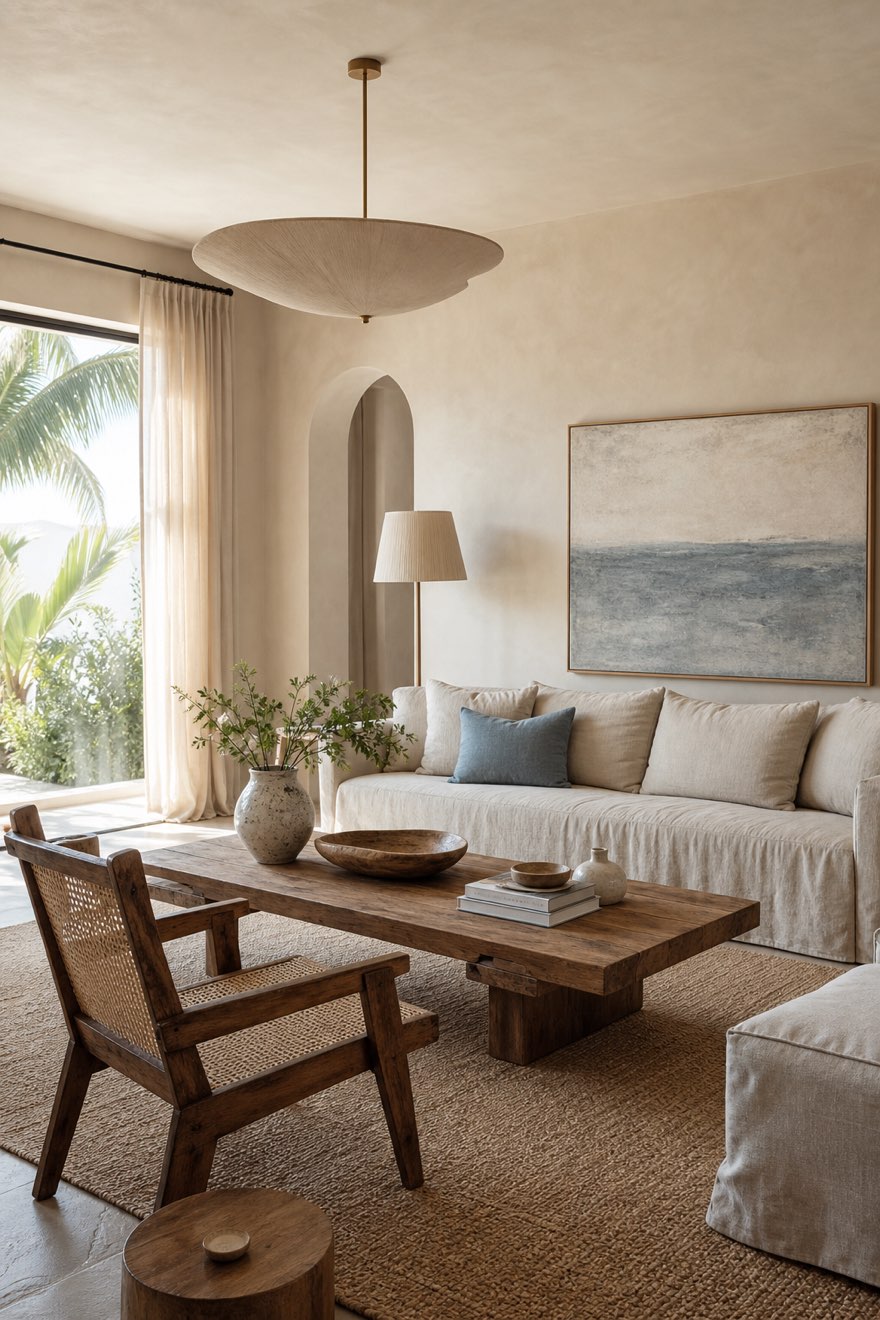
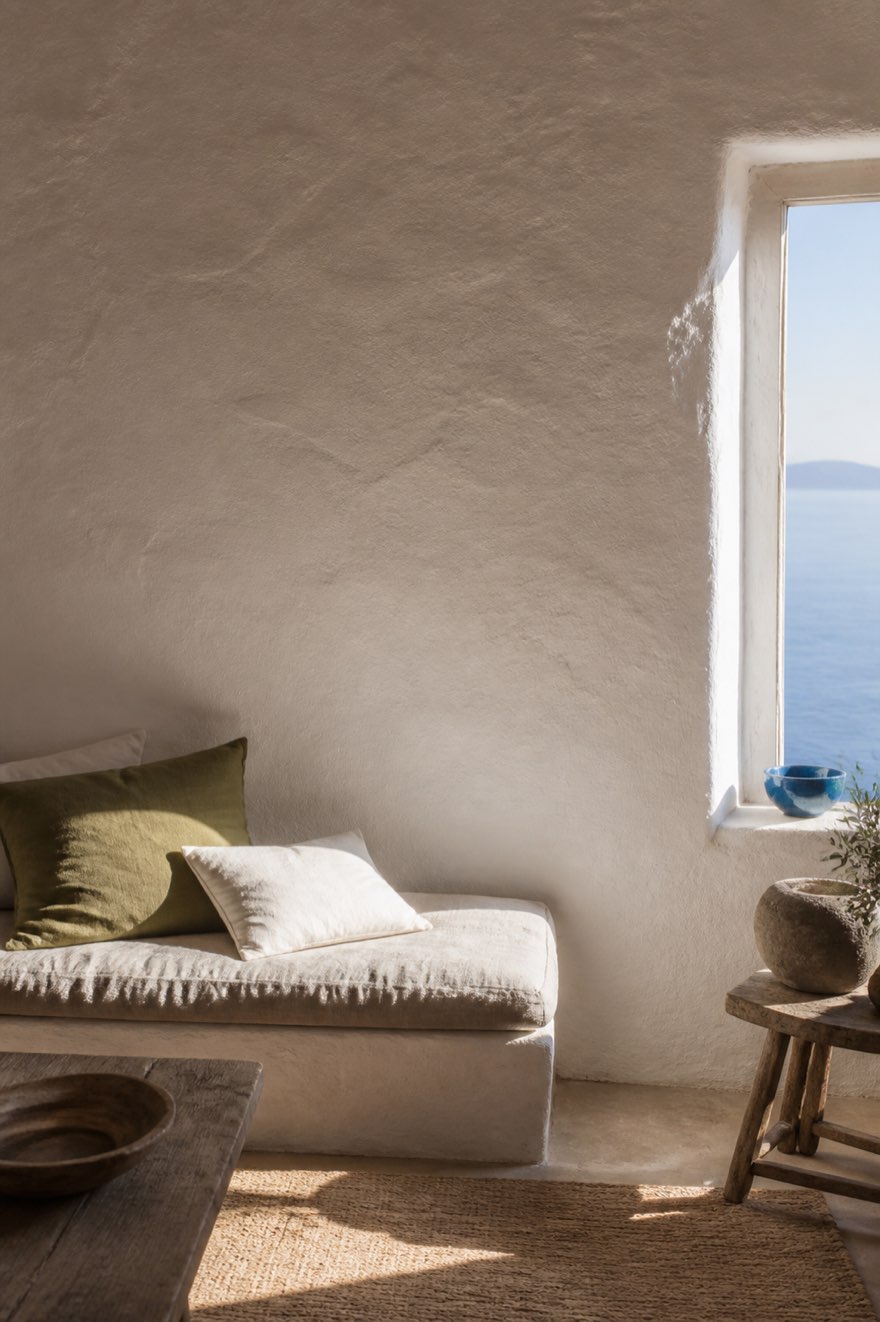
Japandi is what happens when Japanese minimalism and Scandinavian warmth fall in love: the calm of an empty room, but the kind you actually want to sink into. The reason japandi style keeps winning Pinterest is that it solves the cold-minimalism problem — it's warm, low, and forgiving of imperfection (that's the wabi-sabi part). The whole look runs on warm neutrals, two woods you love, natural texture, and a near-religious respect for empty space. No bright color, no clutter, no precious showroom feeling. This guide walks through 18 ideas — room by room, with the exact warm paint names, real products from IKEA to Article, and honest budgets — so you can build the warm, quiet version of japandi without it ever tipping cold.
1.Start With a Warm Neutral Base
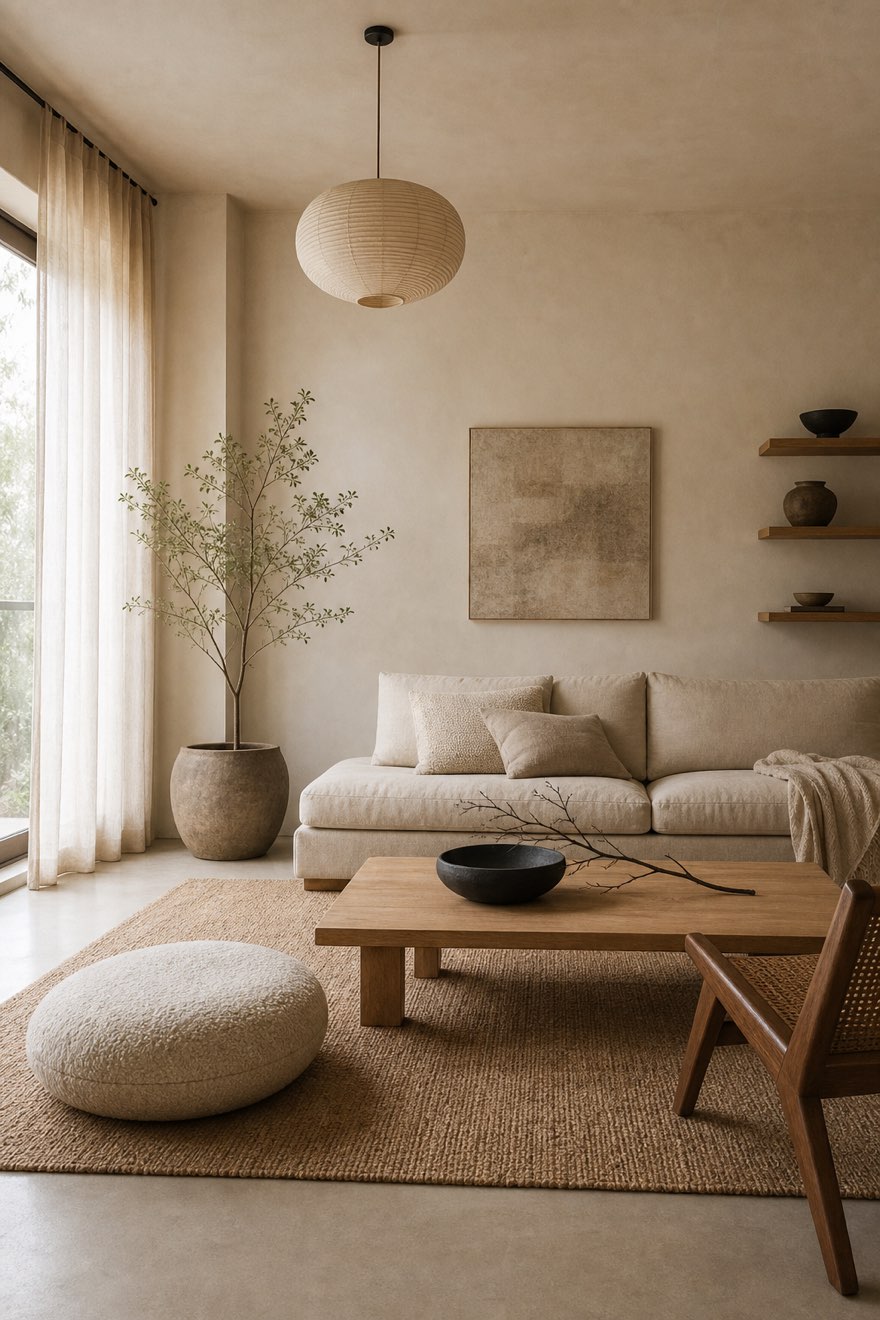
Japandi lives or dies on the base coat, and the usual mistake is reaching for a cool gray. Go warm instead: Benjamin Moore Shaker Beige on the walls, or its softer cousin Pale Oak if your room runs dark. The point is a palette that holds light like rice paper — in my first Kyoto winter the morning sun came through the shoji and turned the plaster the color of warm oatmeal, and I've chased that tone ever since. Build the room in three warm neutrals — ivory, sand, clay — then let one matte-black ceramic bowl be the only “dark.” West Elm's washed-linen sofa runs around $1,200; an IKEA jute rug under $200 grounds it. Stay off stark optic white — it reads showroom, not home.
2.Mix Light Oak With Walnut
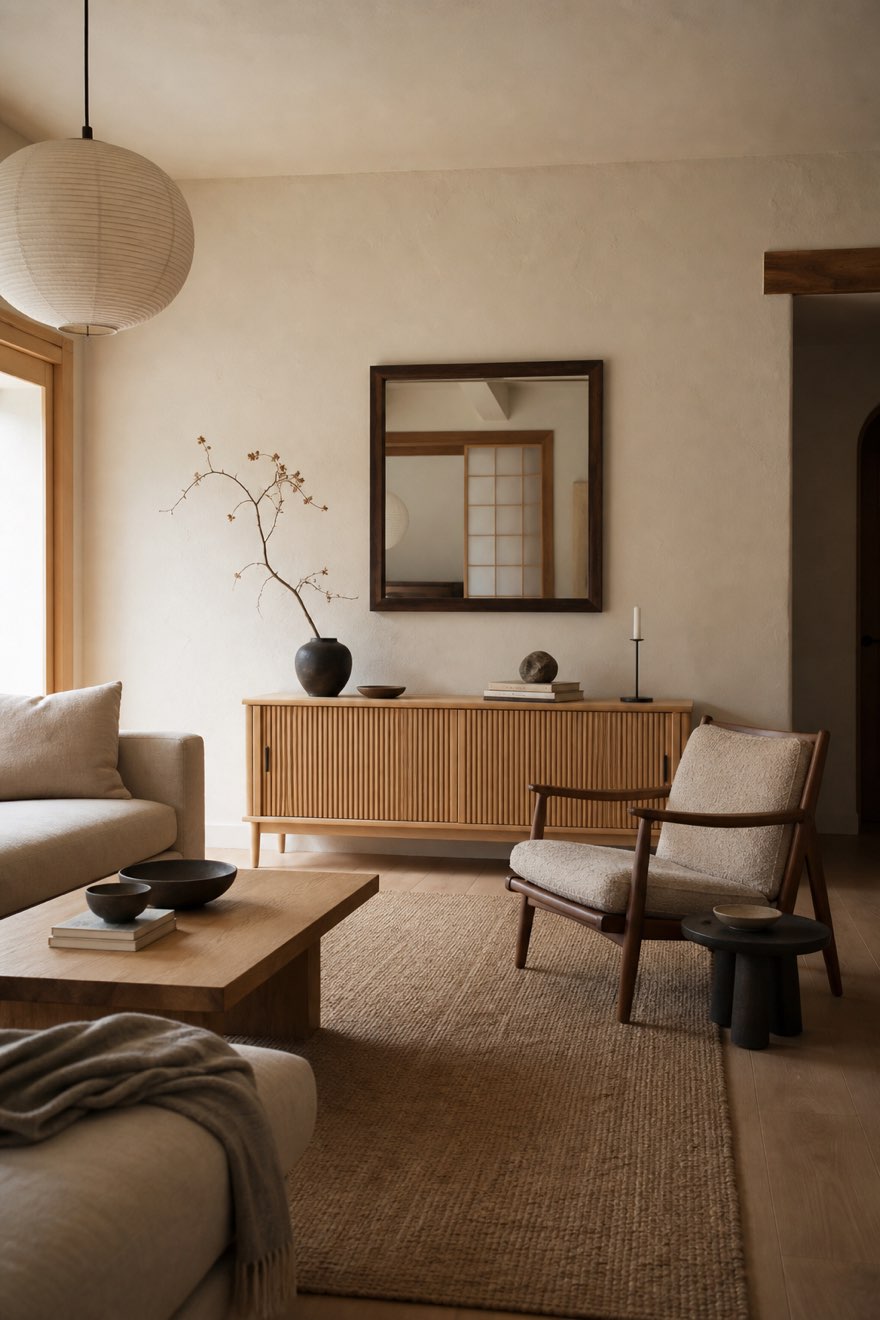
The fastest way to keep warm minimalism from going flat is two woods, not one. Pair a light white-oak piece with a deeper walnut one — an oak slatted sideboard with a walnut lounge chair — so the room gains depth without a drop of color. The rule that keeps it intentional: let the lighter wood dominate (about 70%) and the walnut play accent, never a 50/50 split. Article's “Nera” walnut chair runs about $800; thrift a solid-oak sideboard for $150 and the mix is done. Keep finishes matte or oiled. Orange-toned builder oak and red-toned cherry both fight the calm — warm-neutral woods only, and let the grain be the pattern.
3.Go Low: Floor-Level Furniture
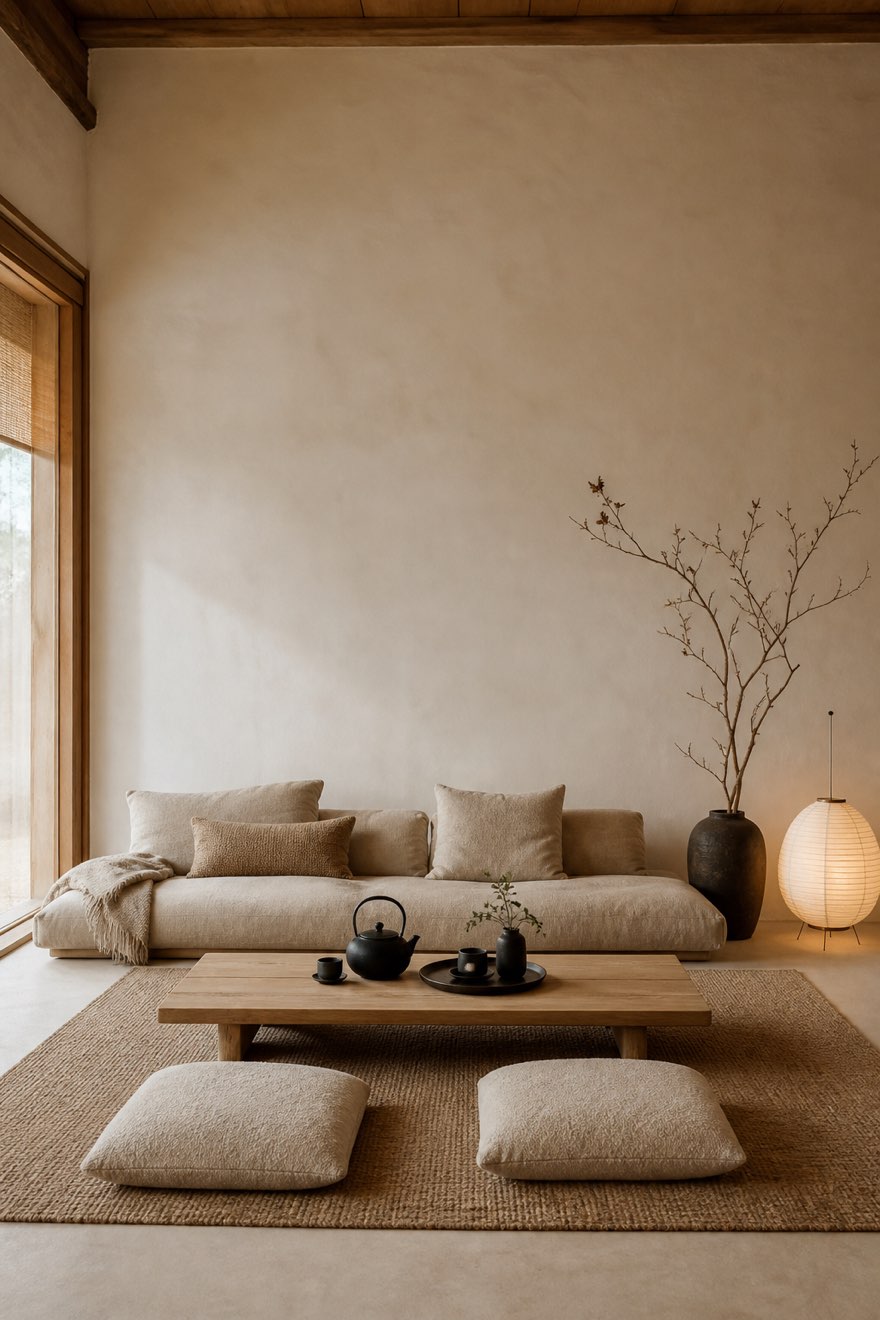
Japandi borrows its calm from the floor up. Drop the furniture — a knee-height sofa, a low oak table, a couple of floor cushions — and the room instantly feels bigger and quieter. No renovation required: swap your coffee table for a low one (IKEA's LISTERBY, around $150) and add two oatmeal floor cushions from World Market (about $40 each) for the tatami effect without the tatami. It works best where there's real daylight, because the open space above the furniture becomes part of the design. Two or three substantial cushions read intentional; a dozen reads dorm.
4.A Wood-Slat Feature Wall (or TV Wall)
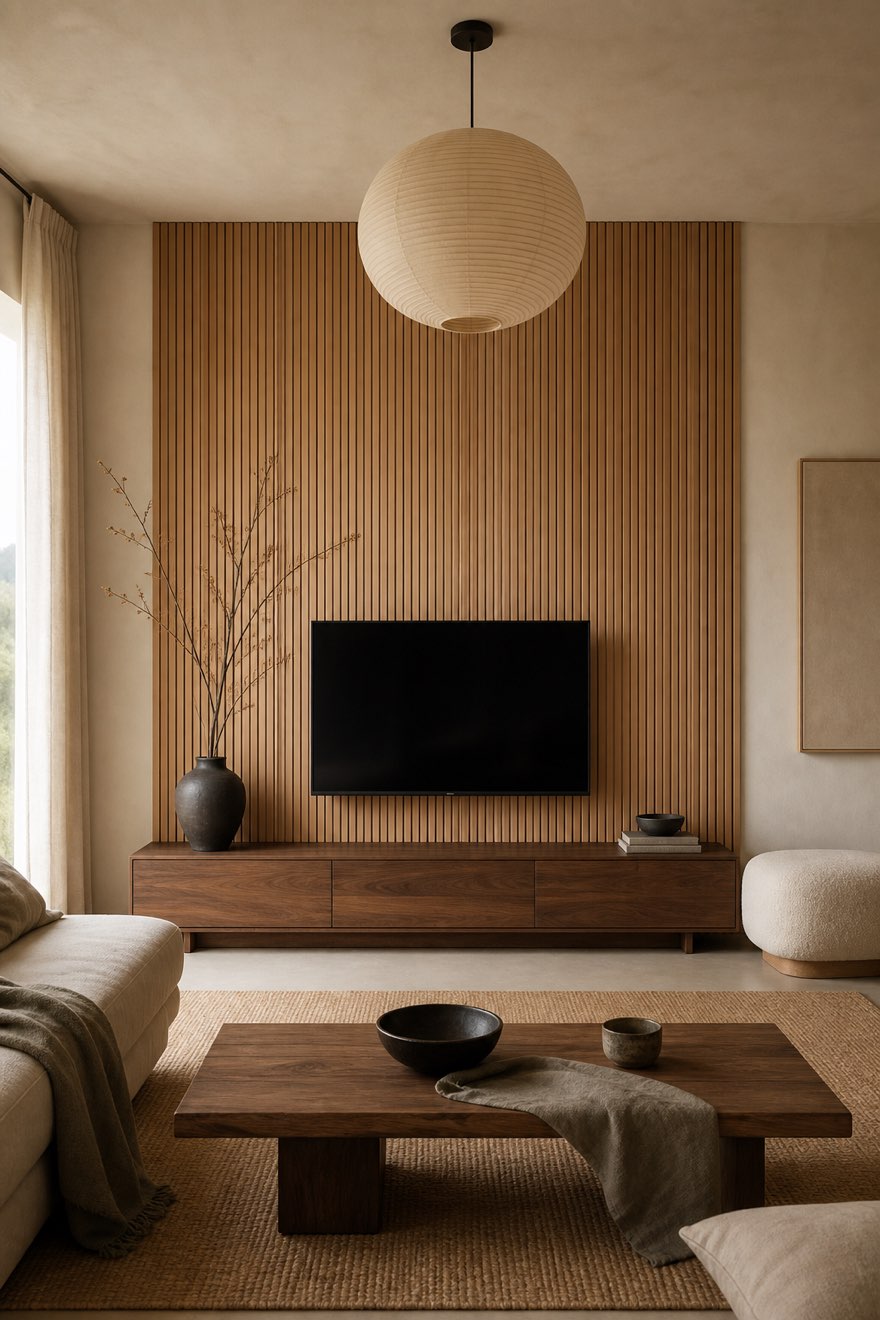
The slatted oak wall is the most-saved Japandi idea on Pinterest, and it solves the room's hardest problem: what to do behind the TV. Vertical light-oak slats turn a black screen into part of a warm wood plane instead of a void. Real wood is the dream, but acoustic slat panels from Amazon (around $30 per 2×8 panel) install over drywall in an afternoon and even soften echo. Run them floor to ceiling, and float a low walnut console beneath. The one thing that turns it cold: high-contrast black slats or gray laminate — the magic is warm oak against warm plaster, tone on tone.
5.The Japandi Living Room, Pulled Together
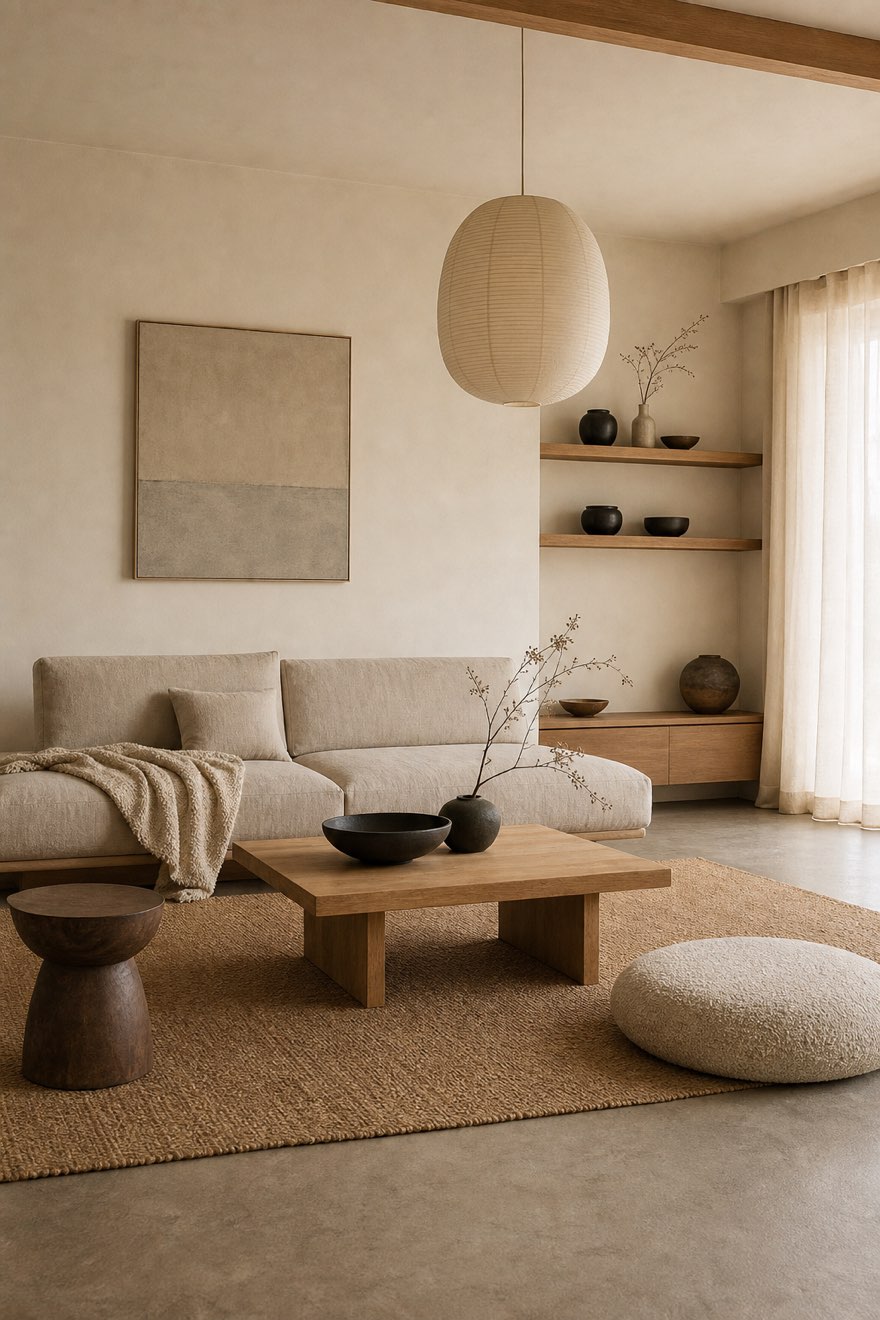
Here's the whole formula in one room: a low linen sofa, a chunky oak coffee table, one walnut stool for contrast, a jute rug big enough that the front legs sit on it, and a paper lantern overhead. The discipline is subtraction — style the shelves with three dark ceramics and a lot of empty space, not twelve objects. Paint the walls Benjamin Moore Edgecomb Gray, a greige that stays warm in low light. A West Elm Hamilton-style sofa in natural linen runs around $1,400; a Wayfair oak coffee table under $250 carries the rest. The trap is matching everything — Japandi wants one linen sofa, one wood you love, and breathing room, not a showroom set.
- Natural linen low sofa · West Elm$1,400
- Solid oak low coffee table · Wayfair$240
- Handwoven jute rug, 8×10 · IKEA$190
- Paper pendant + 3 dark ceramics · IKEA / World Market$120
6.Wabi-Sabi Pottery on Open Shelves
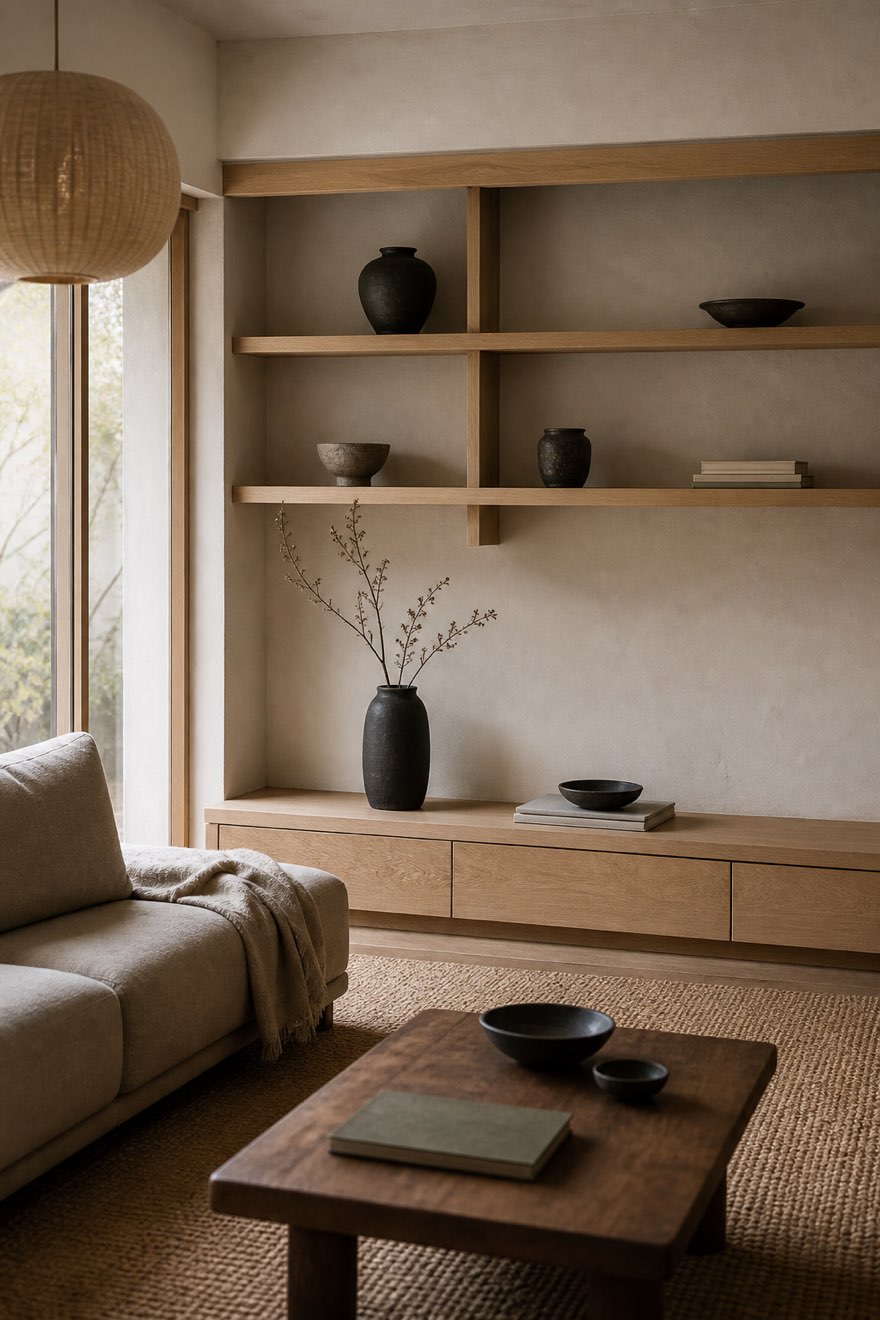
Open shelves are where Japandi shows its soul, and the soul is imperfect pottery. Group a few dark, handmade pieces — a matte-black vase, a slumped stoneware bowl, one small jar — on light-oak shelves and let the gaps do half the work. Charcoal ceramics against warm oak is the entire color story; no bright accents needed. Float real oak shelves (IKEA's LACK in oak effect, about $25 each) or thrift a wood ledge. Style in odd numbers, vary the heights, leave one shelf nearly empty. Matched sets and anything shiny kill the wabi-sabi calm — cracks and uneven rims are the point.
7.Paper & Rattan Lighting
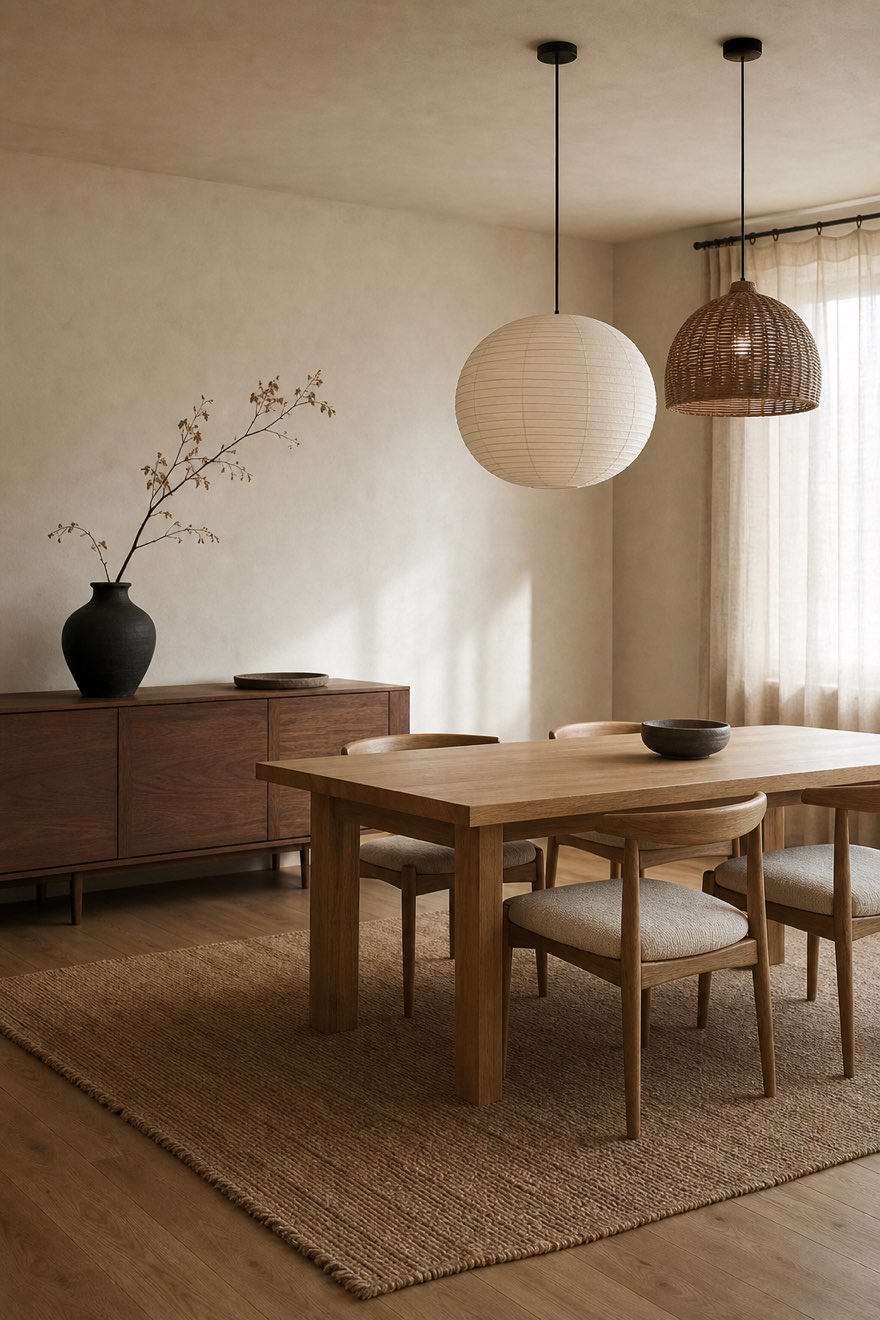
Lighting is Japandi's quietest flex. Skip the brass and crystal for materials that glow instead of shine — paper and woven rattan. The move that looks designed: hang two different pendants over a dining table at slightly different heights, a round paper Noguchi-style lantern beside a woven-rattan dome, so the texture mixes without a hard edge. The original Noguchi Akari runs $200+, but IKEA's REGOLIT paper shade is under $15 and reads nearly identical once it's lit. And whatever else you do, keep the bulbs warm — 2700K, always. Cool-white LEDs snap the whole room straight back to an office.
8.A Low Platform Bed (Japandi Bedroom)
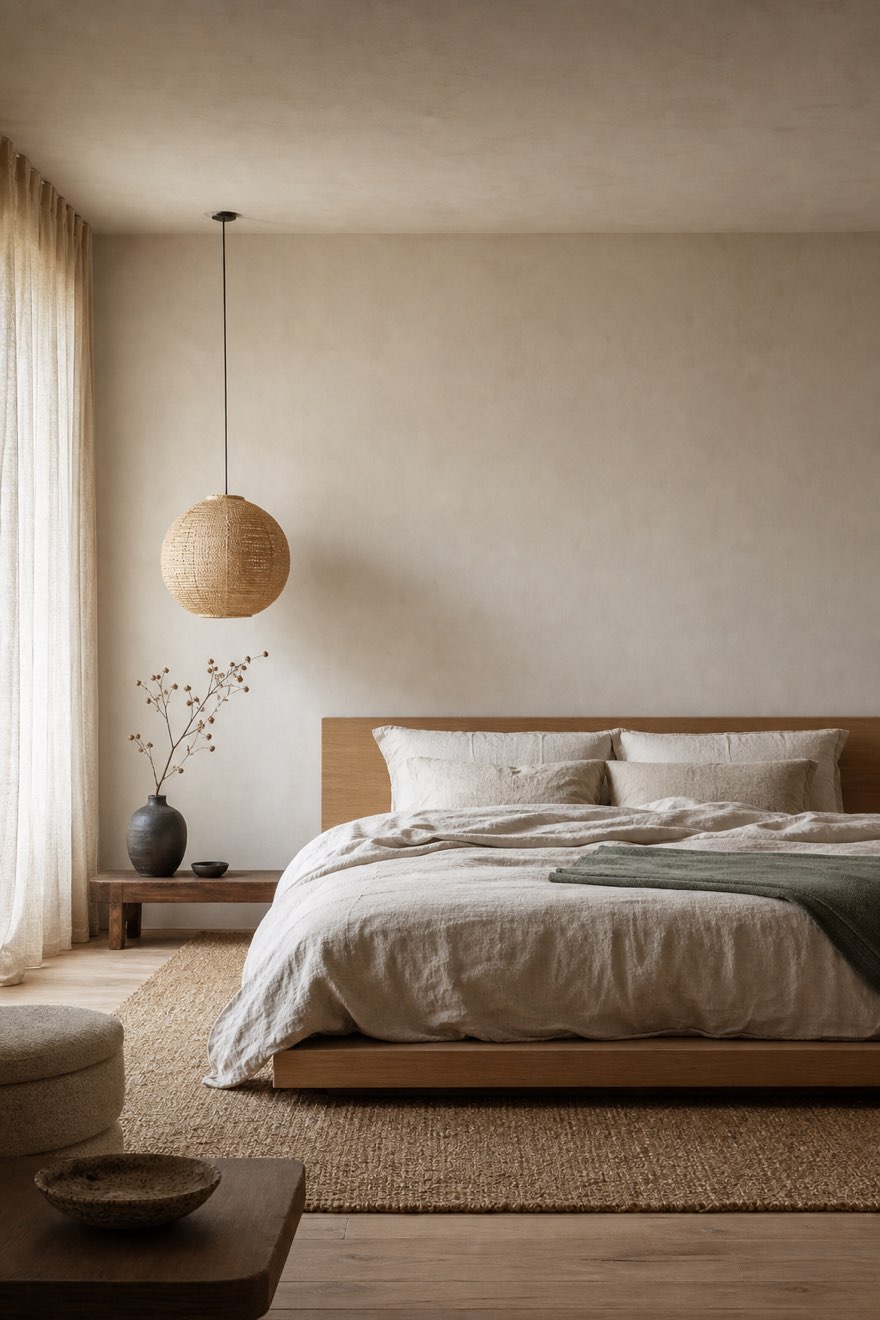
The Japandi bedroom starts low to the ground — a platform bed in light oak, dressed in rumpled ivory and oatmeal linen, with one folded sage throw as the only color. After three years sleeping on a futon laid out on tatami in Kyoto, I came home unable to go back to a tall bed; being close to the floor makes a room feel calm before you've added a thing. Keep the nightstand low and the wall above the headboard empty — that negative space is the luxury. Thuma's oak frame runs about $1,000; IKEA's NEIDEN oak frame is around $130 to start. One thing to resist: a tall upholstered headboard, which pulls the whole room upright and formal.
- Oak platform bed frame, queen · IKEA NEIDEN$130
- Stonewashed linen duvet set · Target Casaluna$120
- Low walnut nightstand · Article$230
- Jute rug + charcoal vase + sage throw · World Market$150
9.The Spa-Calm Japandi Bathroom
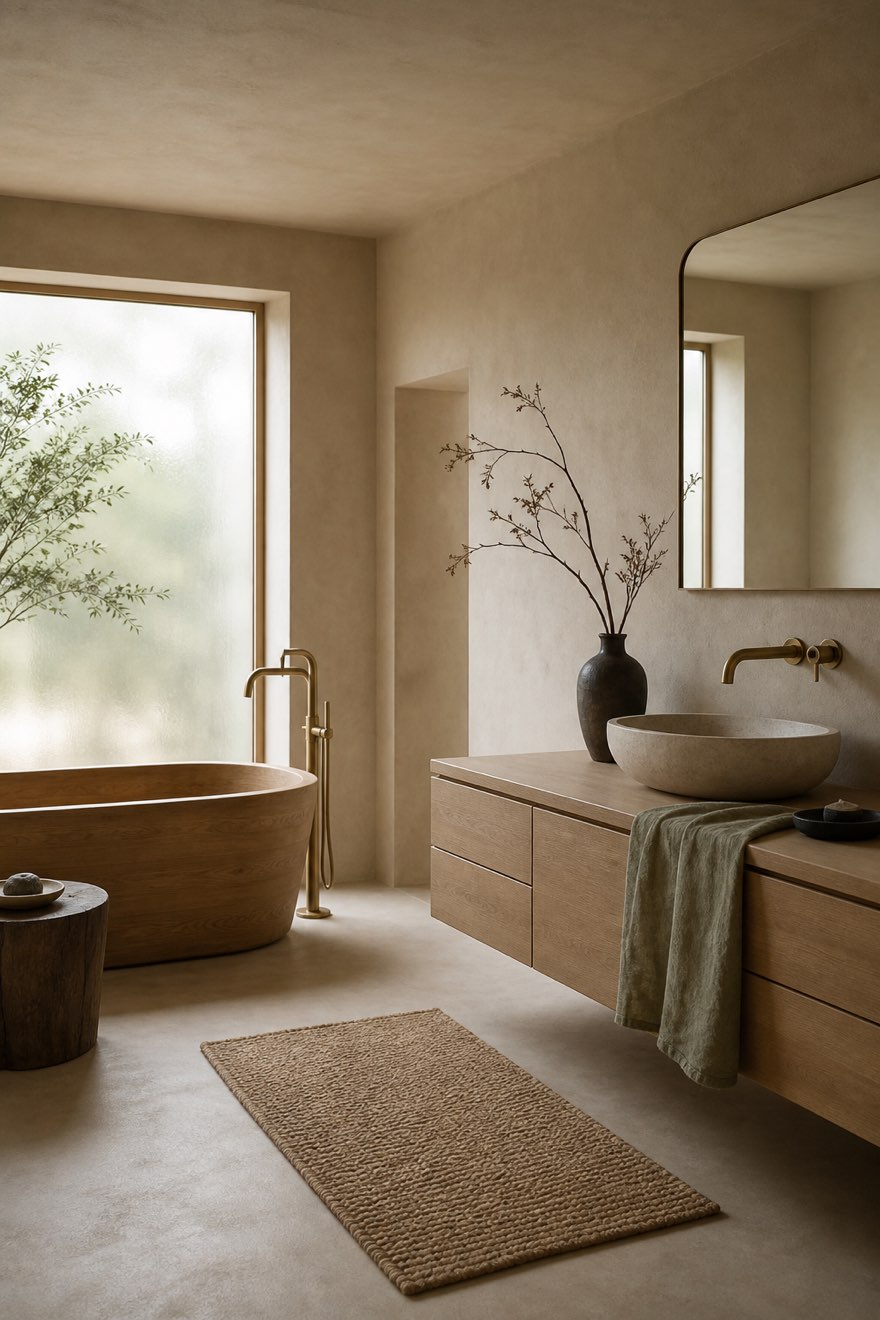
The Japandi bathroom is where the style earns its “calm” reputation — a wooden soaking tub, a stone basin, warm plaster instead of cold tile. The hero material is tadelakt, a Moroccan lime plaster that's water-resistant and glows like soft suede; a pro install runs high, but tadelakt-look microcement kits from Amazon (around $90) get renters close on a feature wall. The first time I sank into a cedar ofuro at a Kyoto ryokan the whole room smelled of warm hinoki and steam, and I've wanted a bathroom that feels like that ever since. Warm the metals with aged brass (a Delta brass tap, ~$180) and add exactly one muted sage towel. Glossy white subway tile and chrome are what drag it back to a rental bath.
- Tadelakt-look microcement kit · Amazon$90
- Stone vessel basin · Signature Hardware$120
- Aged-brass tap · Delta$180
- Jute mat + sage towels + charcoal dish · Target$70
10.Flat-Front Wood Cabinets (Japandi Kitchen)
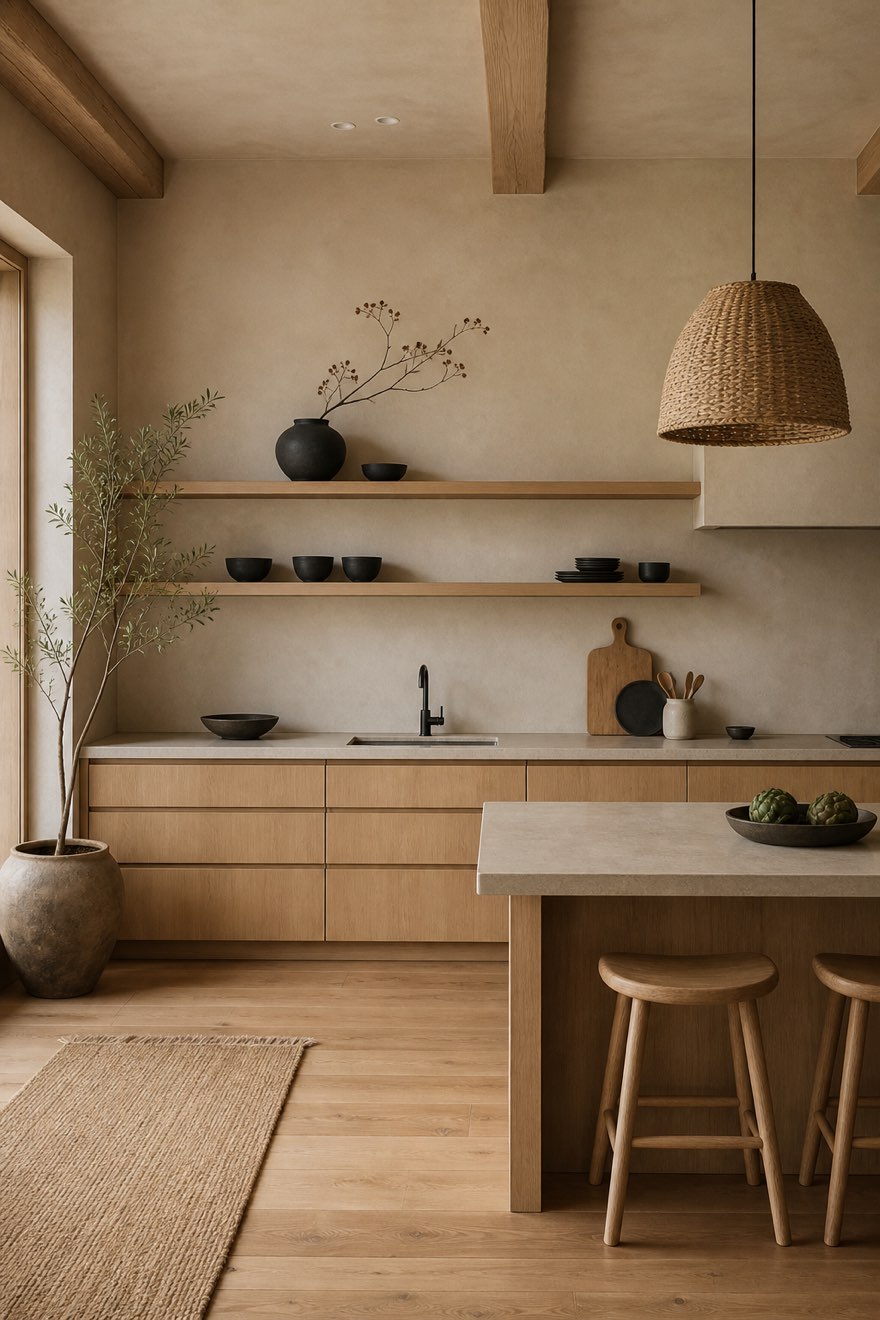
The Japandi kitchen is defined by what it hides: handleless, flat-front light-oak cabinets with push-to-open hardware, so the wood reads as one calm plane. Pair them with a pale stone or honed-concrete counter and warm plaster walls — no glossy backsplash, no upper-cabinet wall of doors. If a full reno isn't happening, Semihandmade makes flat white-oak fronts for IKEA's SEKTION boxes (doors from about $90 each), the highest-impact swap in this list. Float one open oak shelf with three charcoal bowls and the styling is done. Steer clear of high-gloss slab cabinets and gray-veined white quartz — both read tech-showroom; Japandi wants matte oak and stone with a sandy, warm undertone.
- Flat white-oak fronts, per door · Semihandmade$90
- Honed-concrete-look counter refinish · Amazon$150
- Floating oak shelf + 3 charcoal bowls · World Market$110
- Woven-rattan pendant · IKEA$35
11.One Sculptural Branch
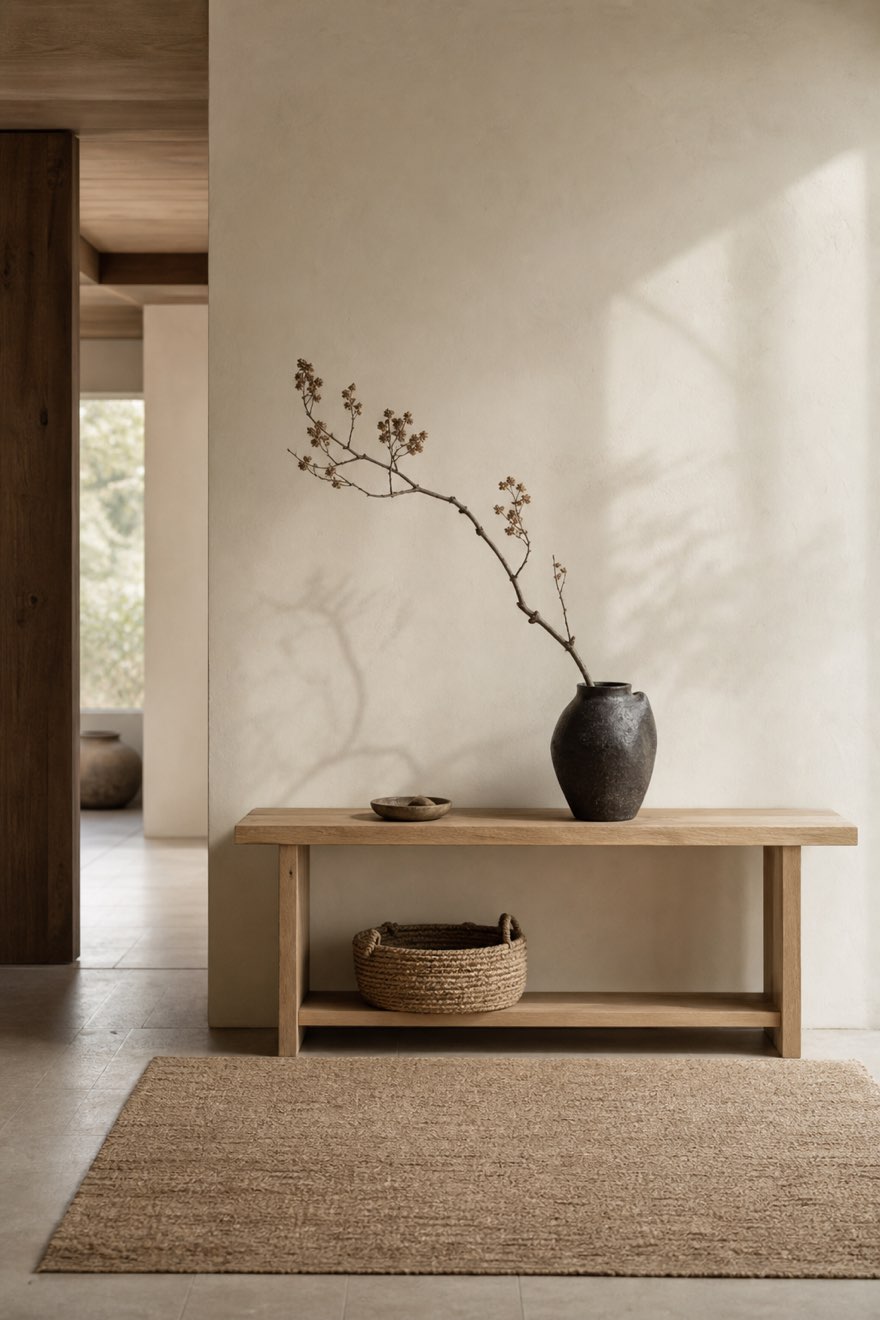
If you take one idea from this whole article, take this one, because it's free: a single sculptural branch, arranged ikebana-style in a dark handmade vessel, with a lot of empty space around it. One branch, not a bouquet — that restraint is the whole philosophy in miniature. I still have the lopsided charcoal vase I haggled for at a Sunday pottery market on the grounds of a Kyoto temple, and it has held exactly one branch ever since. Set it where morning light throws the branch's shadow onto the plaster. The shadow is half the design.
12.Sage Green as the Only Color
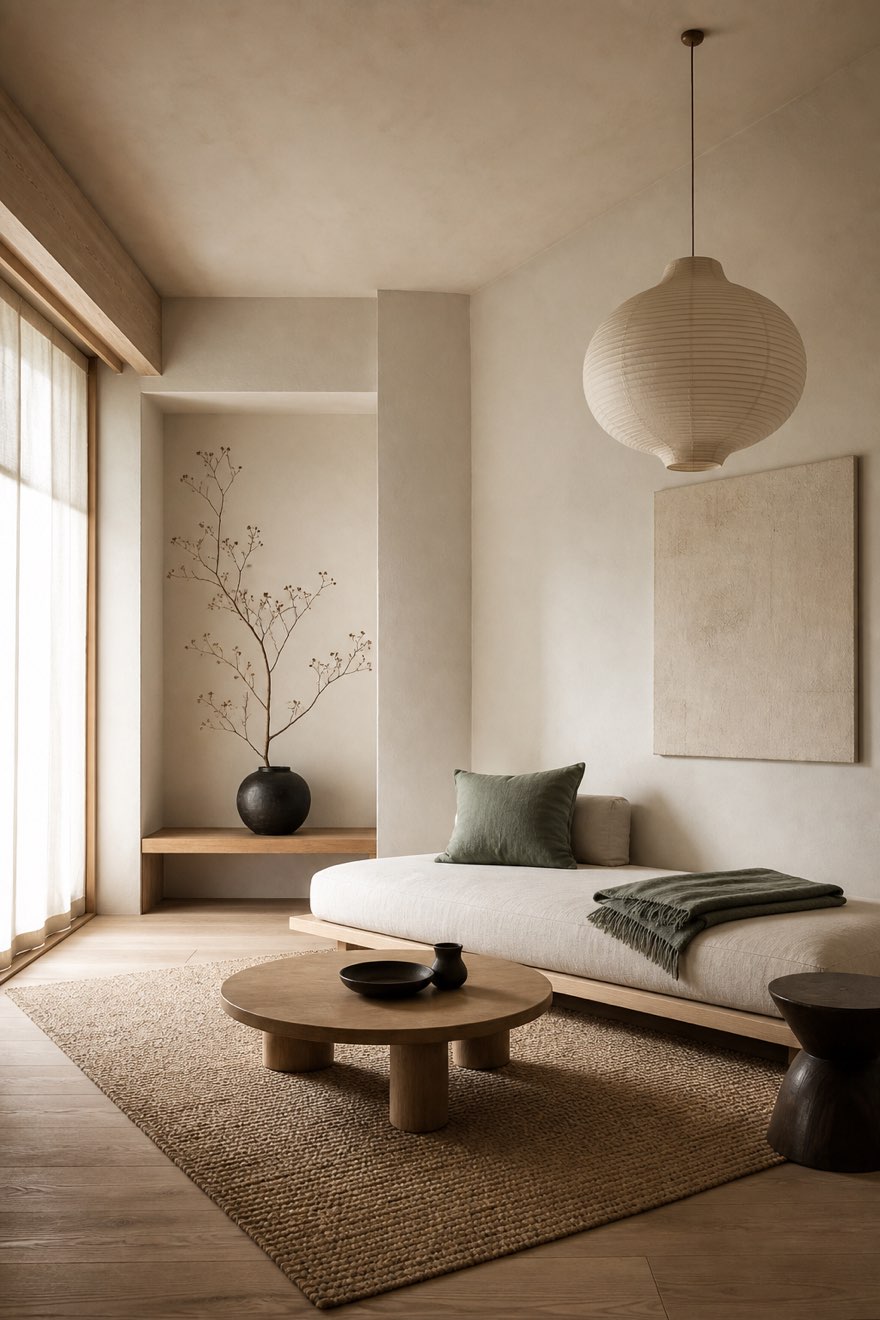
Japandi is nearly colorless on purpose, which is exactly why one restrained color lands so hard. Make it muted sage — a soft, dusty gray-green that behaves like a neutral and never shouts. Use it once or twice, not everywhere: a single cushion, a folded throw, maybe a ceramic. Benjamin Moore October Mist is the reference tone; for no commitment, a sage linen cushion cover from Target runs about $20. Keep sage on fabric, not walls — a whole green wall tips the room out of Japandi and into “sage trend.” And keep it dusty: bright, grassy or emerald greens break the spell, and so does pairing sage with a second color.
13.Layer Natural Textiles
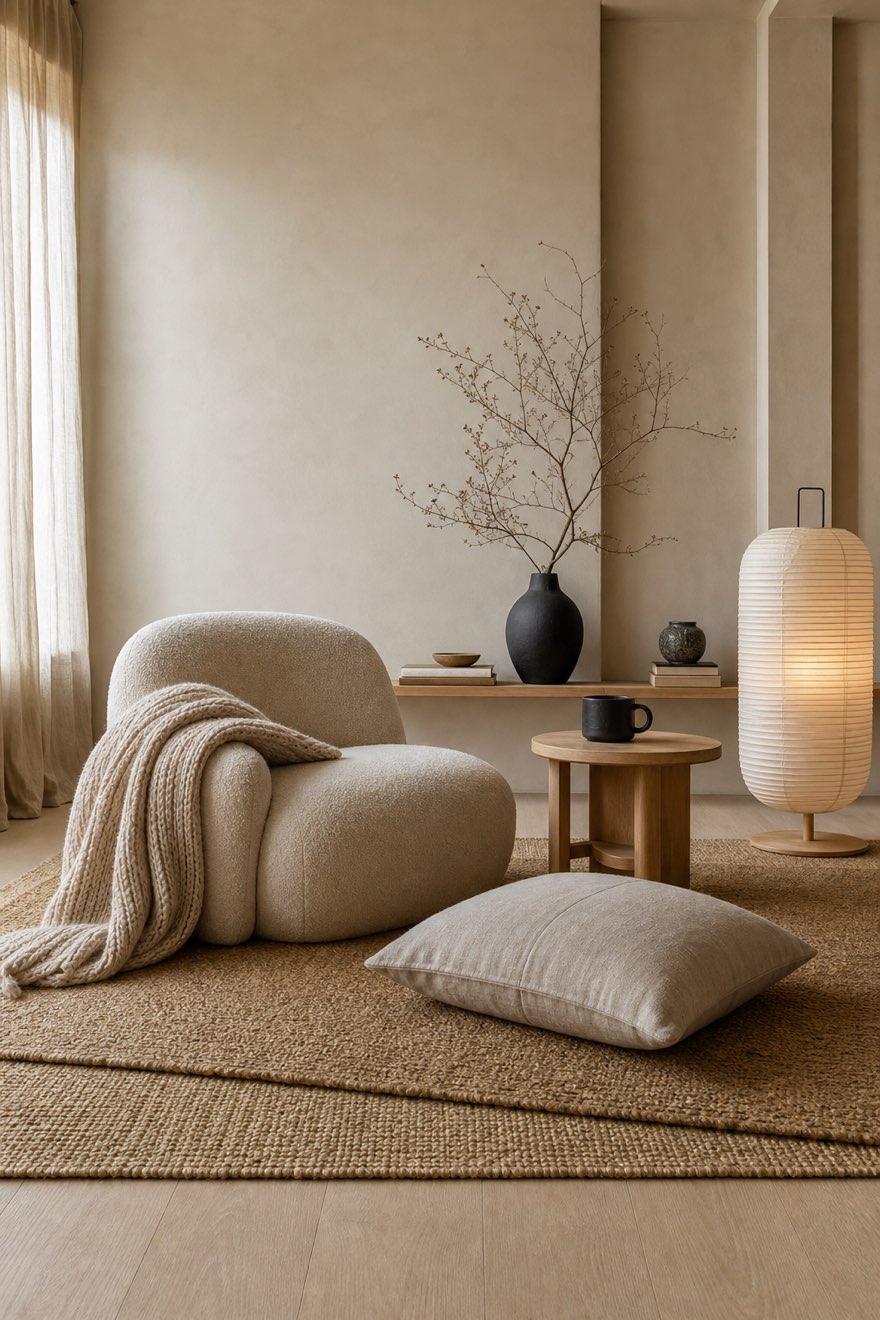
A nearly colorless room can still feel rich — the secret is texture doing the work color usually does. Layer materials that all read “warm neutral” but feel completely different in the hand: a nubby boucle chair, a chunky knit wool throw, a slubby linen cushion, a coarse jute rug over smooth oak floor. Rough against soft is the entire visual interest. Article's boucle “Mello” chair runs about $1,000; for less, a West Elm chunky-knit throw (around $80) plus a thrifted linen cushion starts the layering on a sofa you already own. Three or four textures, max. Anything slick — leather, velvet, high-sheen cotton — pulls the room formal and undoes the soft, lived-in calm.
14.Shoji-Inspired Screens & Soft Light
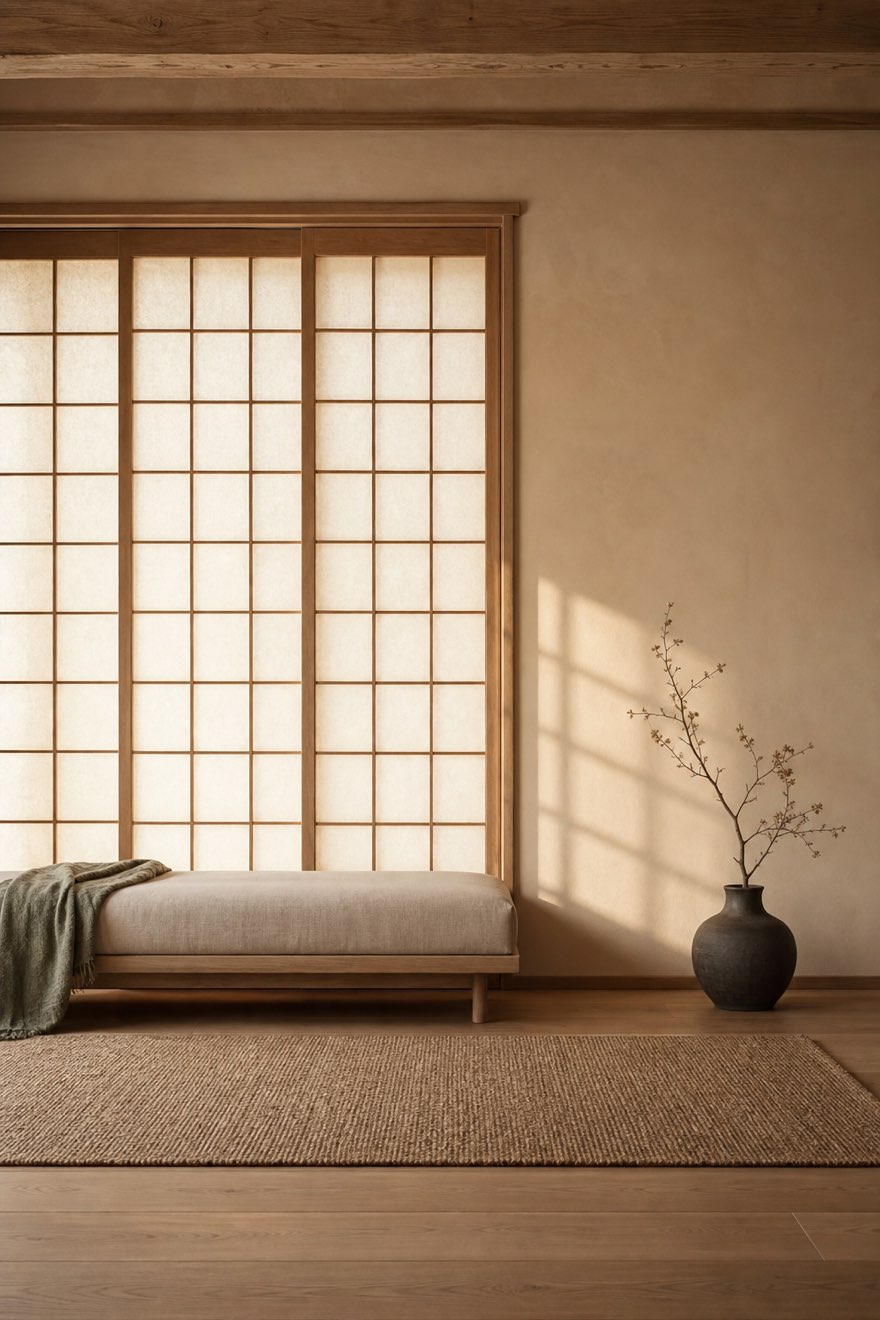
Nothing says Japandi faster than light coming through paper. A shoji-style screen — light-oak lattice over warm rice paper — diffuses harsh sun into a soft glow and throws a gentle grid of warmth across the floor. Real shoji is a commitment, but the look adapts: hang rice-paper panels in front of a window, or use a freestanding wood-and-paper room divider (IKEA's RISÖR-style screens, around $80) to filter light and zone an open space. The payoff is biggest on a window that gets hard afternoon light — warm paper, real golden daylight behind it, and the whole room goes quiet.
15.A Single Quiet Artwork
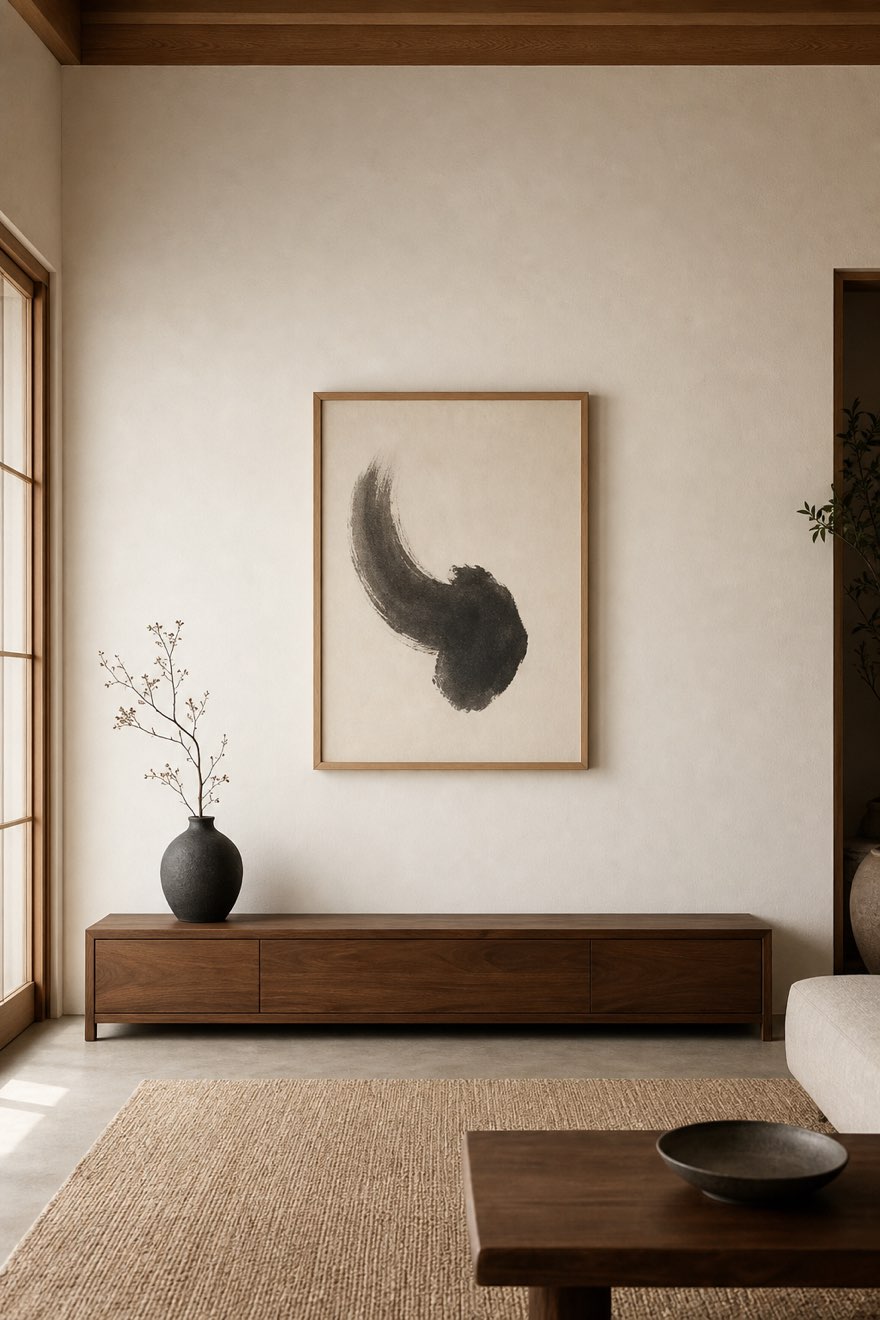
Most rooms are over-decorated; Japandi is the opposite. One artwork, generously surrounded by empty wall, says more than a gallery wall ever could. Choose something with breath in it — a soft sumi-e ink brushstroke, a muted abstract — framed simply in light oak, no mat or a wide warm-white one. The empty space around it isn't wasted; it's the point. Etsy is full of printable sumi-e for $8–15; print large, frame in an IKEA RÖDALM oak frame ($20), and hang it lower than instinct says. One quiet mark beats glossy black frames, high-contrast prints, and the urge to add a second piece.
16.The Japandi Entryway (Genkan)
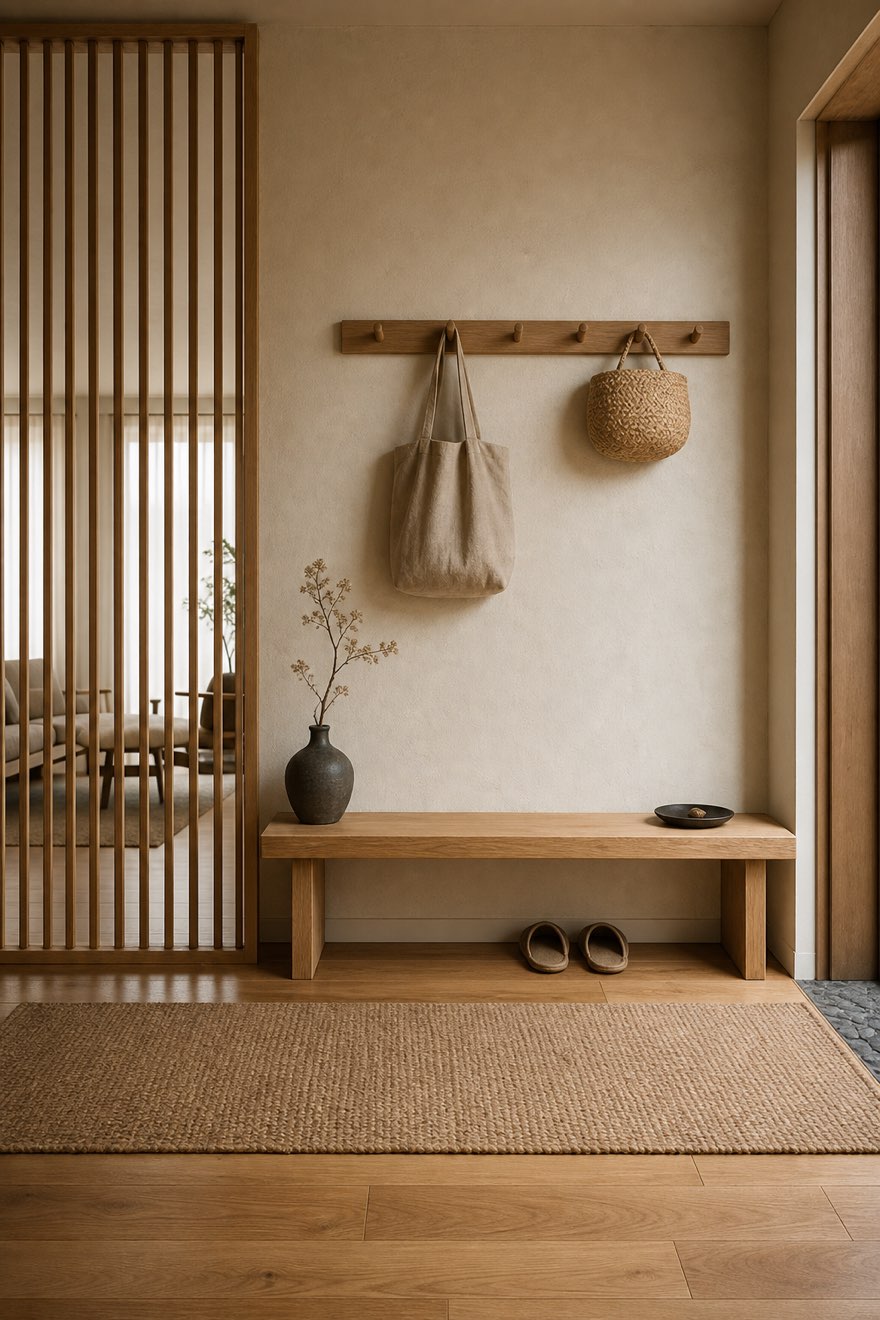
The genkan — the Japanese drop-your-shoes threshold — is the most usable idea in this whole list. Give the entry a low oak bench to sit and unlace, a basket or peg rail for bags, a charcoal dish for keys, and a jute runner underfoot. A wood-slat partition screens the rest of the home from the door and gives that “pause before you enter” calm. IKEA's oak-veneer bench runs about $90; a row of simple wood Shaker pegs is under $20 and a Sunday to install. Keep the floor clear — one pair of slippers out, the rest tucked beneath. The genkan works precisely because it's nearly empty and entirely on purpose.
17.A Calm Japandi Home Office
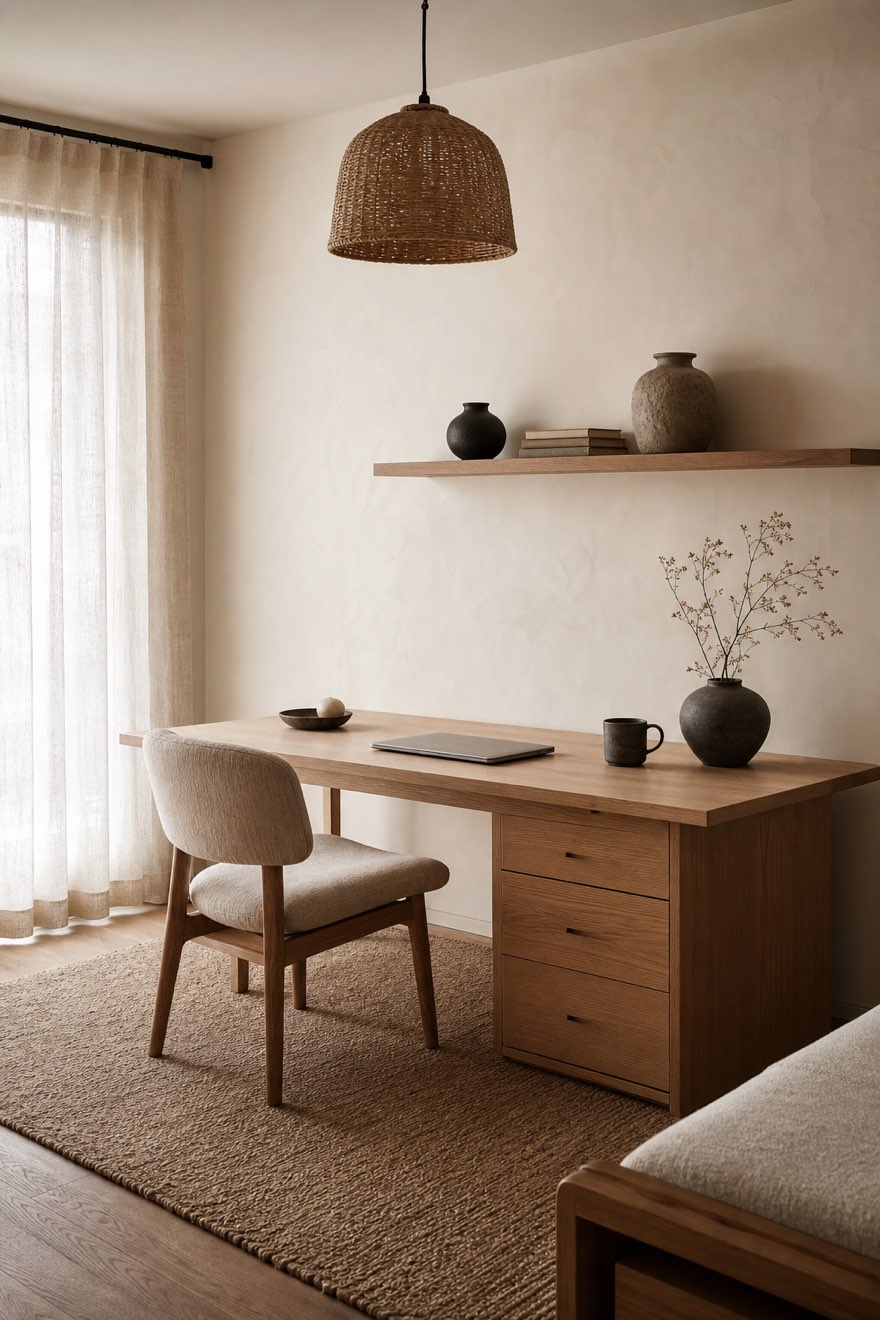
A Japandi desk is the antidote to the gaming-setup aesthetic — no RGB, no cable nest, no plastic. Start with a simple light-oak desk against a warm plaster wall and a low linen task chair; the brief is “could you happily sit here for three hours and also leave it on a video call?” Float one oak shelf above for a couple of dark ceramics and books, run a jute rug underneath, and corral cables in a tray behind the desk. IKEA's ANFALLARE oak desktop on legs lands around $150; warm the light with a 2700K bulb in a rattan pendant. Black metal desks, white laminate and visible tech are what break it — one closed laptop and a charcoal mug is the whole surface.
- Light-oak desktop on legs · IKEA ANFALLARE$150
- Low linen task chair · Article$250
- Floating oak shelf + 2 dark ceramics · World Market$90
- Rattan pendant + 2700K bulb · IKEA$40
18.Dark Japandi: The Moody Version
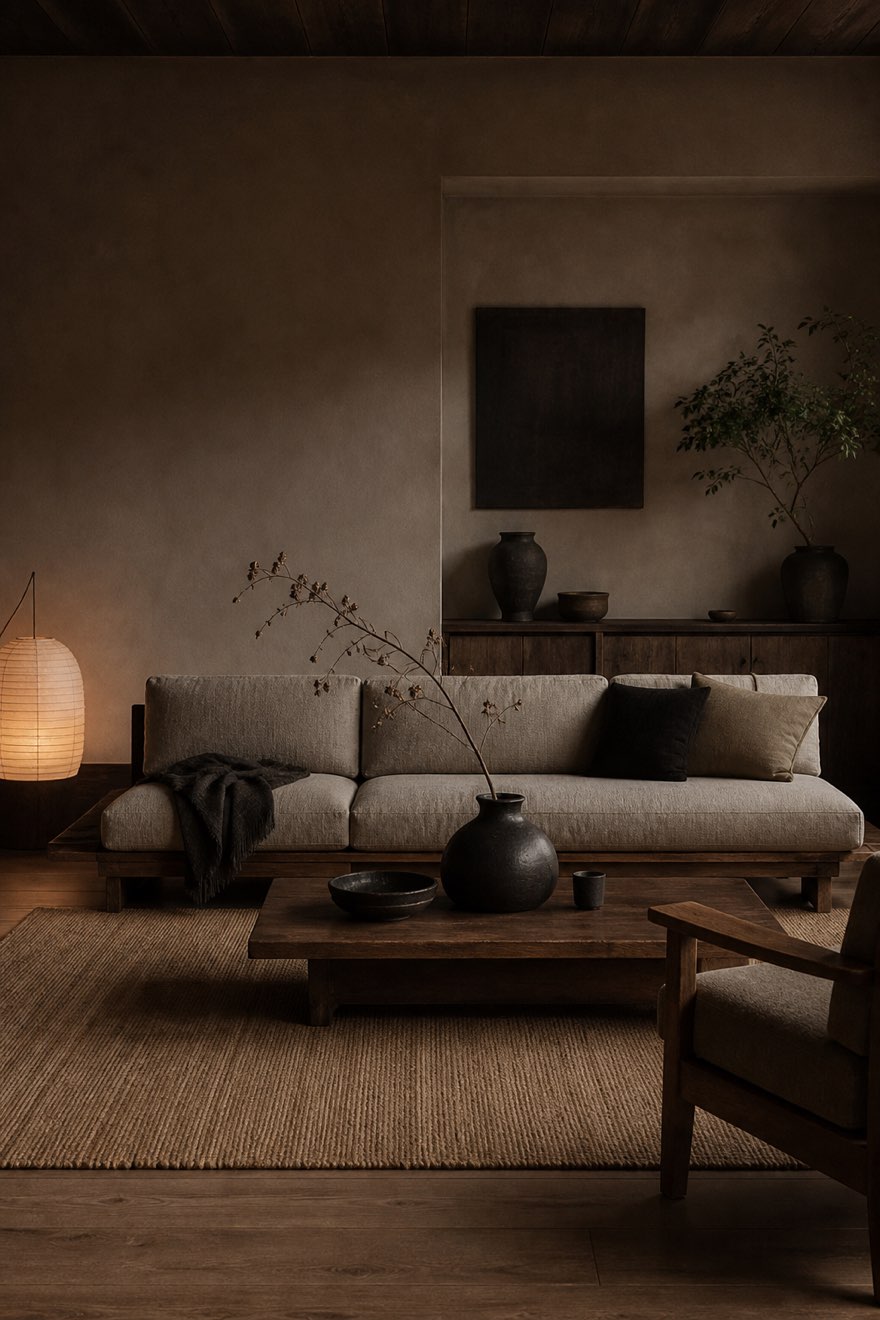
If pale Japandi feels too quiet, this is the version with a pulse. Dark Japandi keeps every rule — natural materials, low furniture, wabi-sabi pottery, empty space — but drops the value way down: walnut instead of oak, charcoal and soft-black accents, walls in a deep warm greige. The make-or-break is staying warm: Benjamin Moore Cromwell Gray reads brown-taupe in low light, never blue. Light it low and golden — a paper lantern at floor level, a single warm lamp, nothing overhead and cool. A walnut-stained coffee table from Amazon (around $130) anchors it on a budget. The fastest way to ruin it is a cool charcoal-blue gray, bright white trim or overhead LEDs — any one flips moody-cozy into morgue.
Frequently Asked Questions
The questions everyone asks before starting a japandi room.
What is japandi style?
Japandi blends Japanese minimalism with Scandinavian warmth: clean lines and empty space, softened by warm woods, natural texture and wabi-sabi imperfection. The result is calm and uncluttered without feeling cold or stark — minimalism you actually want to live in.
Japandi vs. Scandinavian vs. minimalist — what's the difference?
Scandinavian leans bright, white and cozy; pure minimalism can read cold and gallery-like. Japandi sits between them: lower furniture, warmer woods (oak plus walnut), darker organic accents, and more soul. It's minimalist in count, but warm in feel.
What are the warm-neutral paint colors for japandi?
Stay warm, never gray-blue. Benjamin Moore Shaker Beige, Pale Oak and Edgecomb Gray are the go-to walls; October Mist if you want a whisper of sage; Cromwell Gray for dark japandi. Always a warm undertone, always flat or matte.
How do I keep japandi warm, not cold or sterile?
Three rules: warm woods over cool metals, texture over color (linen, wool, boucle, jute), and 2700K warm bulbs only. Add one dried branch and a little wabi-sabi imperfection. Stark white walls and chrome are what tip it cold.
What's the budget to start, and which woods mix best?
You can start a room for $300–500 with paint, a jute rug, linen textiles and a few dark ceramics. For wood, pair one light tone (white oak, ash) with one deeper tone (walnut), letting the lighter wood dominate about 70% — that contrast is the warmth.