Mid-Century Modern Living Room Ideas: 15 Bold Retro Looks in Walnut, Leather & Color
Mid-century modern living room design started bold. The 1950s and '60s version ran on saturated color: burnt-orange and teal walls, low-slung olive velvet sofas, cognac leather draped over walnut and brass. That's the side we're chasing here — the retro, color-and-leather mid-century, not the washed-out neutral reading it usually gets today. These 15 ideas show how to commit to a saturated color field, anchor it with grain-forward walnut, and add the one material that makes a room read 1960s instantly: tan leather. Each comes with paint names, a budget range, and the pieces that matter, whether you're drenching a whole wall or styling a credenza in a rental. Start bold and build from there.
Where to start: You don't need a full mid-century build. A single walnut credenza, or a cognac-leather Eames-style lounge chair ($300–900 vintage or new), is the cheapest way to make a room read 1960s without touching the walls. Add one saturated color and an atomic light when you're ready.
1.The Retro Color Formula, Decoded
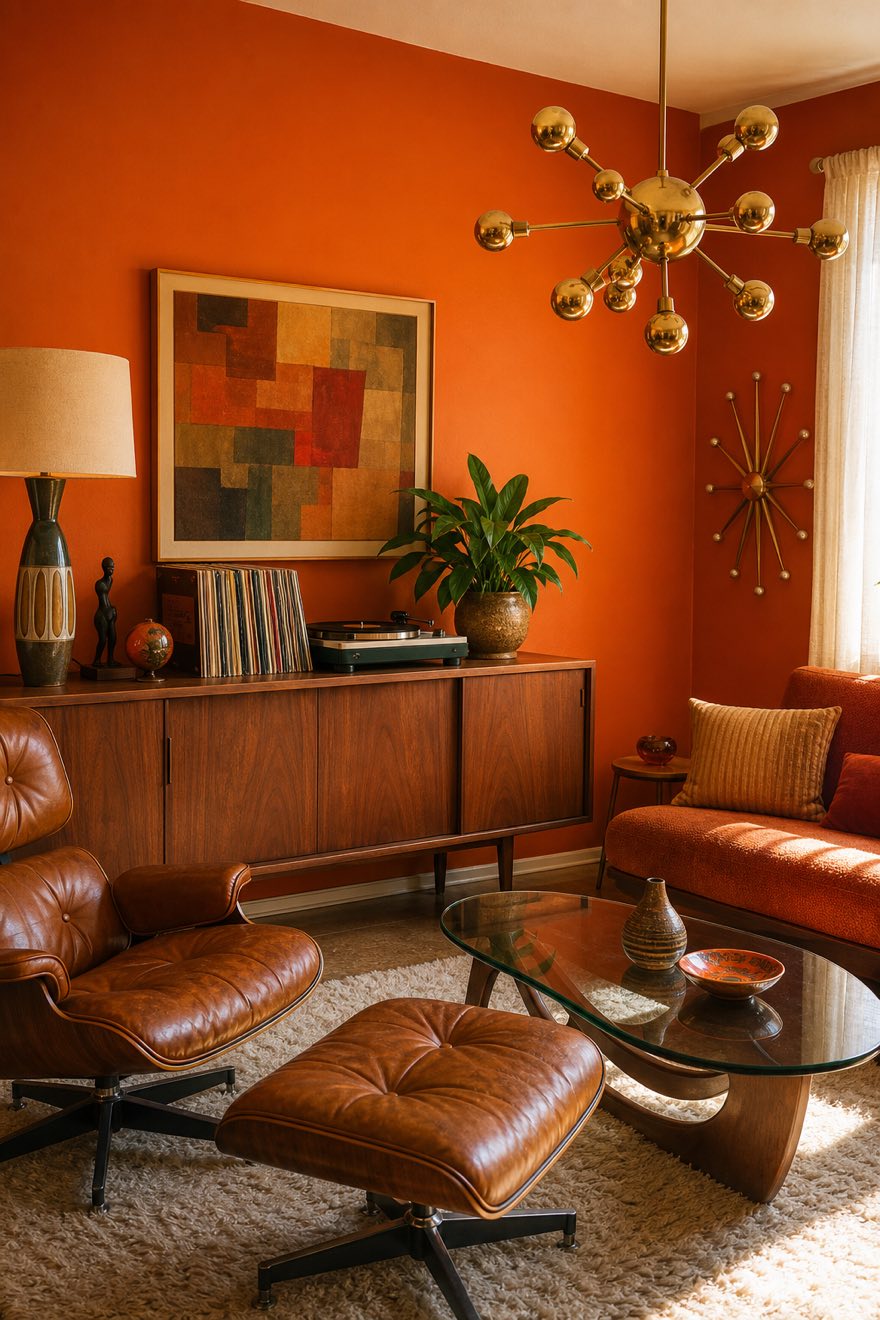
Mid-century color wasn't shy. The era ran on saturated, earthed tones — burnt orange, olive, mustard, teal — used as whole fields, not timid accents. The formula is simpler than it looks: pick ONE saturated color for the walls or the biggest piece, then let walnut ground it and brass warm it. Burnt orange is the gutsiest entry; try Sherwin-Williams Obstinate Orange 6884, or go olive with Relentless Olive 6425 or Benjamin Moore Split Pea. If a full wall feels like a lot, a warm-tan base (BM Woodstock Tan HC-20) under one saturated sofa does the same job. The rule that keeps it from going costume: one bold field, a lot of walnut, and nothing else fighting for the same shout.
What it costs · by budget
- Saturated retro paint, 1 gal · $60
- Atomic sunburst wall clock · $70
- Brass + smoked-glass nesting tables · $120
- Low-slung olive velvet sofa · $1,200
- Walnut tapered-leg credenza · $350
- Brass sputnik pendant · $120
- Cognac Eames-style lounge + ottoman · $1,400
- Vintage walnut credenza · $900
- Color-drench + sputnik + bar cart · $2,000
End to end, a bold mid-century living room realistically runs about $3,500–$7,000 — far less if you start with one walnut or leather piece and add color and lighting over time.
2.The Low-Slung Sofa as the Room's Spine
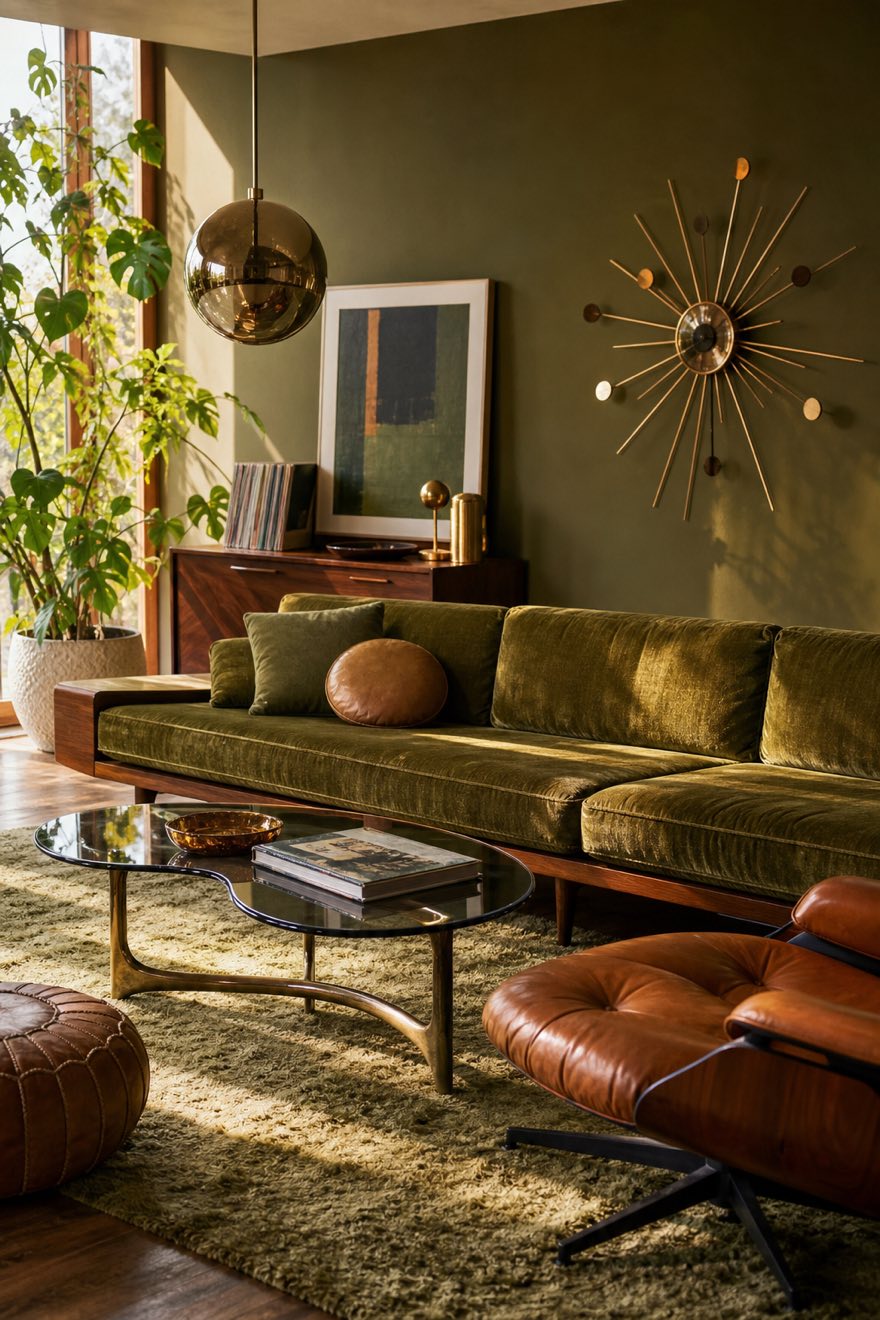
Everything in a mid-century living room hangs off one long, low horizontal line, and the sofa draws it. The 1960s silhouette sits low to the floor (seat height around 16–17 inches), runs long and clean, and rides on tapered walnut legs that lift it just off the rug. Upholster it in a saturated field: olive velvet is the move right now, deep enough to register as real color, soft enough to live on, and the whole room organizes around it. Skip the puffy modern depth; you want a shallow, upright seat with a strong back line. Article's Sven or a vintage Adrian Pearsall-style frame both nail the proportion in the $1,200–$1,800 range. Get the sofa low and long, and the rest falls into place.
- Low-slung olive velvet sofa · Article Sven$1,300
- Walnut tapered-leg credenza · vintage / West Elm$400
- Brass + smoked-glass coffee table · Article$350
- Cognac-leather lounge chair · vintage / Wayfair$700
3.The Walnut Credenza, Styled
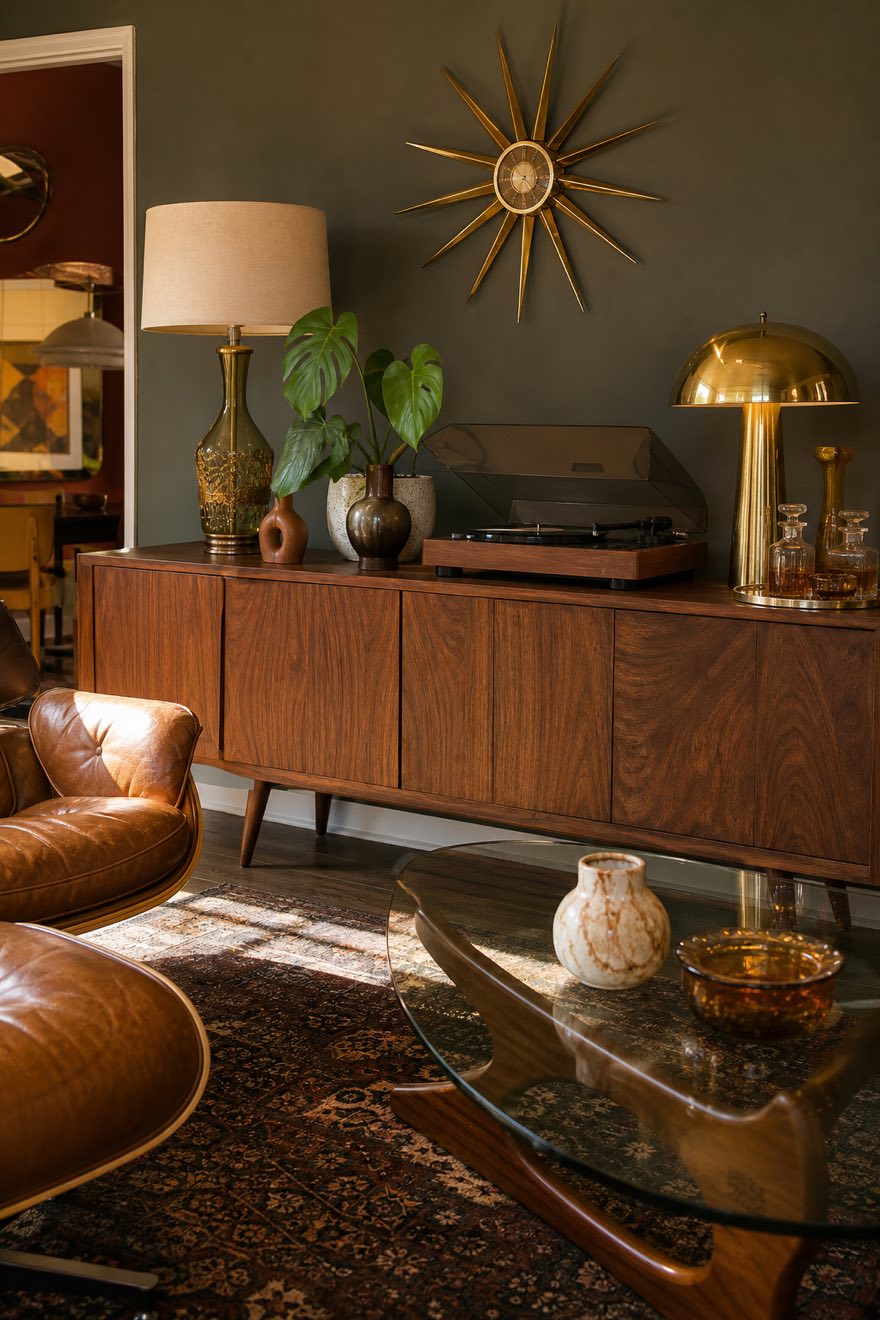
The walnut credenza does the most work of any single piece. Grain-forward teak or walnut, tapered legs, long and low — it anchors the room and hides your clutter. Style it unmatched: a turntable, a few atomic ceramics, smoked-glass barware, one brass lamp. Mix a vintage find with a new West Elm or Article piece so it looks collected, not bought in a set.
4.Cognac Leather (the Material Japandi Can't Have)
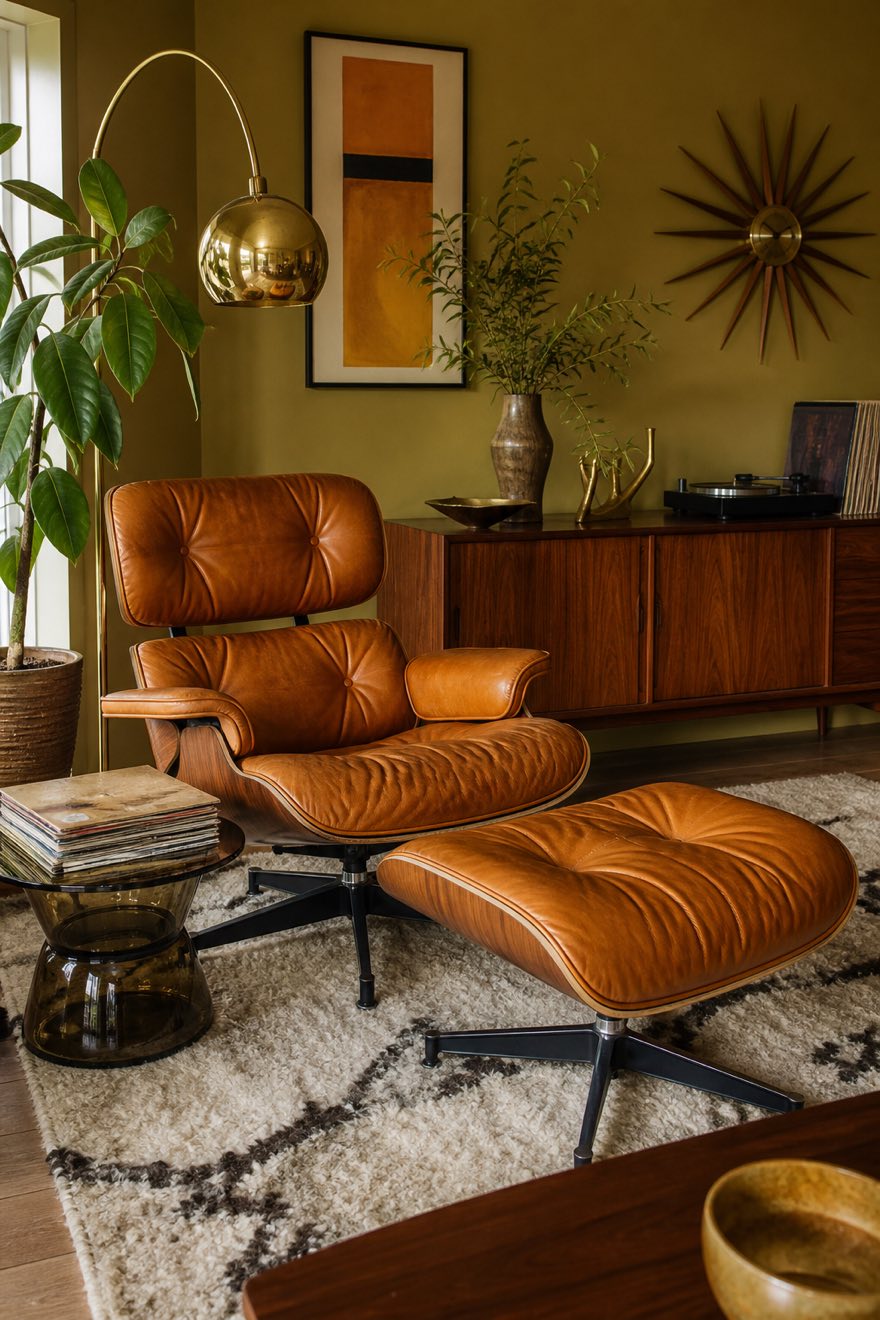
Here's the line that separates this look from every pale, matte, careful room on your feed: leather. Cognac and tan leather, creased and a little worn, is the one material a stripped-back palette can't borrow, and it's the fastest way to signal mid-century without saying a word. The icon is the Eames Lounge (Charles & Ray Eames, 1956, molded plywood and leather), but a vintage sling chair, a tufted ottoman, or a leather-strap safari chair all carry the same patina. The point is age: new leather looks like a showroom, broken-in leather looks like a life. I found my own cognac lounge chair in a dusty Palm Springs consignment shop, the seat already softened to the shape of someone else's afternoons, and it's still the first thing every guest sits in. Buy it used if you can; if you buy new, choose an aniline leather that will actually develop a patina instead of staying plasticky. One good leather piece against walnut, and the room stops looking decorated and starts looking lived-in. It's what makes this the bold, leather-and-color retro cousin to our calm Japandi rooms: same furniture era, opposite mood.
5.Sculptural Atomic Lighting
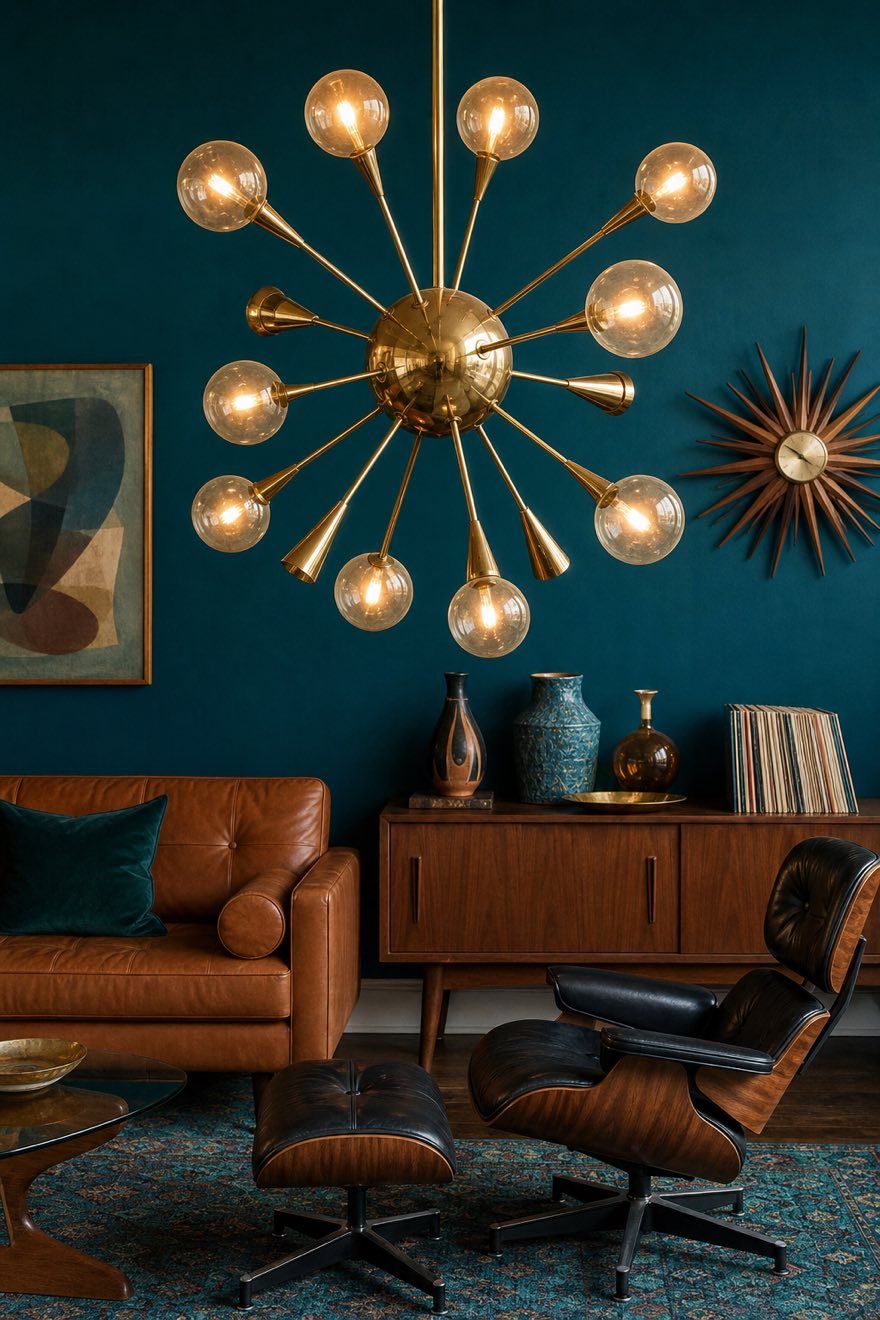
One light fixture can date a room to 1960 faster than anything else you buy. The sputnik chandelier, all radiating brass arms tipped with little glowing globes, was a direct nod to the Space Race (the satellite launched in 1957, and suddenly everyone wanted the cosmos on the ceiling). A globe cluster or a single brass cone pendant does the same job at a smaller scale. Hang it against a deep, saturated wall so the brass actually pops; petrol teal or burnt orange both throw the metal forward. Lumens and Rejuvenation carry good brass sputniks around $300–$600, and the vintage ones turn up cheaper if you're patient. Big, brassy, and unapologetic — that's the whole point.
6.The Teal-Drenched Bedroom
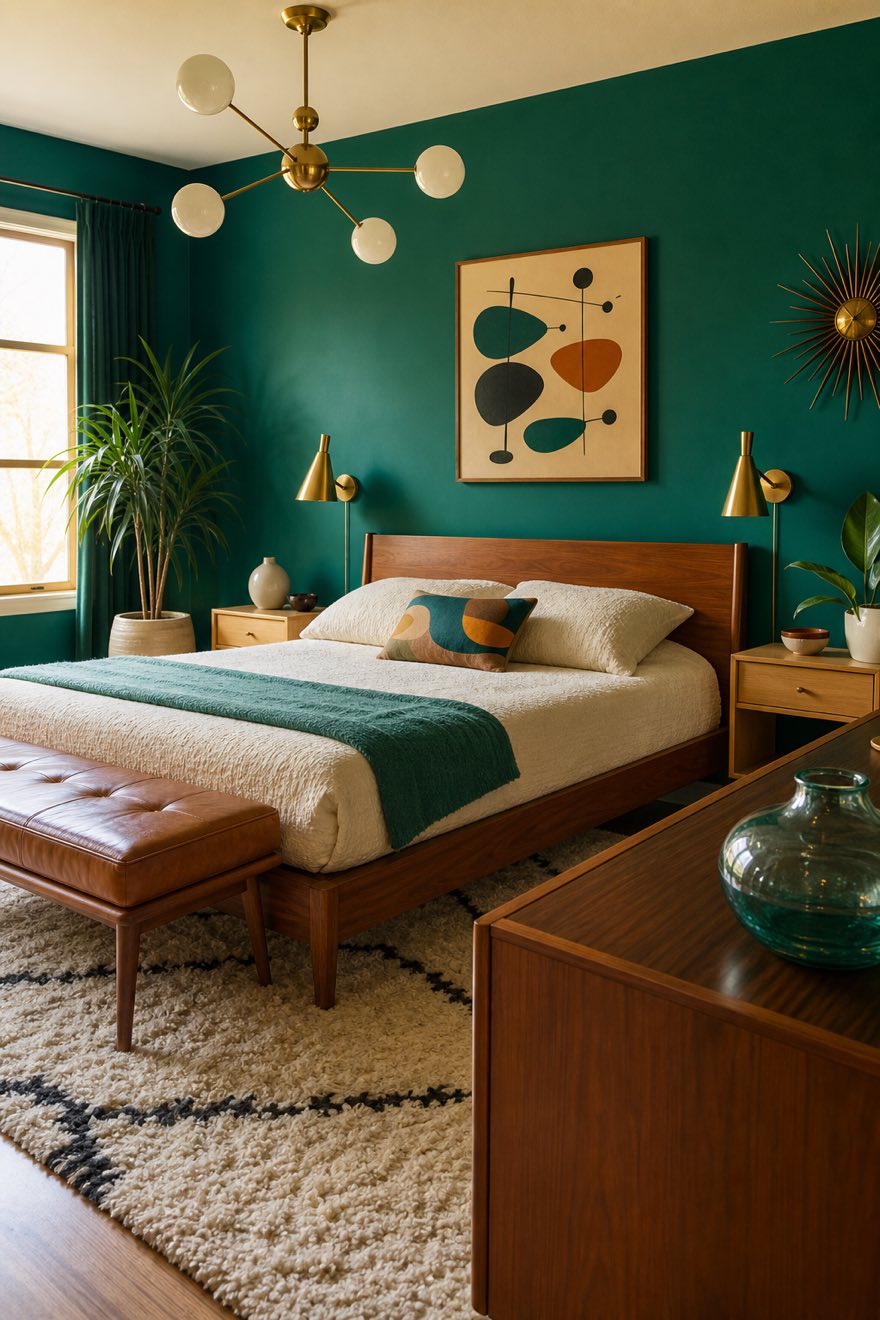
A bedroom is where most people lose their nerve and reach for something safe. Don't. Drench one whole wall (or all four) in a saturated green-teal, and let a low walnut platform bed sit against it like a stage. Teal is the rare bold color that still works in a bedroom without going pale or timid; pair it with light-oak nightstands so the wood doesn't disappear, brass cone sconces instead of table lamps, and one abstract atomic print over the bed. A cognac-leather bench at the foot ties it to the rest of the house. Keep the bedding simple: boucle or a waffle weave, one teal or rust throw, so the wall stays the loudest thing in the room. Behr Dragonfly or Sherwin-Williams Rookwood Sash Green are good teals to start from.
- Low walnut platform bed, queen · Article$1,100
- Light-oak nightstands, pair · West Elm$600
- Saturated teal paint, 1 gal · Behr Dragonfly$60
- Brass cone sconces + cognac bench · vintage / Wayfair$450
7.Geometric & Atomic Pattern, Done Right
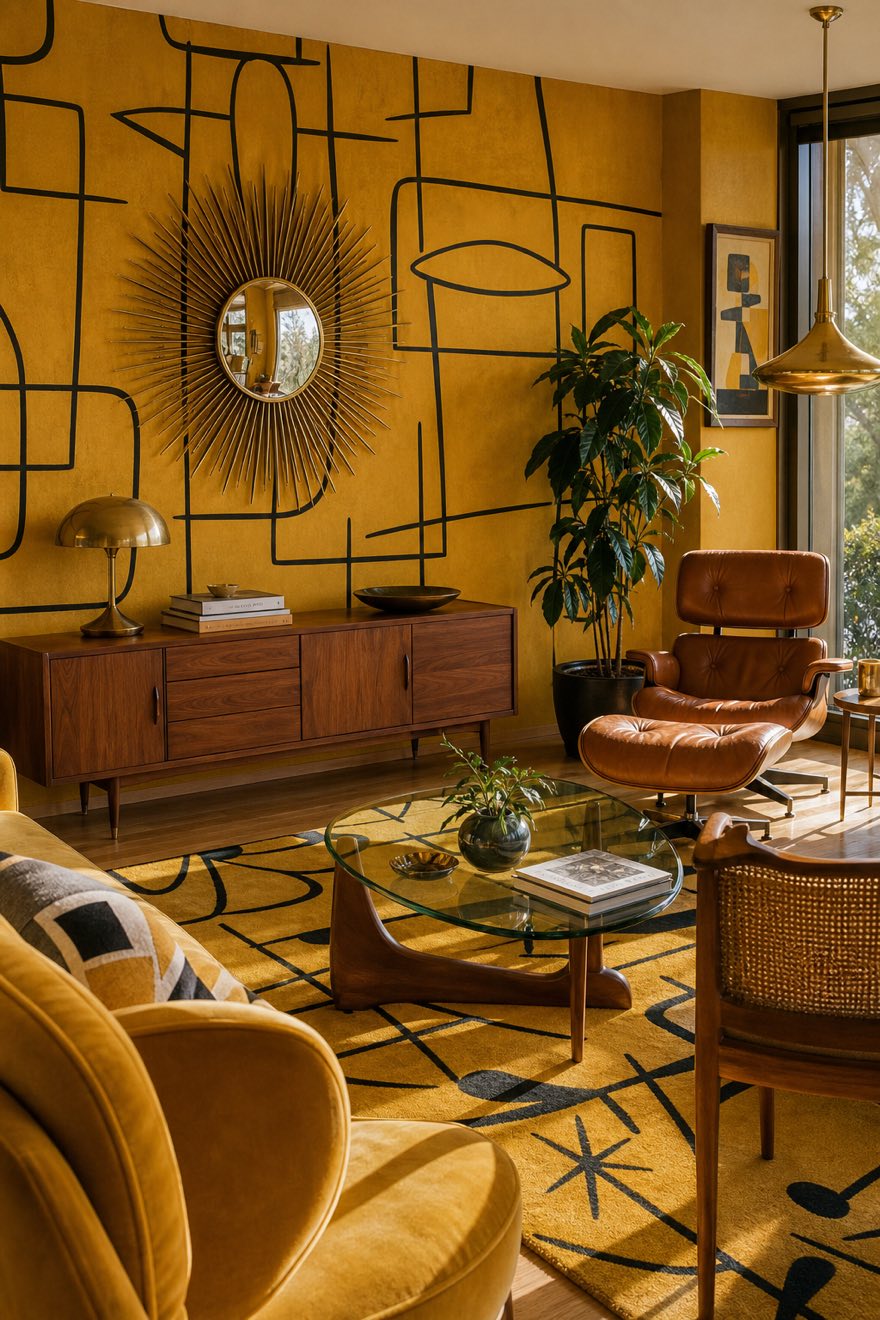
Pattern is where mid-century gets fun, and also where it goes wrong. The right motifs are abstract and atomic: boomerangs, starbursts, biomorphic blobs, clean black-line geometrics — the modernist vocabulary of the era. The wrong ones are the faux-"Southwestern" or "Aztec" prints that get lumped in with MCM online; those borrow from Native and Latin American design and aren't yours (or the era's designers') to take, so skip them. Go graphic instead: a bold geometric rug, a sunburst mirror, an abstract cushion or two against a mustard field. Renter move: a peel-and-stick atomic-pattern wallpaper on one wall delivers the whole hit and comes right back off. Keep the pattern to one or two surfaces so it stays a statement, not a fever dream.
8.Brass + Smoked Glass
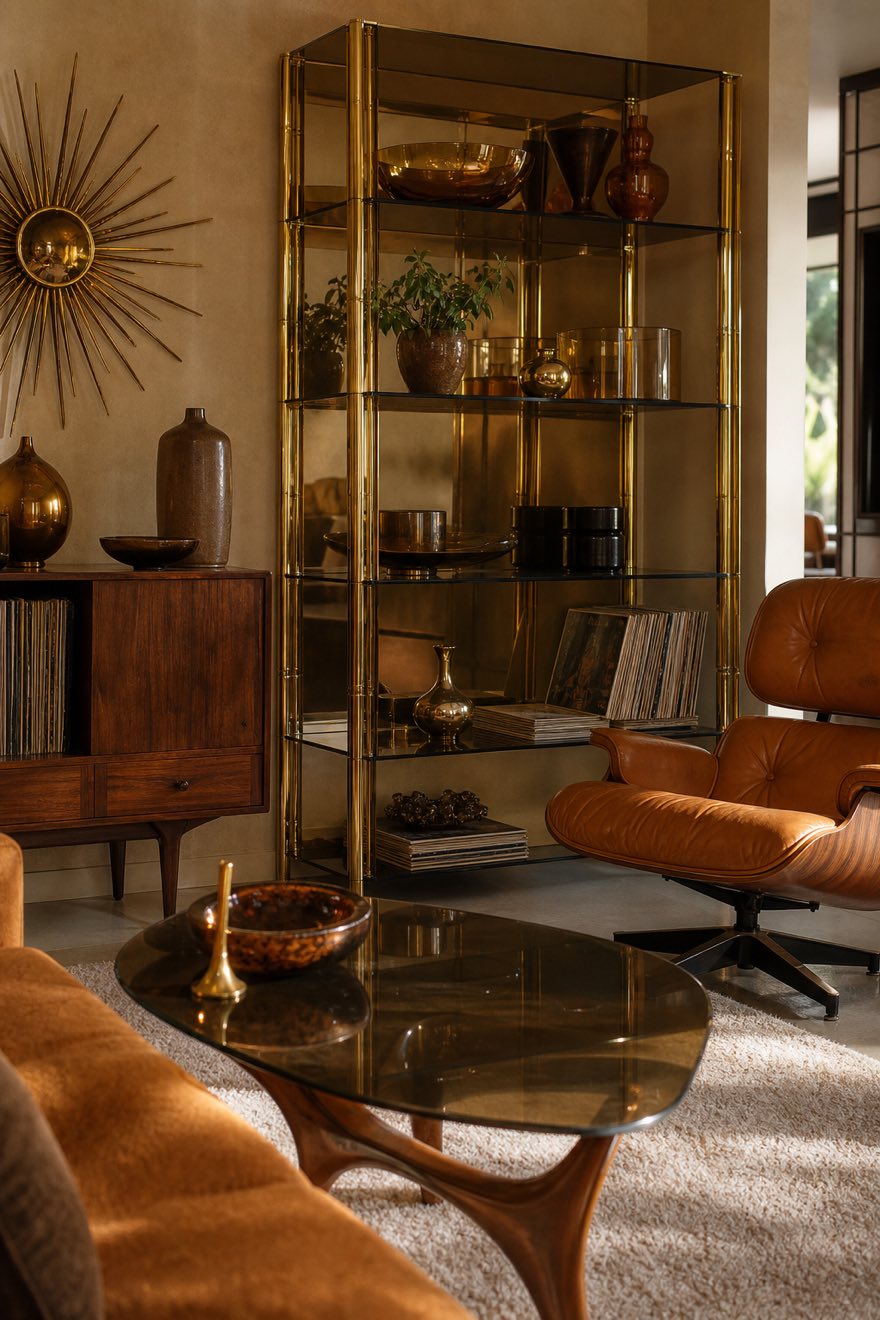
Brass and smoked glass are the jewelry of a mid-century room. A brass étagère, a set of nesting tables, or a bar cart with cut-glass decanters adds shine and reflection without adding bulk — the glass keeps it from feeling heavy. Look for warm polished brass, not chrome, and smoke-tinted glass, not clear. CB2 and vintage shops both have it.
9.The Dining Nook
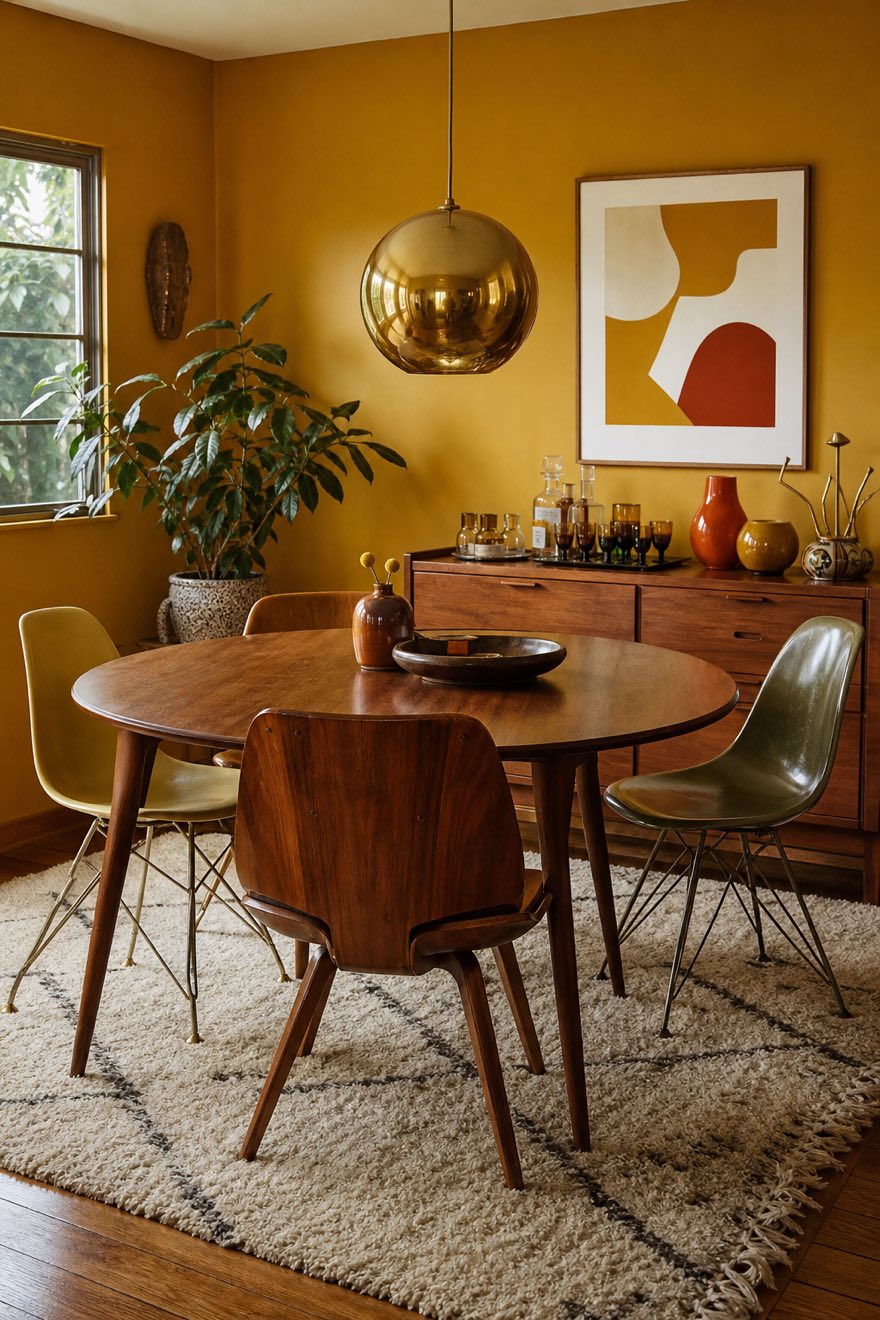
A dining nook lets you commit to a color you'd lose your nerve over in a bigger room. Mustard works here because it drinks up warm light and throws it back, and because it loves walnut. Anchor the corner with a round walnut table, tulip base or tapered legs, and skip the matched chair set. Mix molded shell chairs in walnut with a second saturated tone, say rust or teal, and let the slight mismatch keep it from reading like a showroom floor. Hang a brass globe pendant low, just above eye level when you're seated, and let a walnut sideboard carry the smoked-glass barware and a few atomic ceramics. It's a small footprint doing a disproportionate amount of work.
10.The Palm Springs / Desert-Modern Move
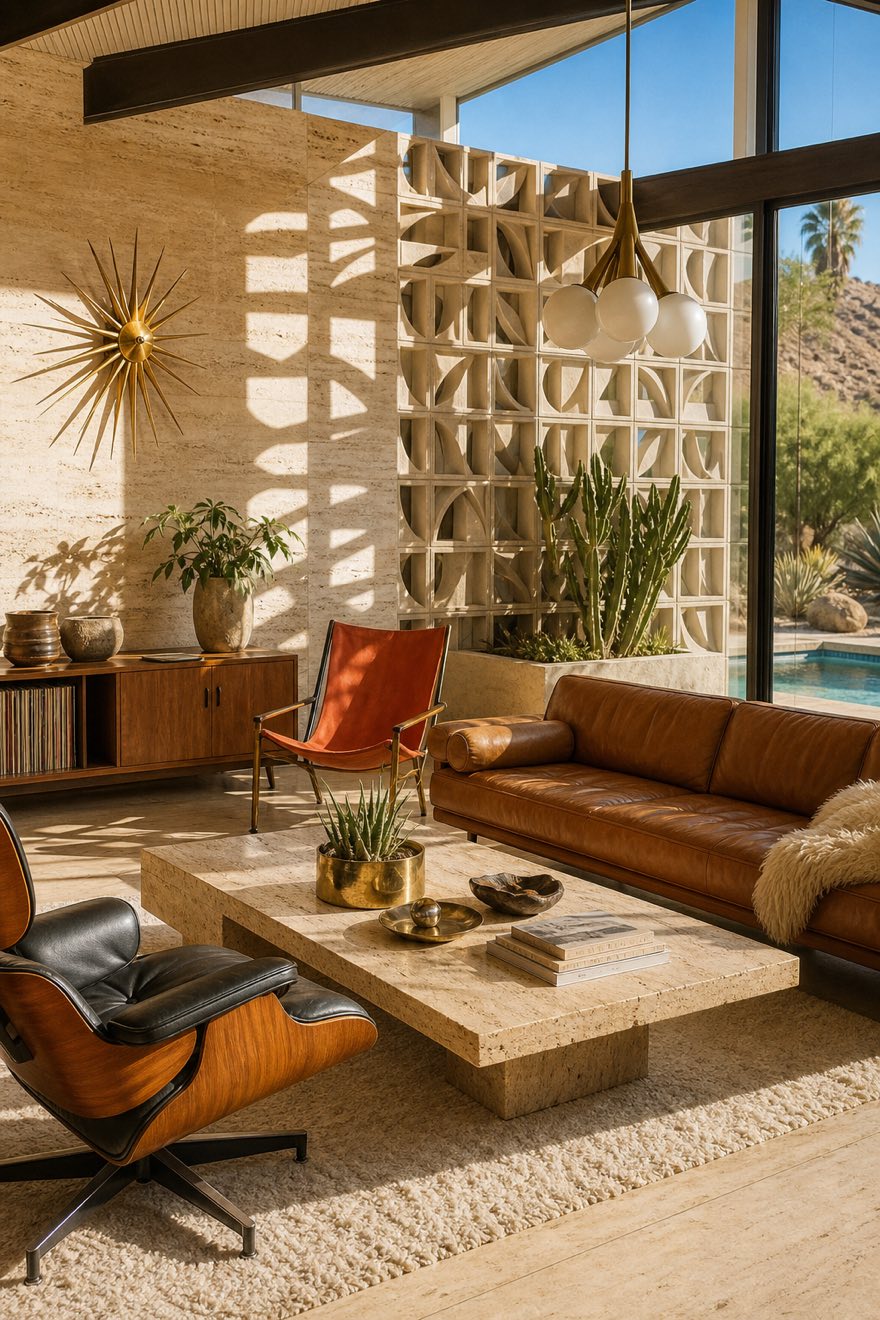
If mid-century has a spiritual home, it's the desert. Palm Springs is where the style went to stretch out: low rooflines, walls of glass, and the indoor-outdoor flow the climate basically demands. This is the one room where you can let stone, travertine and warm tan, carry the field, because the architecture is loud enough to do the talking. Travertine floors and a travertine slab coffee table, a breeze-block screen throwing geometric shadows across the room as the sun moves, a low cognac sofa, and exactly one burnt-orange accent, a leather sling chair, so the whole thing doesn't go flat. Brass keeps the sheen up. I rented a Krisel-era tract house outside Palm Springs one February, and what I remember isn't the furniture. It's the breeze-block wall by the entry, throwing diamonds of light across the terrazzo every afternoon around four. You can't buy that; it's the building doing it. But you can borrow the logic: one architectural gesture, hard sun, and restraint everywhere else.
11.Cane & Boucle Texture Layer
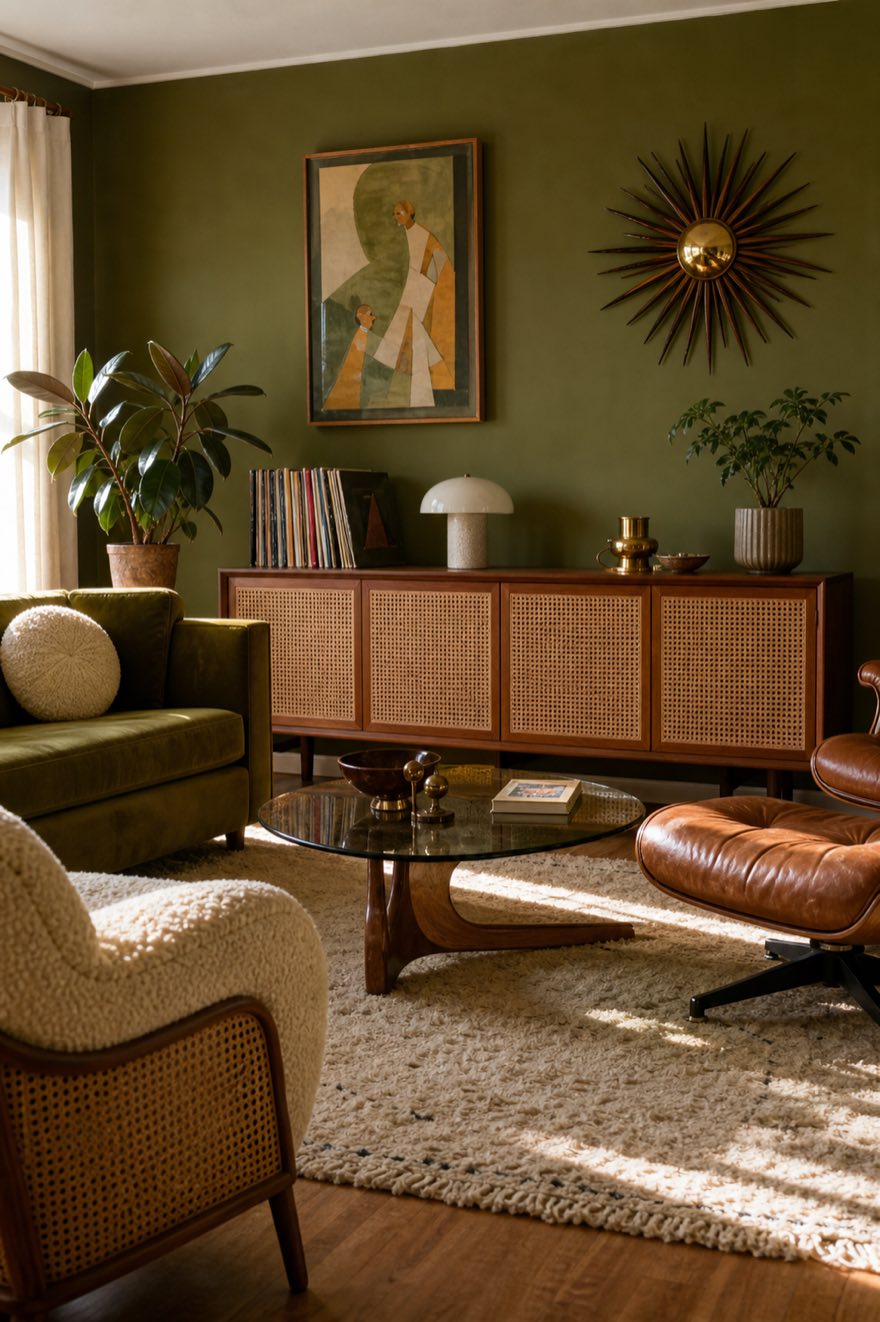
Saturated color can go flat fast, especially across a big olive wall or a long olive sofa. The fix isn't less color — it's more texture. A cane-front credenza, a cream boucle chair, a little walnut grain, and the olive stops looking like a paint chip and starts looking like a decision. The trick is keeping the olive as the dominant mass so the room still reads green from the doorway; cane and boucle are the texture layer, not the headline. A cognac leather lounge and a brass sunburst keep it firmly on the bold side of the line.
12.Avocado, Reclaimed
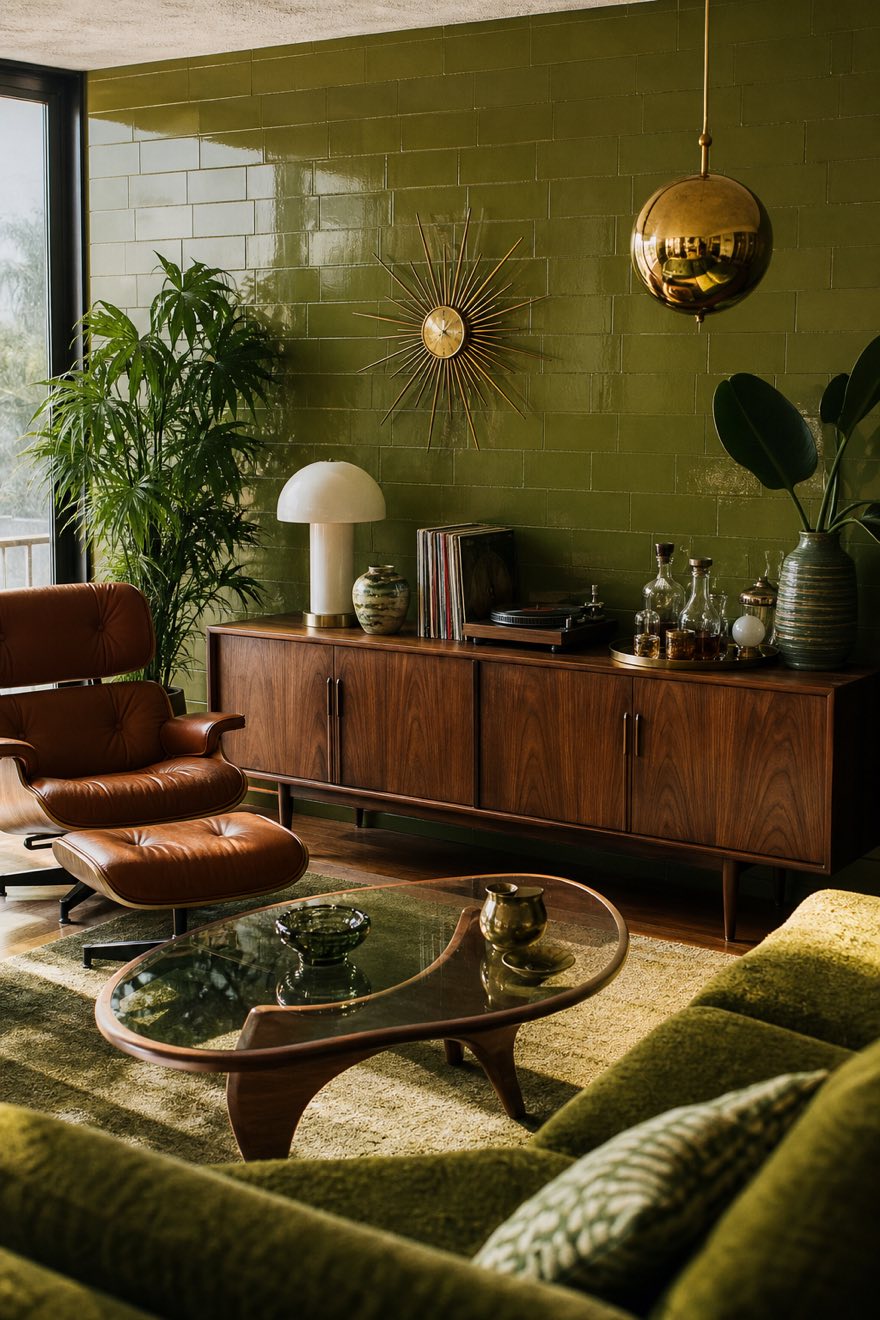
Avocado green spent thirty years as a punchline — the color of dated 1970s appliances nobody wanted. It's back, and the people who fear it are missing what makes it work: avocado is a deep, complex green that behaves like a neutral once you pair it with the right materials. Drench a wall in it, or tile a bar back in glossy avocado, then bring in grain-forward walnut, polished brass, cognac leather, and smoked-glass barware. The gloss matters; a flat avocado can sulk, but a glazed-tile or satin finish catches the light and looks deliberate. Done with conviction, it's the most grown-up color in the room. Commit, or don't bother.
13.The Sunken Conversation Pit
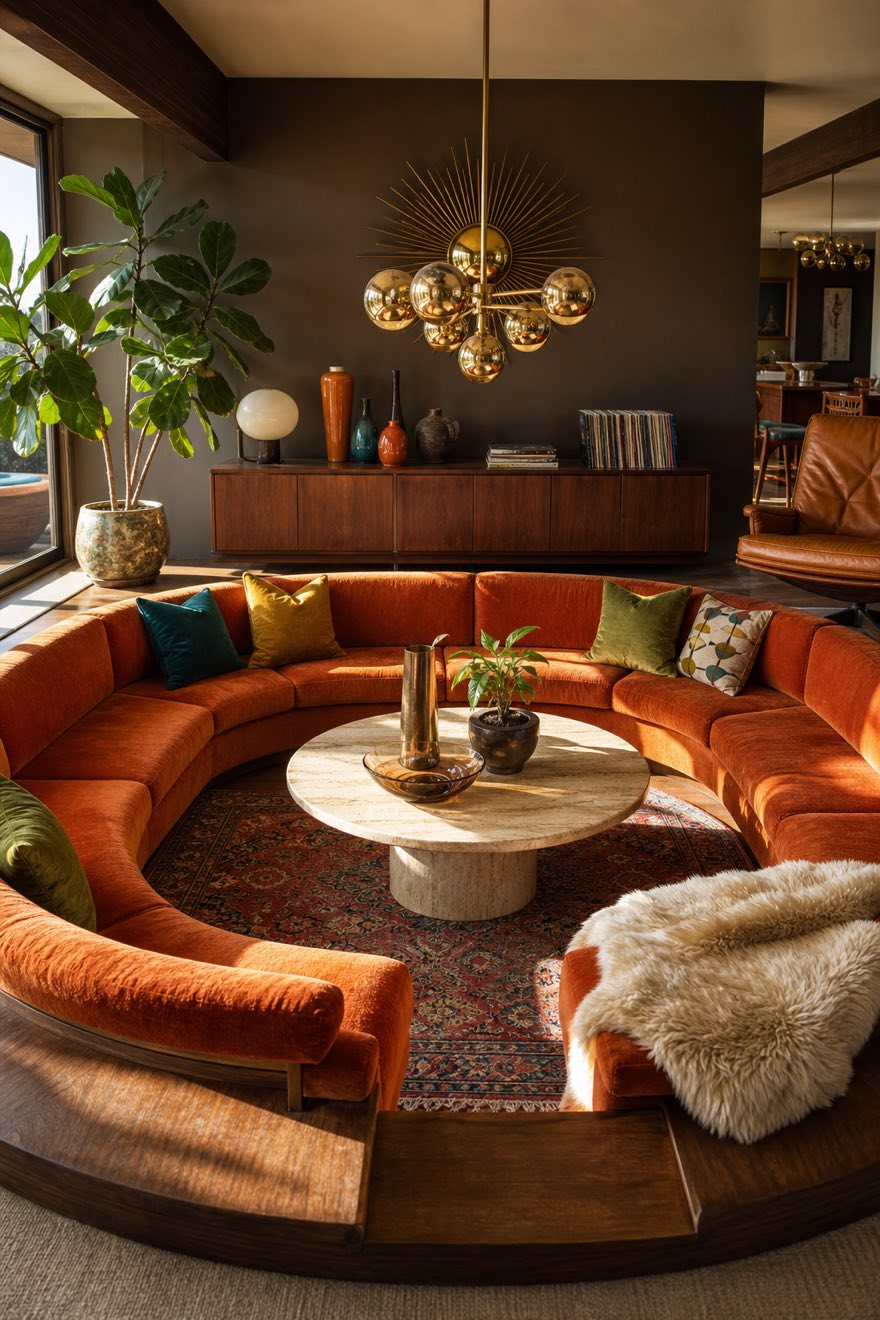
Sink the seating a step below floor level, wrap it in burnt-orange upholstery with a walnut surround, and you've got the boldest move in mid-century: the conversation pit. One low table in the middle, everyone facing everyone, no side tables, nothing in the way — just a tight social square of color you step down into.
14.Small-Space / Renter Mid-Century
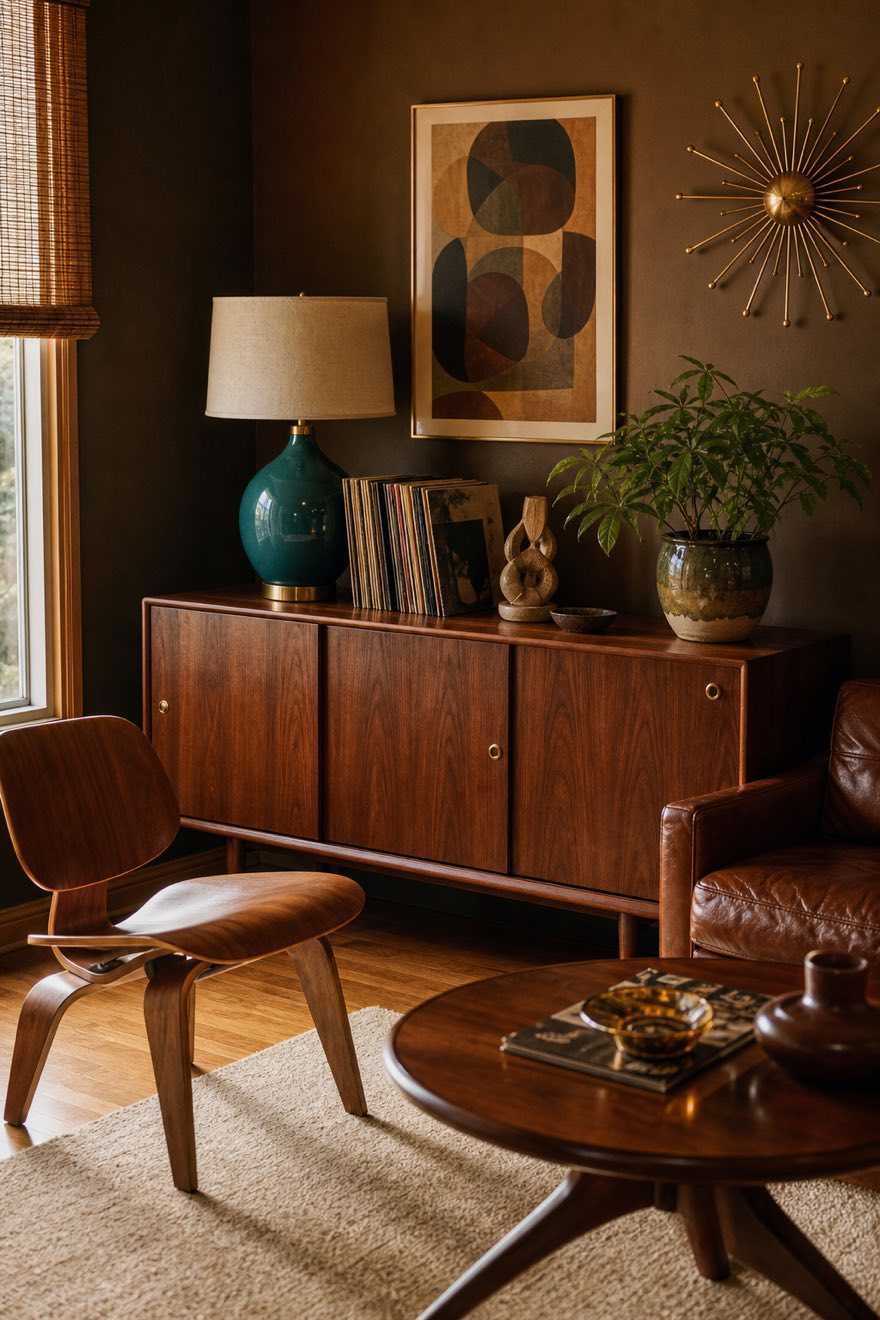
For renters and small apartments, mid-century is built on a few clean silhouettes, not square footage. You don't need a feature wall or a credenza the length of a sofa. A small walnut console, one Eames-style chair, a brass globe lamp, and a single teal accent, a cushion or a lamp base, and the corner reads 1960s. Keep the wall color if you can't paint; the walnut and brass do the heavy lifting against almost anything. Skip the matched set and let one good vintage piece carry the room. Small space is an advantage here: it forces you to choose the pieces that actually matter.
15.Make It Read 1960s, Not a Film Set
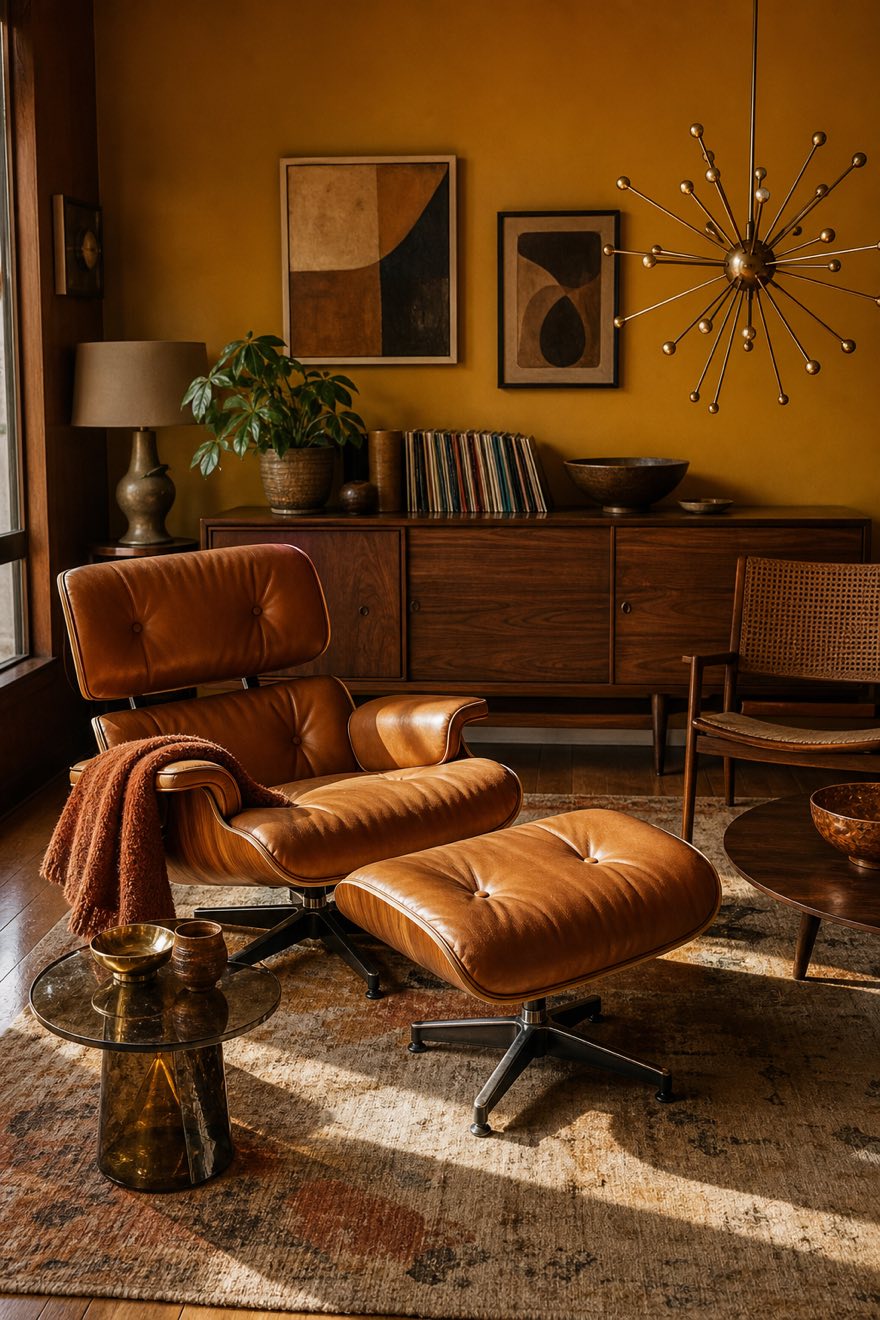
Here's the thing that separates a mid-century room from a mid-century film set: the film set is perfect, and a real room isn't. The way to keep it from tipping into costume is to mix. Put a 1962 walnut credenza next to a chair you bought last year. Let the rug show some wear. Hang the art a little low. Leave the records out. The cognac leather chair I keep coming back to, the Palm Springs one, works because it's broken-in and creased, not because it's mint. Buy the bones new if you have to, but let the room collect a few honest, slightly-wrong things over time. That's the difference between a room that looks designed and a room that looks lived in. Pick one saturated color, one good leather chair, one brass light, and build out from there.
More room styles: the Parisian apartment look goes cooler and more architectural, Art Deco brings the high-gloss glamour, and our calm Japandi rooms are the matte, pared-back opposite of everything here.
- Low-slung olive velvet sofa · Article (Sven)$1,300
- Walnut tapered-leg credenza · West Elm / vintage$350–$900
- Cognac Eames-style lounge + ottoman · Wayfair / vintage$700–$1,400
- Brass sputnik / globe pendant · Lumens / Rejuvenation$120–$600
- Brass + smoked-glass coffee or nesting tables · Article / CB2$120–$350
- Low walnut platform bed · Article$1,100
- Brass cone sconces, pair · Rejuvenation$200
- Saturated retro paint · SW / BM / Behr$40–$80
Frequently Asked Questions
The questions everyone asks before going bold.
What colors define a mid-century modern living room?
The bold version runs on saturated fields — burnt orange, olive, teal, mustard, avocado — grounded by grain-forward walnut, cognac leather, and brass. Pick one saturated color for the walls or the largest piece, then let the wood and metal do the rest. Neutral-tan works only where a brass or leather piece is the real subject.
How do I get a mid-century modern look in a rental?
You don't need to paint. A walnut credenza, one Eames-style chair, a brass globe lamp, and a single saturated accent will read 1960s on their own. Peel-and-stick atomic wallpaper adds a color field without losing your deposit. Skip the matched set; let one good vintage piece carry the room.
What's the difference between mid-century modern and Japandi?
They share clean silhouettes but pull in opposite directions. Japandi is matte, muted, and pared back; bold mid-century modern is saturated color, cognac leather, brass-and-smoked-glass sheen, and atomic lighting. This article is the leather-and-color retro cousin to our calm Japandi rooms — same era of furniture, very different mood.
How much does a mid-century modern living room cost?
You can start for about $250 — a can of saturated paint, an atomic clock, and brass-and-glass nesting tables. A mid-level refresh with a low olive sofa, walnut credenza, and a sputnik pendant runs around $1,670. A full splurge room with a cognac Eames lounge and vintage walnut lands between $3,500 and $7,000.
What furniture makes a room read mid-century modern?
A few silhouettes do the heavy lifting: a low-slung sofa, a tapered-leg walnut credenza, an Eames-style leather lounge and ottoman, a sputnik or globe pendant, a kidney or boomerang coffee table, and a brass sunburst on the wall. Get two or three of those right and the room reads instantly.