Modern Moroccan Decor: 15 Ideas for a Warm, Elevated Home (Not a Themed Restaurant)
Moroccan decor has a reputation problem: too often it means a dark, lantern-stuffed room where every surface is fighting for attention. Modern Moroccan is the opposite — warm, calm, and edited, built on the one idea that actually runs a riad. In Morocco nothing is decoration first; the plaster, the tile, the low seating and the carved screens all began as answers to heat, light and a life lived close to the floor. Design from that function and the warmth follows on its own. This guide walks through 15 modern Moroccan ideas, room by room, with the real materials, exact paint and tile names, and honest US budgets — so you can mix Morocco in without theming your whole house out.
1.Start With Warm Plaster, Not a Theme
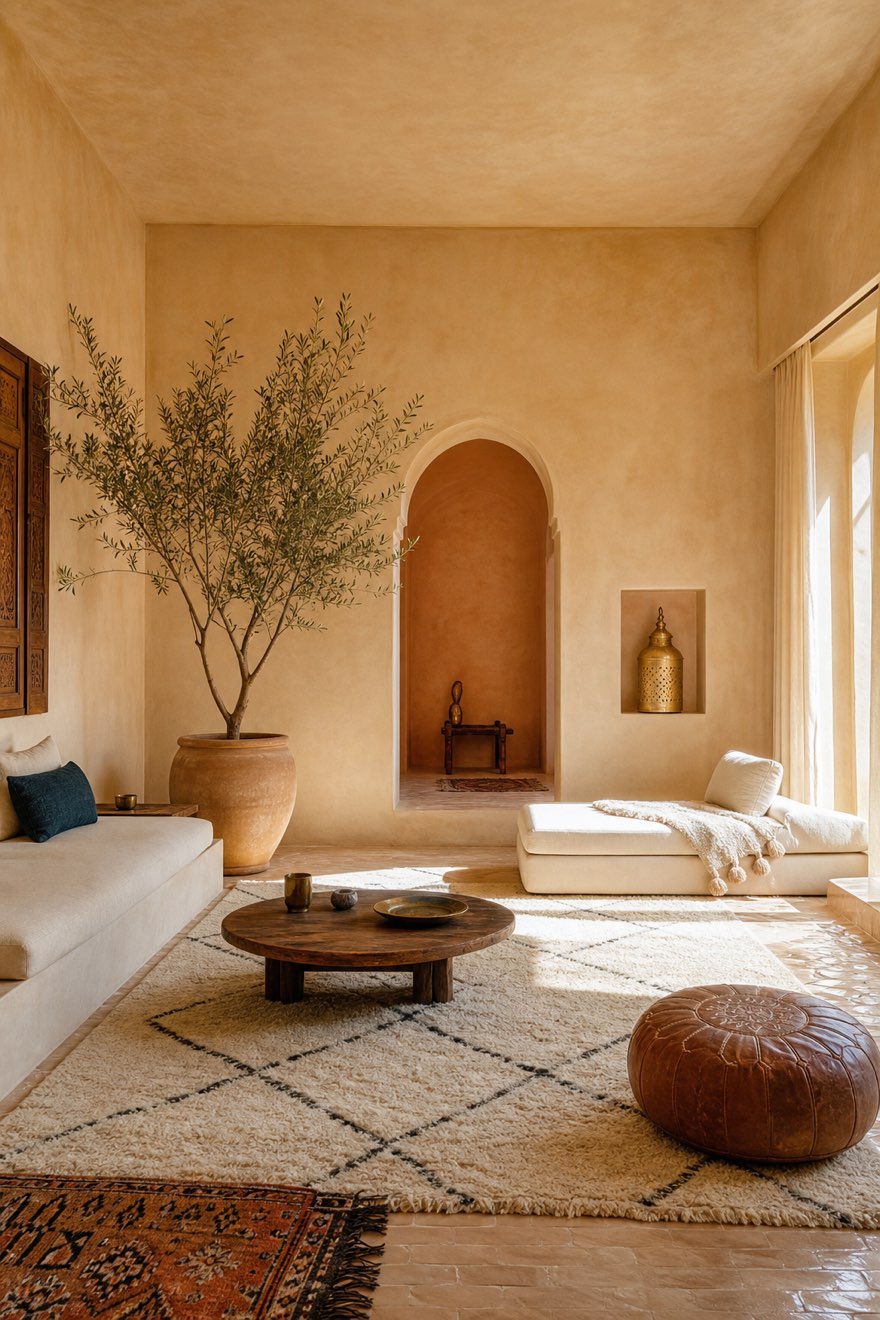
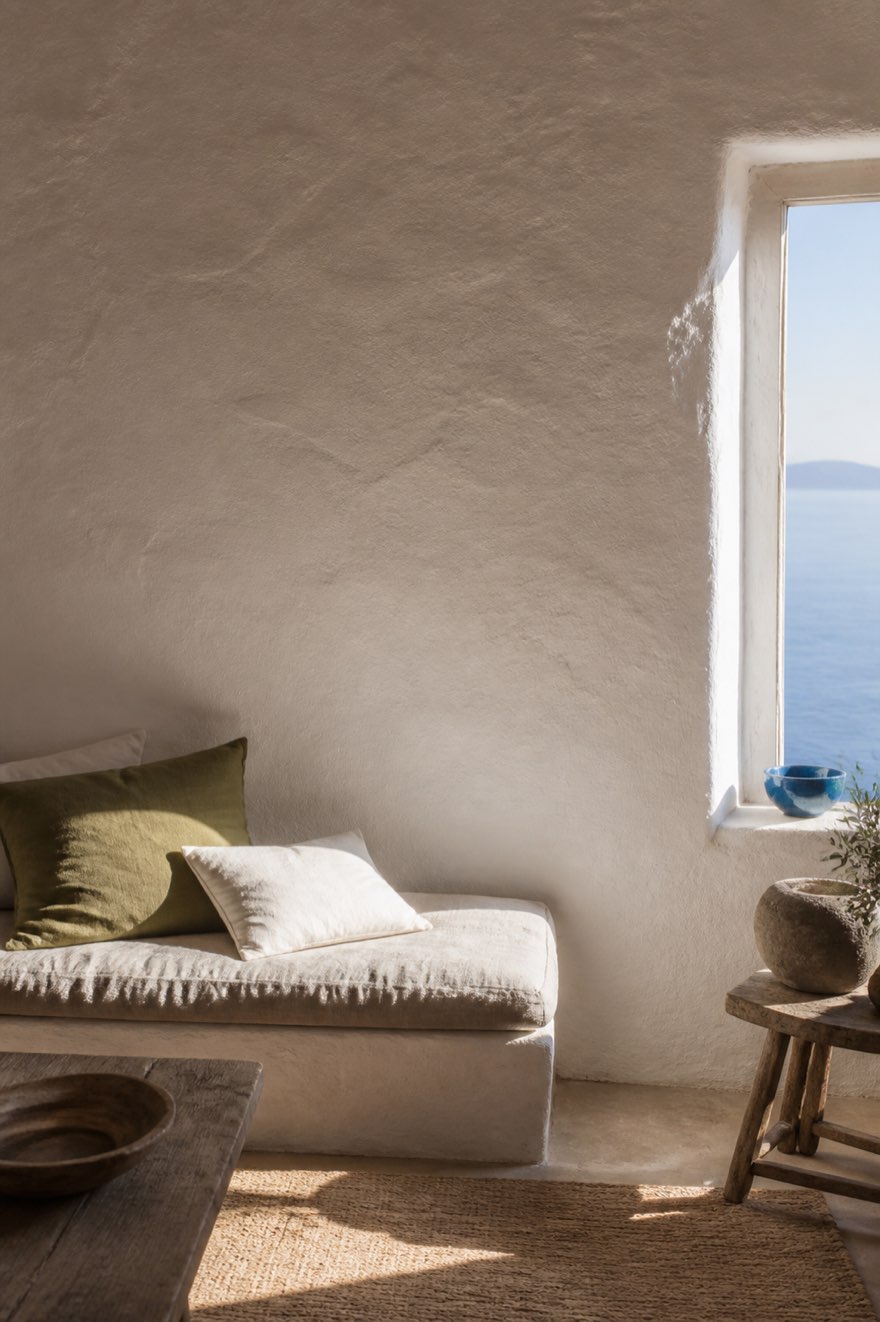
Before a single lantern or tile, get the walls right — because in Morocco the wall is the room. Tadelakt and limewash plaster aren't decoration; they're how a riad breathes, holding the cool of the morning into the afternoon. Skip flat builder-beige and reach for a warm, troweled sand-terracotta — Portola's Lime Wash gives that hand-applied glow from about $110 a gallon, or fake it with limewash-effect paint for under $60. It's the same sun-warmed plaster that sits behind Mediterranean decor, just pulled a few degrees warmer. In my Marrakech riad the plaster shifted color all day — pink at dawn, deep ochre by four. That living, uneven warmth is the whole foundation; everything else is just a few strong objects placed against it.
2.Zellige Is the One Splurge Worth It
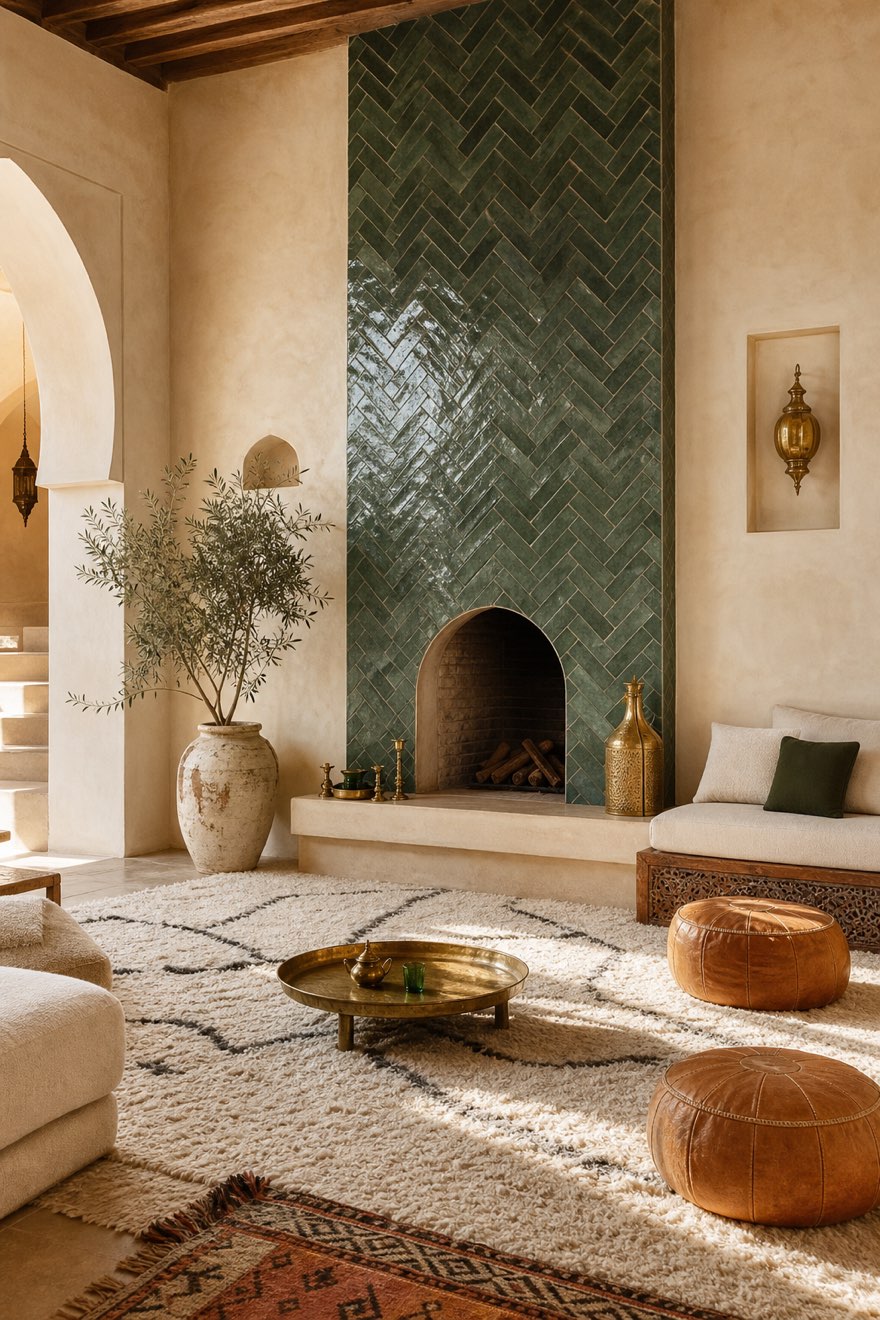
Real zellige is hand-cut, hand-glazed, and gloriously irregular — every tile catches the light at a slightly different angle, which is exactly why a wall of it looks alive while a sheet of factory “Moroccan-look” tile looks dead. Use it where it earns its keep: a fireplace surround, a single shower wall, a kitchen backsplash. Zellige from Clé runs $25–40 a square foot; for a smaller hit, cement-look peel-and-stick zellige is about $12 a pack on Amazon. Lay it stacked for calm or herringbone for movement, and let the grout lines stay a touch uneven. The wobble is the point — it's how you know a human made it.
3.Tadelakt for a Bathroom That Feels Like a Hammam
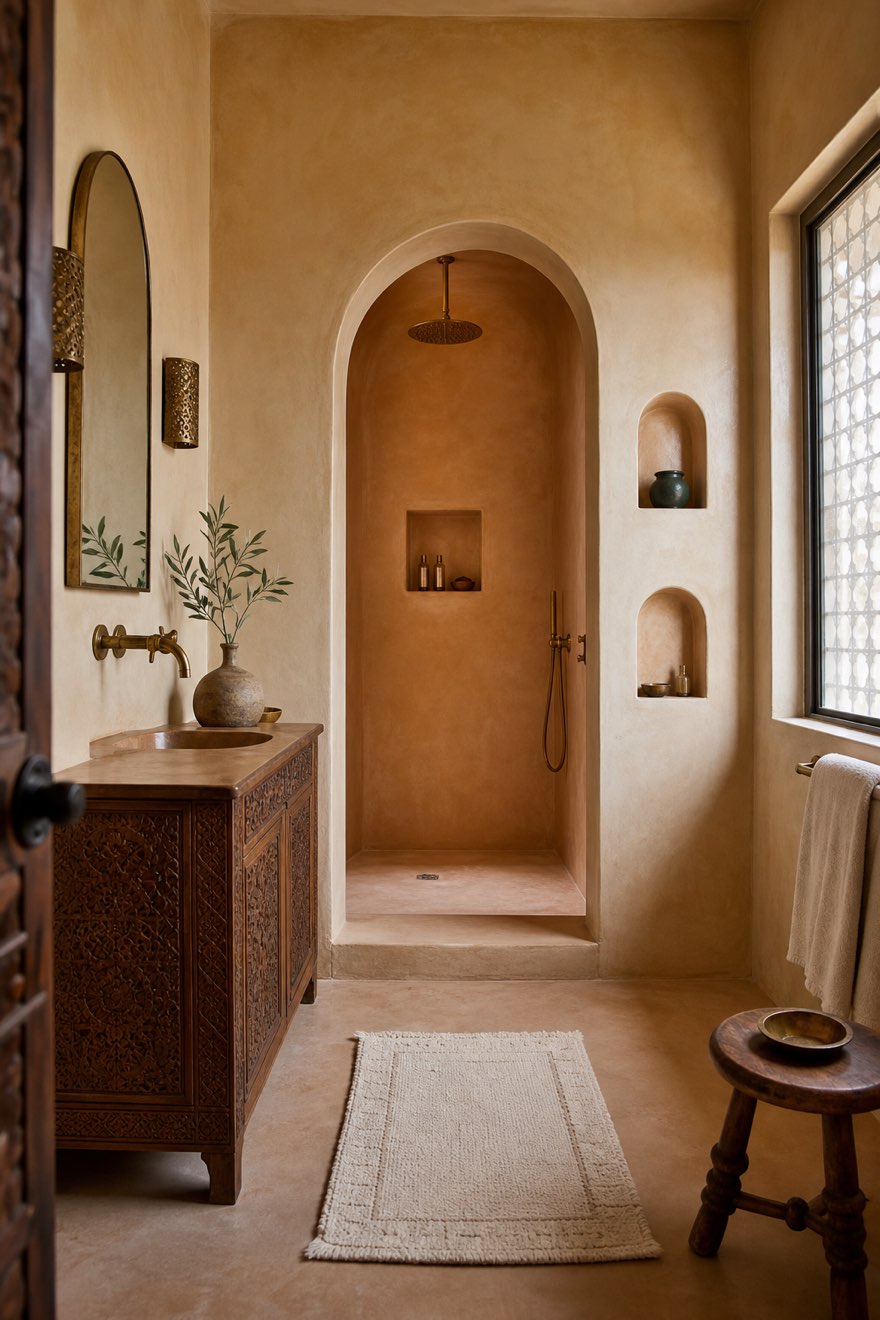
Tadelakt exists for one reason: it's lime plaster polished with olive-oil soap until it's seamless and waterproof, built for the steam of a hammam centuries before tile grout existed. That function is why it feels so calm — no grid, no grout, just one continuous warm surface that wraps the room. The first hammam I sat in near the Marrakech medina had walls the color of wet clay and not a single hard edge, and I've wanted that ever since. A pro tadelakt install runs high, but a tadelakt DIY kit from Etsy (~$90 for a feature wall) gets a renter most of the way on one shower wall.
- Tadelakt DIY kit, one wall · Etsy$90
- Hammered-brass wall tap · Signature Hardware$210
- Carved cedar / cane vanity · World Market$450
- Arched brass mirror + stoneware set · Target / World Market$140
4.One Jewel Tone, Earth Everywhere Else
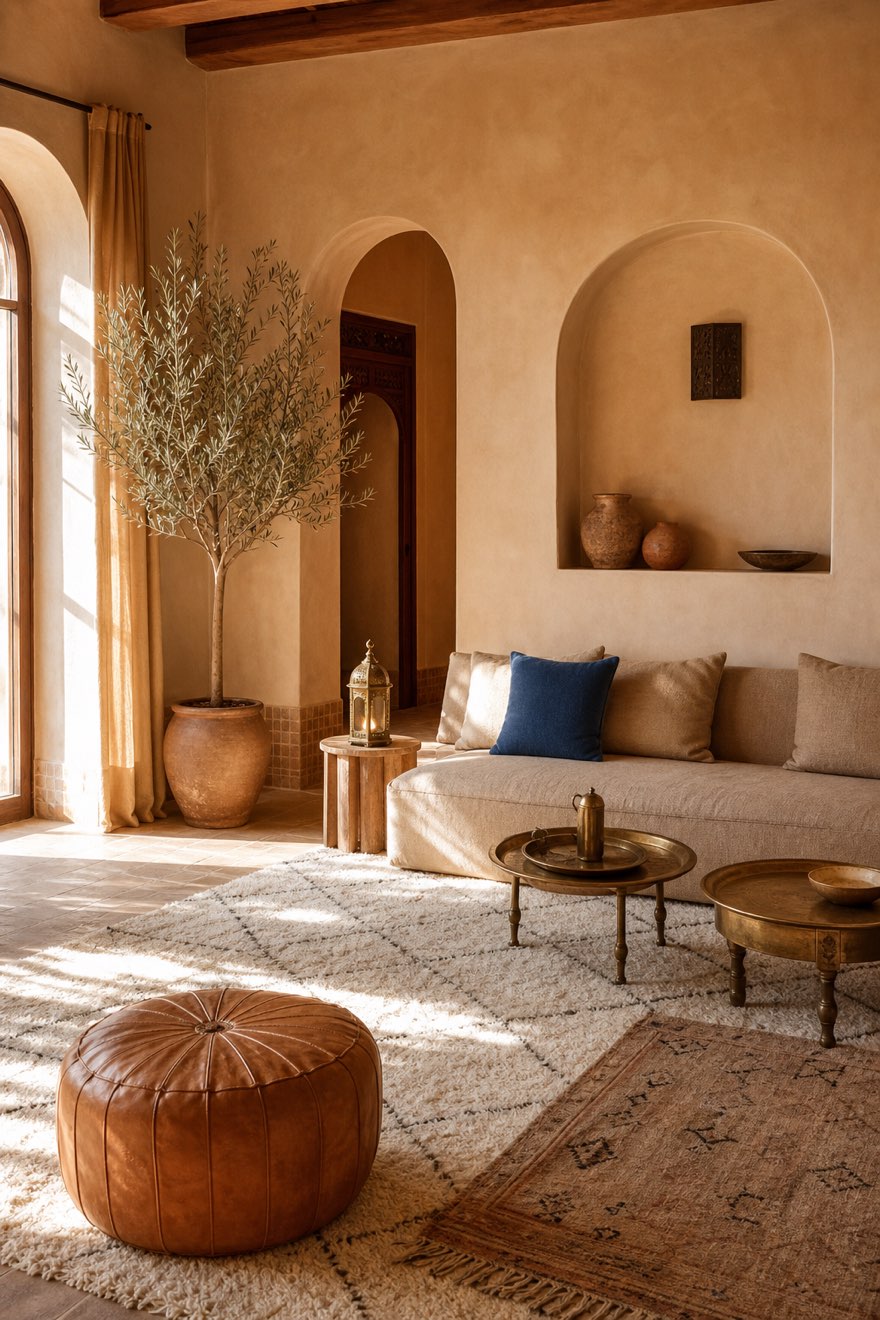
Here's the rule that keeps modern Moroccan from sliding into pastiche: build the whole room in warm earth — terracotta, sand, sienna, ochre — and let exactly one muted jewel tone do the talking. There's a reason those earth tones carry the room: they keep their depth under strong daylight, where saturated jewel colors flatten and go muddy, so warm neutrals are simply what reads richest in a bright American room. A deep Chefchaouen blue cushion, a saffron throw, an emerald glazed vase: pick one, not five. The earth tones are the chorus; the jewel is the single soloist, and a soloist only lands in a quiet room. A sabra-silk cushion runs $30–50 in that perfect dusty blue. If you'd rather have blue lead the whole room instead of accent it, that's Greek decor, one bold cobalt against white. Here, pick your one color, repeat it once somewhere small, and let everything else stay sun-warmed and calm.
5.A Berber Wool Rug as the Anchor
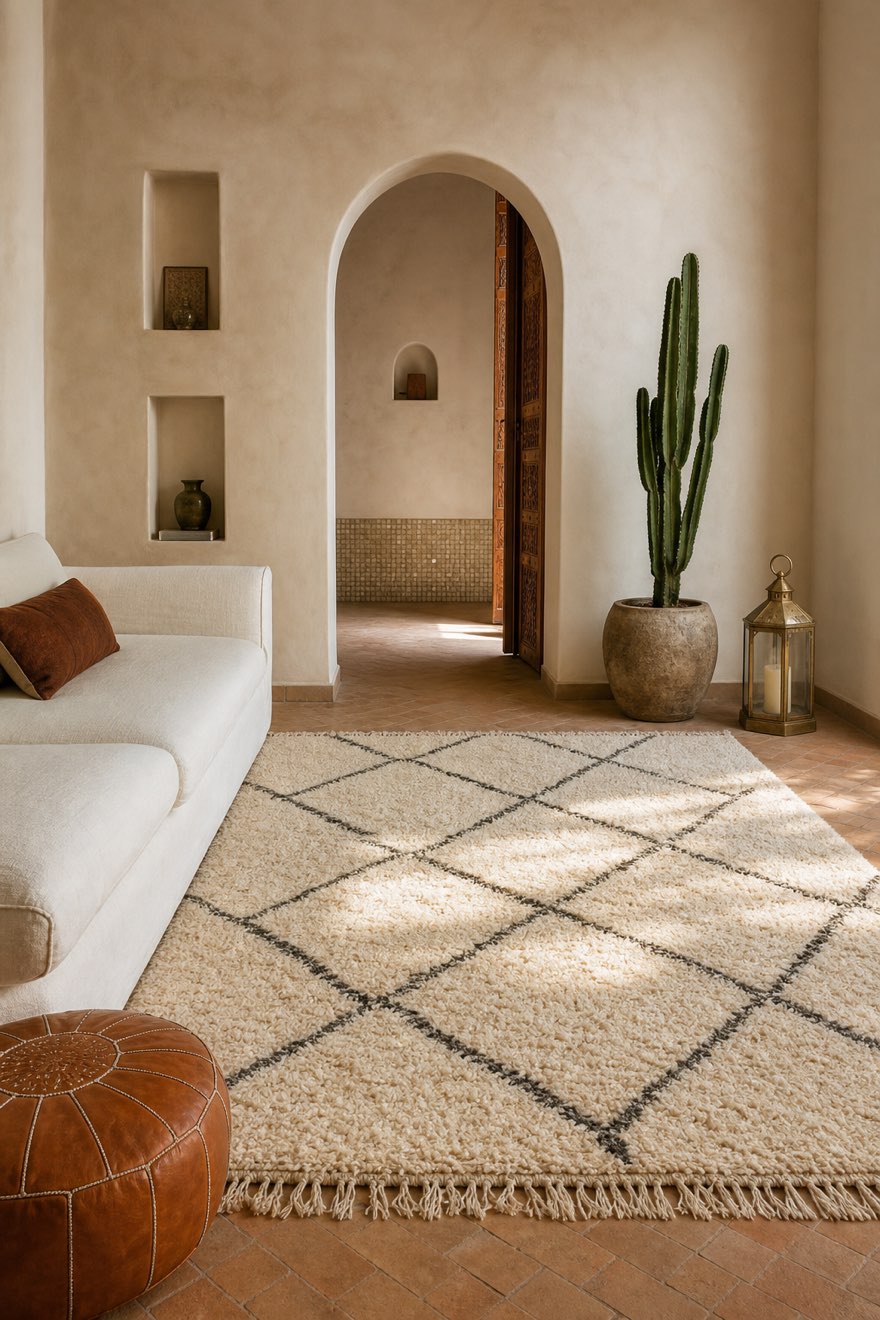
A Beni Ourain isn't a “Moroccan rug”: it's a high-altitude survival object, hand-knotted in thick undyed wool by Amazigh women of the Atlas to hold heat through freezing nights, its charcoal diamonds old protective symbols, not pattern for pattern's sake. That function is why it grounds a room instead of just decorating it. I spent a sweaty hour in a Marrakech souk haggling for mine over three glasses of mint tea, and it was worth every dirham. Vintage runs high; for the look, a Beni Ourain-style wool rug from Article starts around $700, or a washable Berber-diamond rug from Ruggable is about $300. Buy it oversized, with at least the sofa's front legs on the wool, and one great rug does the work of a whole room of pattern.
6.Lay the Living Room Out Around the Rug
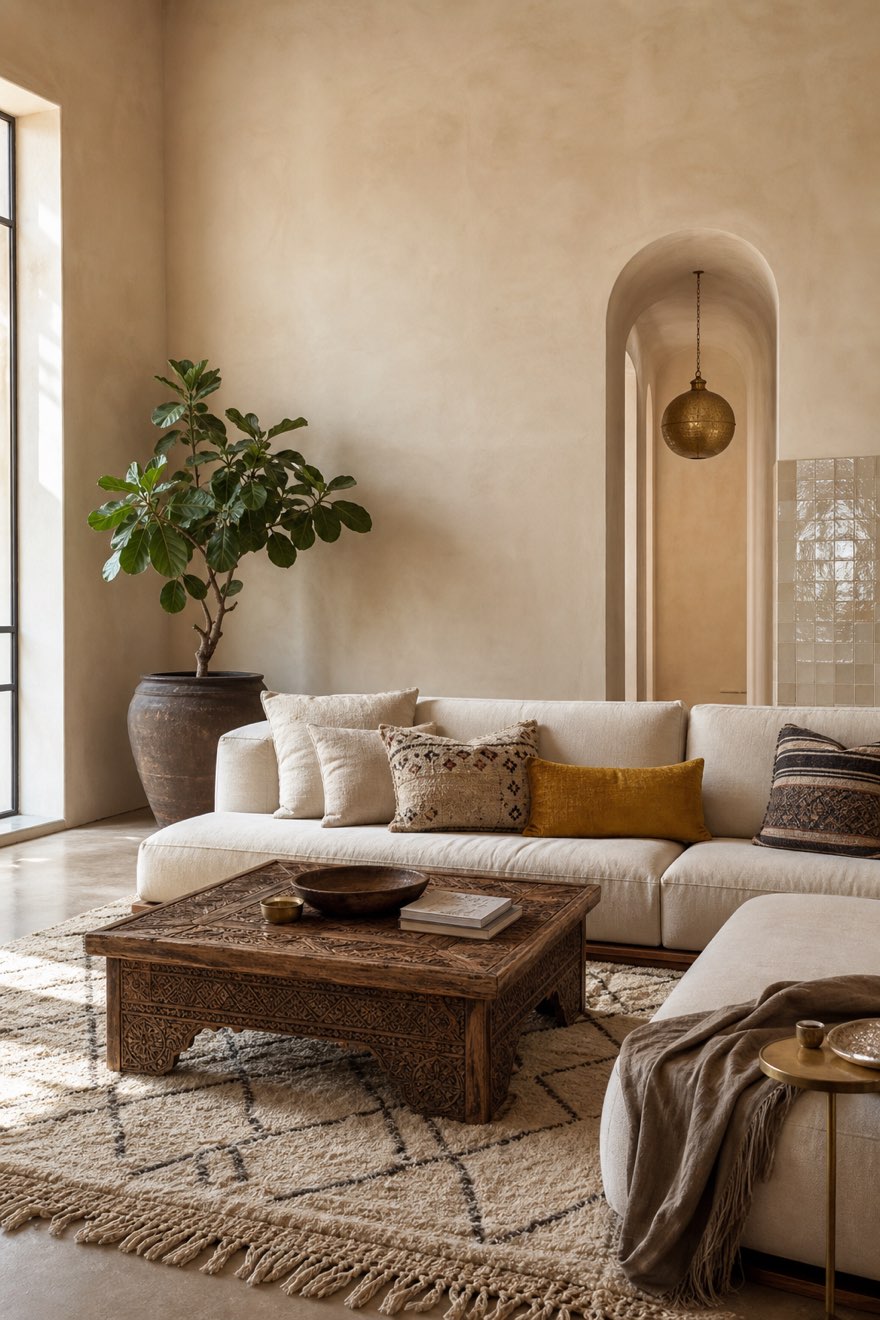
A Moroccan living room is laid out like a majlis: low seating set along the edges and gathered around a central rug, never aimed at a television. That comes straight from a floor-gathering culture — keep the furniture low and close to the walls and you open up the middle of the room, so it reads communal and calm instead of crowded. Anchor the whole group on one oversized Beni Ourain, float a low brass-tray table in the center, and keep the sightline clear from the doorway straight across the wool. Then let the pieces stay modern and few: a simple linen sofa (Article's Sven runs about $1,500), one carved cedar piece, one muted jewel cushion. Get the arrangement right first and the room works before you have bought a single “Moroccan” thing.
- Linen sofa · Article Sven$1,500
- Carved cedar coffee table · Etsy / World Market$400
- Beni Ourain-style rug, 8×10 · Article$700
- Saffron sabra-silk cushion + brass tray · Etsy / World Market$120
7.Hammered Brass Light (and the Two-Metal Rule)
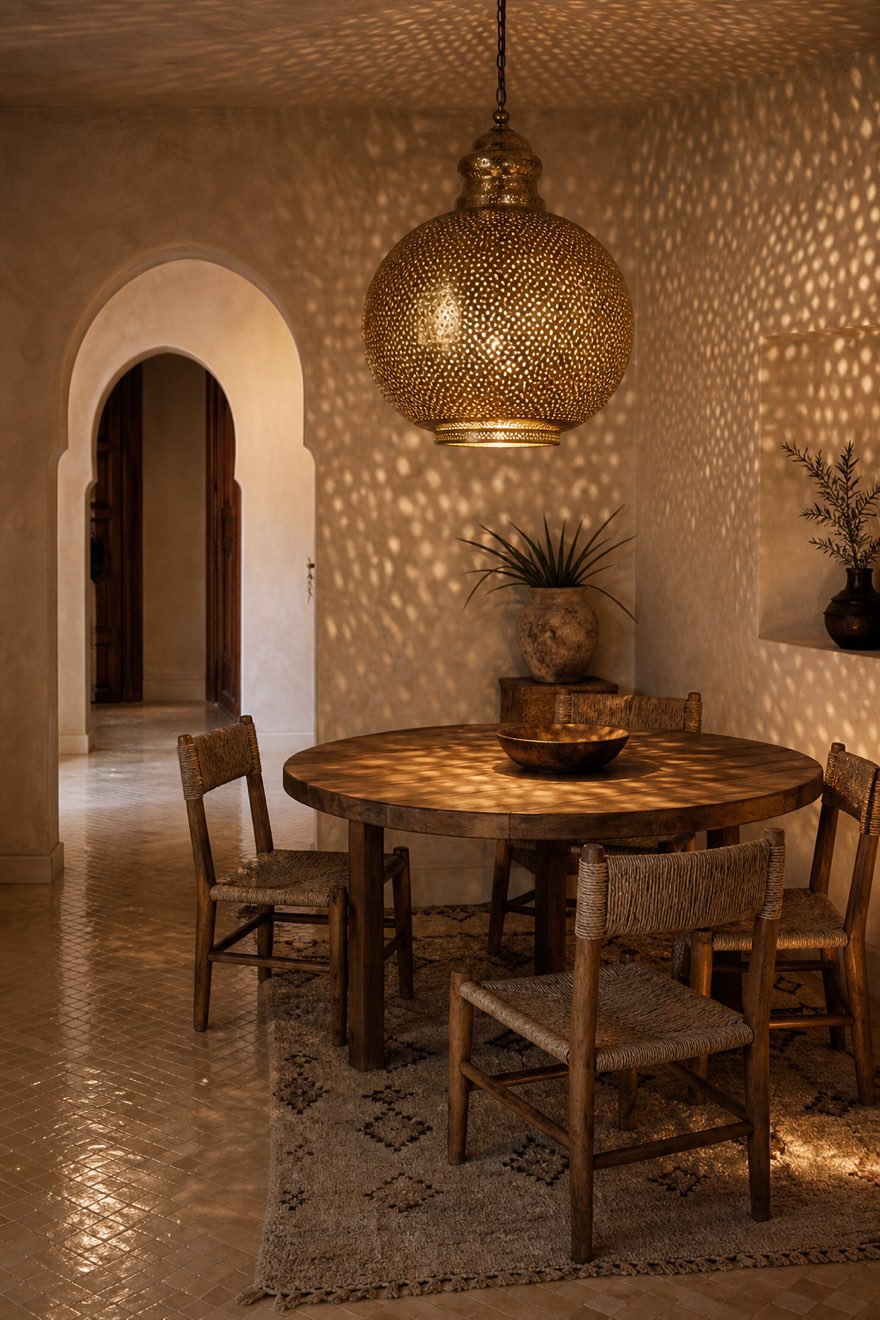
A pierced brass lantern does something no modern fixture can: it turns a single bulb into a roomful of moving light, the perforations throwing lacework across the walls, exactly what they were built to do before electricity, to soften and scatter a small flame. One good lantern is plenty: a hammered-brass pendant from World Market runs about $130. And here's the rule that keeps brass from piling up: choose two metal finishes for the whole room and stop. Brass plus the warm wood it lives among, or brass plus one aged black. A third metal is where a calm room starts to jangle.
8.Carved Cedar: A Screen, a Door, a Headboard
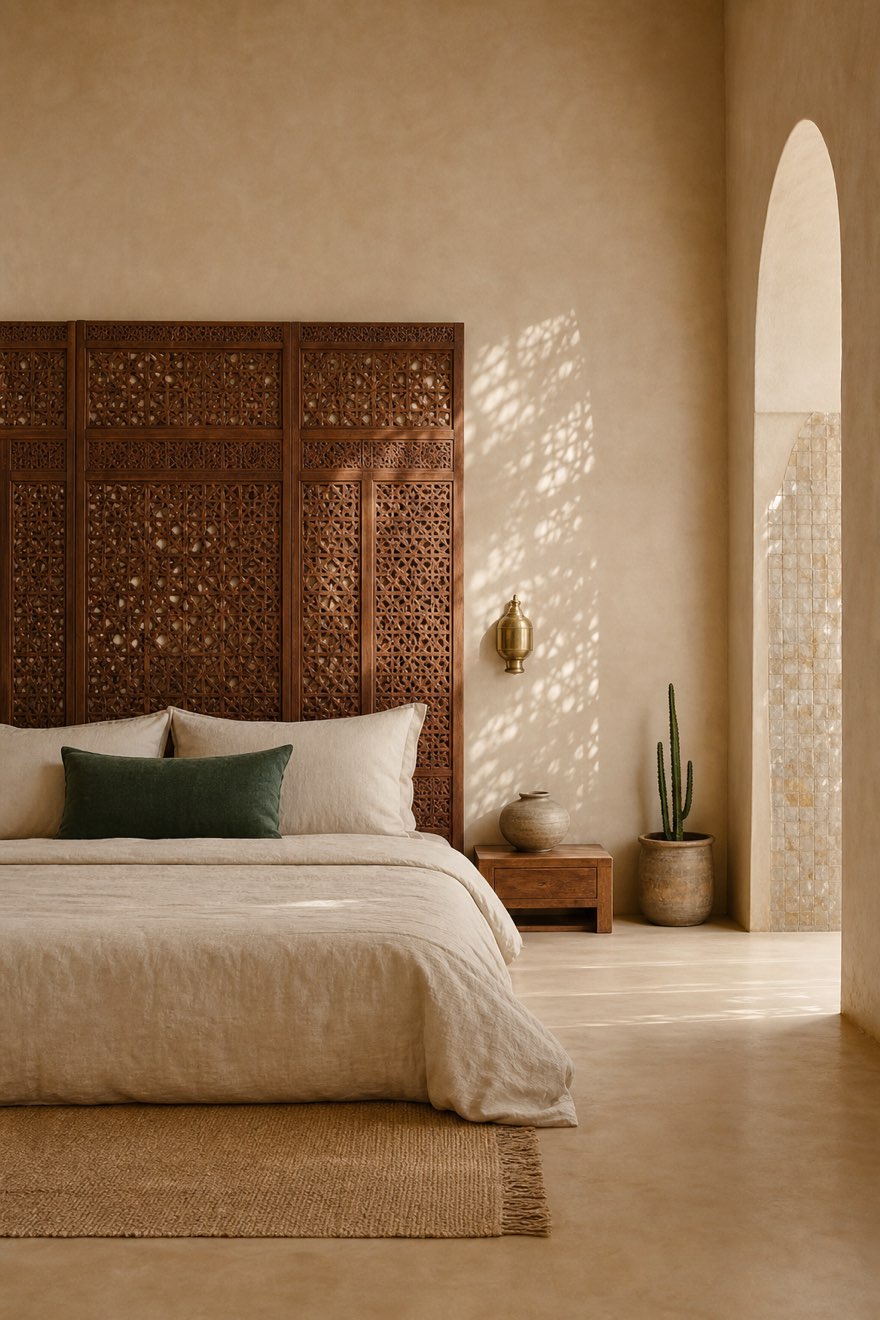
Carved cedar is the riad's quiet luxury, and like everything Moroccan it began as function: a mashrabiya screen was cut dense enough to filter harsh sun and pull a breeze through while keeping a room private — the beauty was a by-product of solving for climate. Used as a headboard, a closet front, or a single leaning screen, that carved warmth outperforms any amount of applied pattern. You don't need an antique — a carved wood wall panel on Etsy runs $120–250 and leans against a wall in minutes. Set it where side light rakes across the relief, and the shadows do half the decorating for you.
9.The Moroccan Bedroom: Low, Layered, Calm
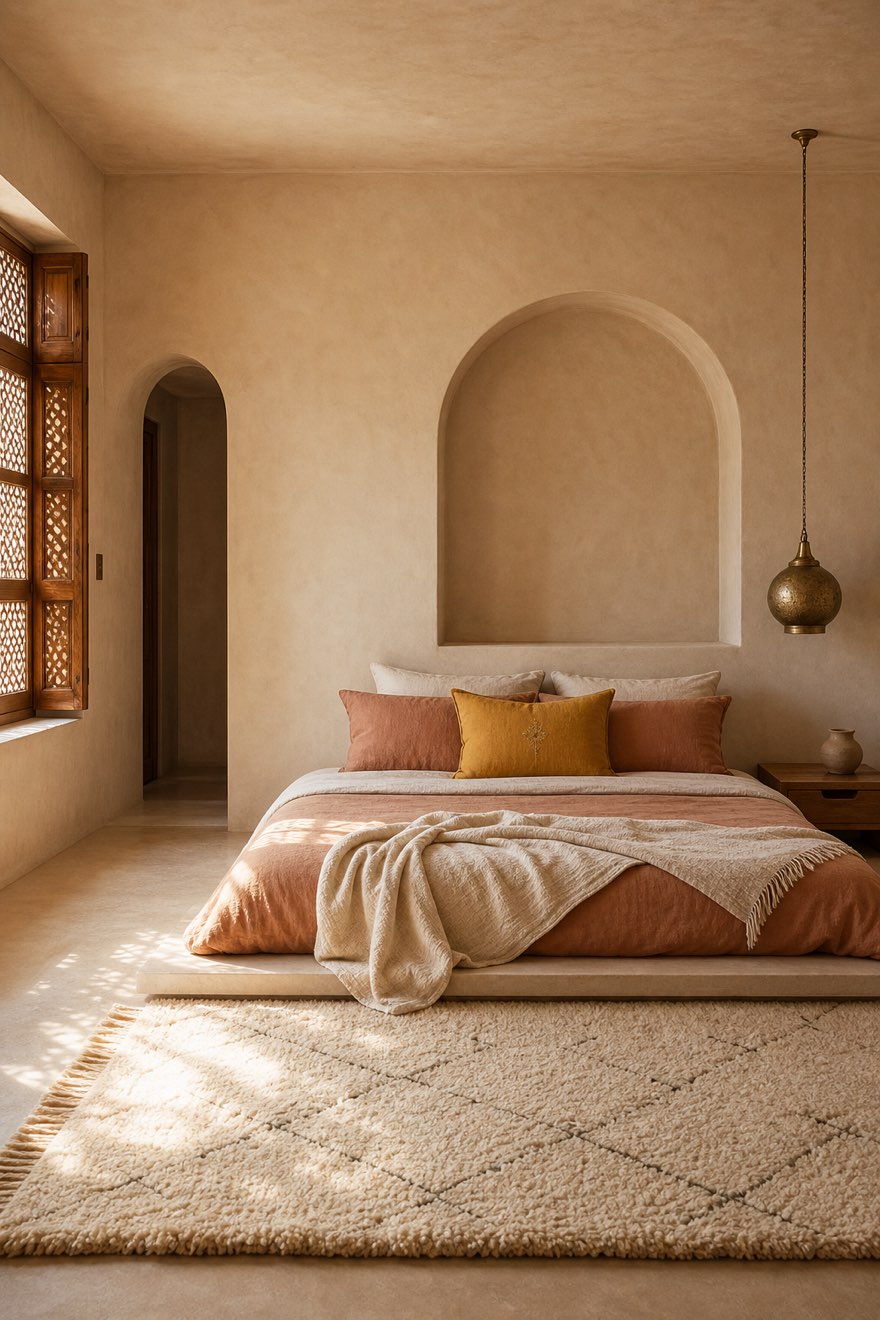
The Moroccan bedroom sits close to the floor for a reason — low furniture keeps you down in the cool air, where it pools, the same logic that put seating low all over the riad. So start with a low platform and layer up in warm, washed linen: sand, cream, a little terracotta, nothing slick. Hang a small brass pendant beside the bed instead of a lamp on the table — it frees the surface and throws softer light. One muted saffron cushion is all the color the room needs. A stonewashed linen duvet from Quince runs about $130 in exactly these earth tones, and a low wood platform frame from Article starts near $900.
- Stonewashed linen duvet set · Quince$130
- Low wood platform bed, queen · Article$900
- Beni Ourain-style rug · Article$700
- Brass pendant + saffron sabra cushion · World Market / Etsy$160
10.Arched Niches for Ceramics and Candlelight
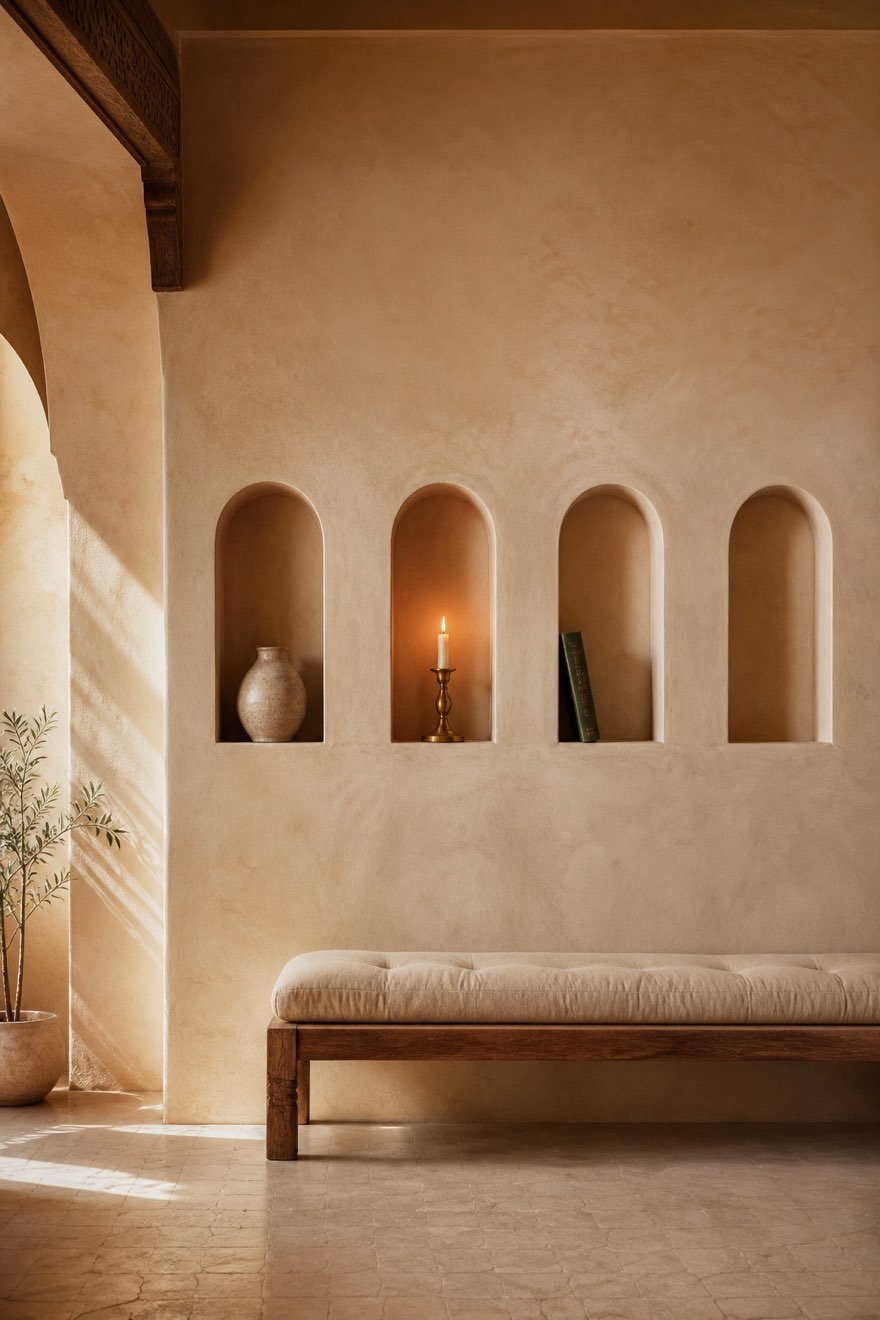
A riad stored its life in the wall long before the closet and the cabinet arrived: niches carved straight into the plaster, because thick masonry walls had depth to spare and freestanding furniture never suited the heat. That's why a recessed arched niche feels so right: it's storage that became sculpture. Build them into a stud wall with curved drywall bead, finish in the same plaster as the room, and light one from within. The discipline is one object per niche — a single ceramic, a lit brass candle, a stack of two books — and a lot of empty plaster around it. A run of arches with almost nothing in them is the most expensive-looking wall in the house, and it costs the price of drywall.
11.Let One Kitchen Wall Do the Talking
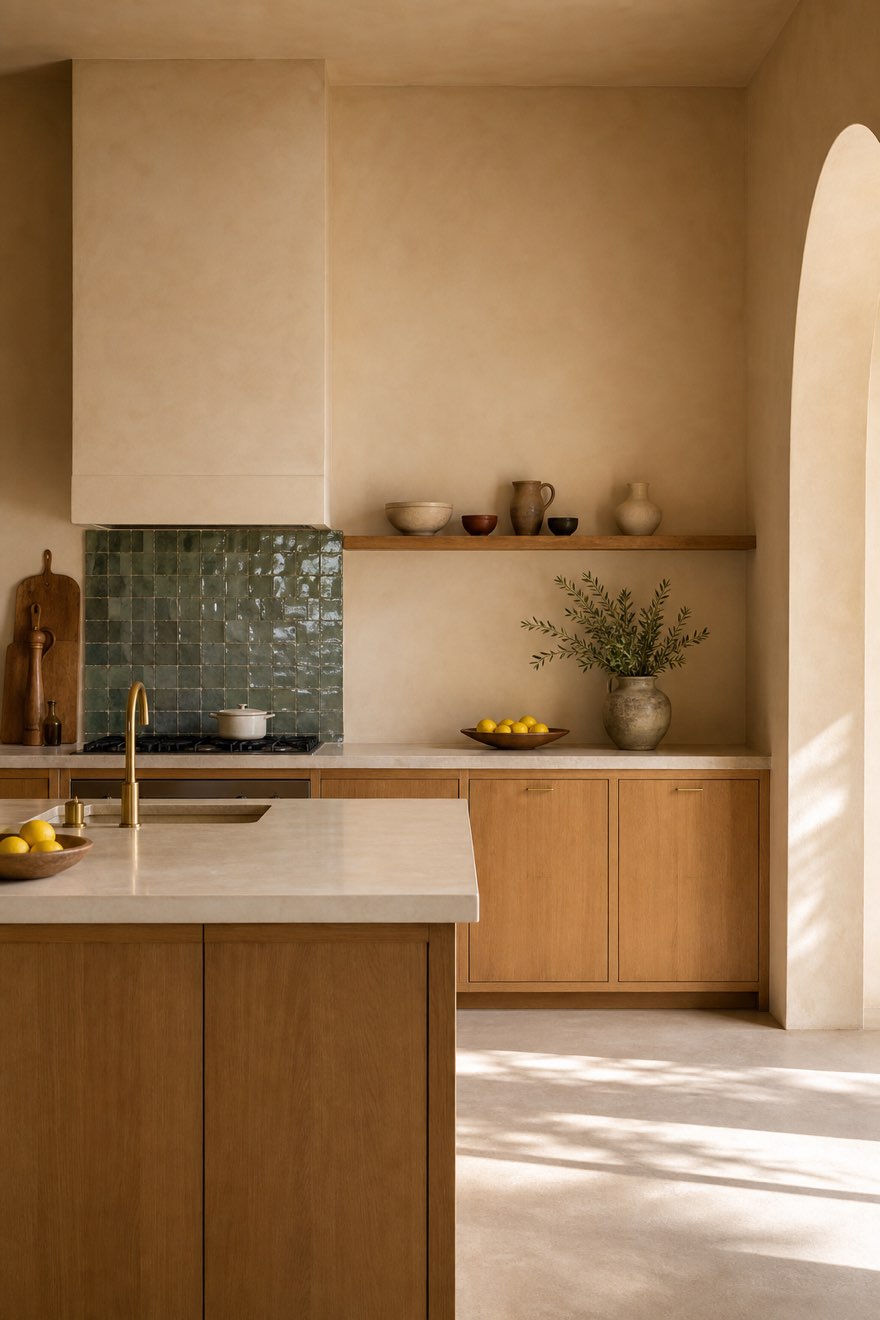
Keep the kitchen mostly plain and let one wall do the talking. Warm honey-oak cabinets, a calm plaster or stone counter, and a single band of handmade zellige behind the range — that's the entire Moroccan move, and it's enough. The reason it works is contrast: the irregular, light-catching tile reads as craft precisely because everything around it is quiet. Zellige backsplash tile from Clé is the splurge at $25–40 a square foot, but a backsplash is small, so the real cost stays low. Run it only behind the range or up one wall; the second the pattern jumps to the island and the floor too, the calm is gone.
12.Leather Pouffes and Sabra Silk
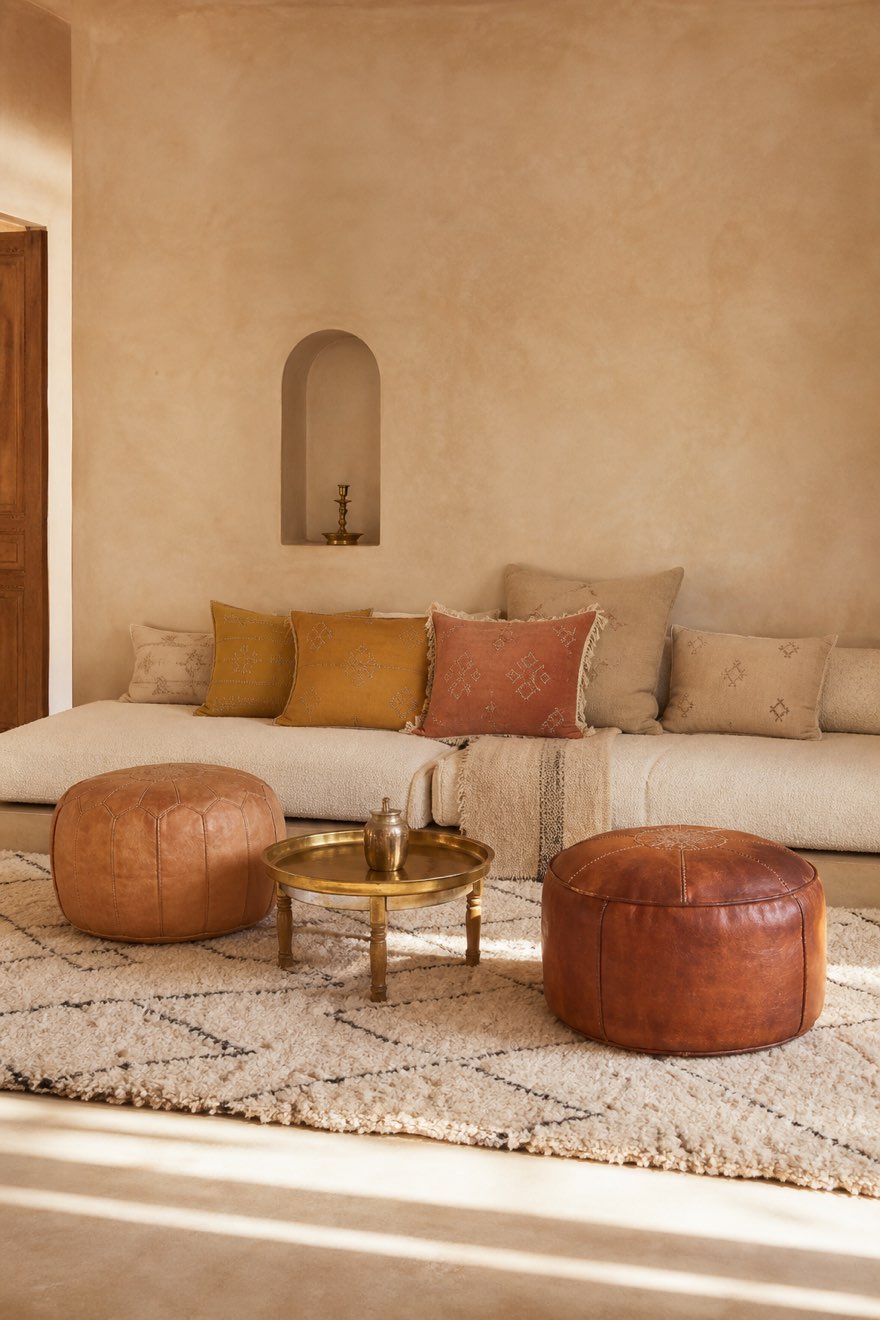
Two materials carry the whole Moroccan textile story, and both come from function. A leather pouffe was a low, movable seat for a culture that gathered on the floor — it ages into something better the more it's used. Sabra “cactus silk” is woven from agave fiber, lighter and cooler than animal silk in the heat, with a subtle sheen that catches lamplight. Pile a low bench with sabra cushions in muted saffron and terracotta, drop a tan leather pouffe beside it (World Market, ~$130, often sold unstuffed — fill it with old linens), and you've layered texture without adding a single pattern that shouts. Leather, wool, agave silk: warm, tactile, and quietly Moroccan.
13.Borrow the Courtyard's Cooling Logic (Not Just Its Looks)
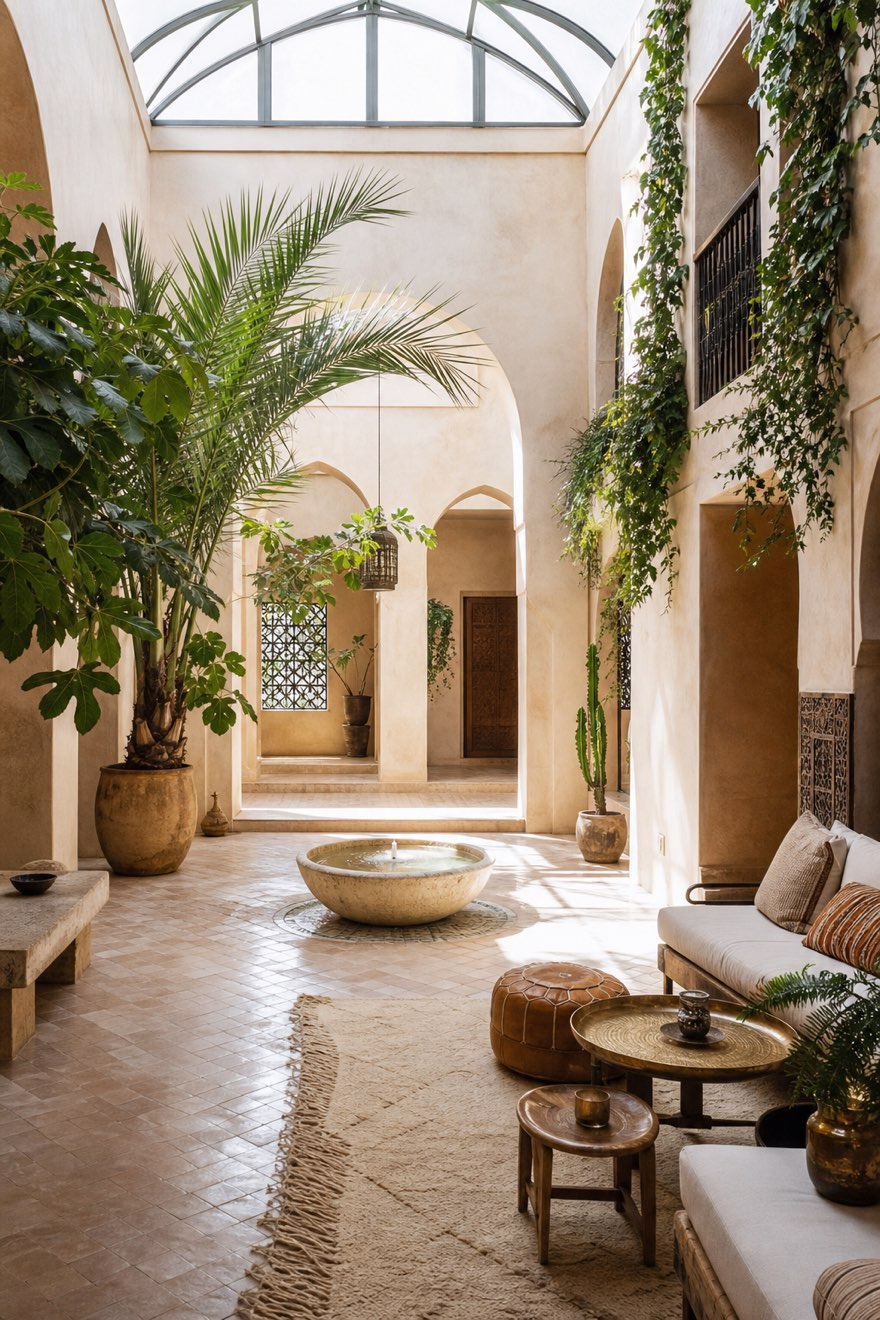
A riad turns its back on the street and wraps the whole house around a planted, open-to-the-sky courtyard — and that isn't decoration, it's climate engineering. The open center vents hot air upward, while water and greenery cool what stays behind. You can run the same logic in a closed-up house. Group real plants where the best light lands, set a small tabletop fountain or even a shallow stone bowl of water nearby for the sound and the humidity, and keep at least one surface cool underfoot — terracotta, stone, or a flat-weave instead of wall-to-wall pile. A cast-stone tabletop fountain from Wayfair near a sunny window does more for the feeling of a room than any amount of pattern. Function first; the look follows.
14.Learn the Two Pattern Languages So You Can Balance Them
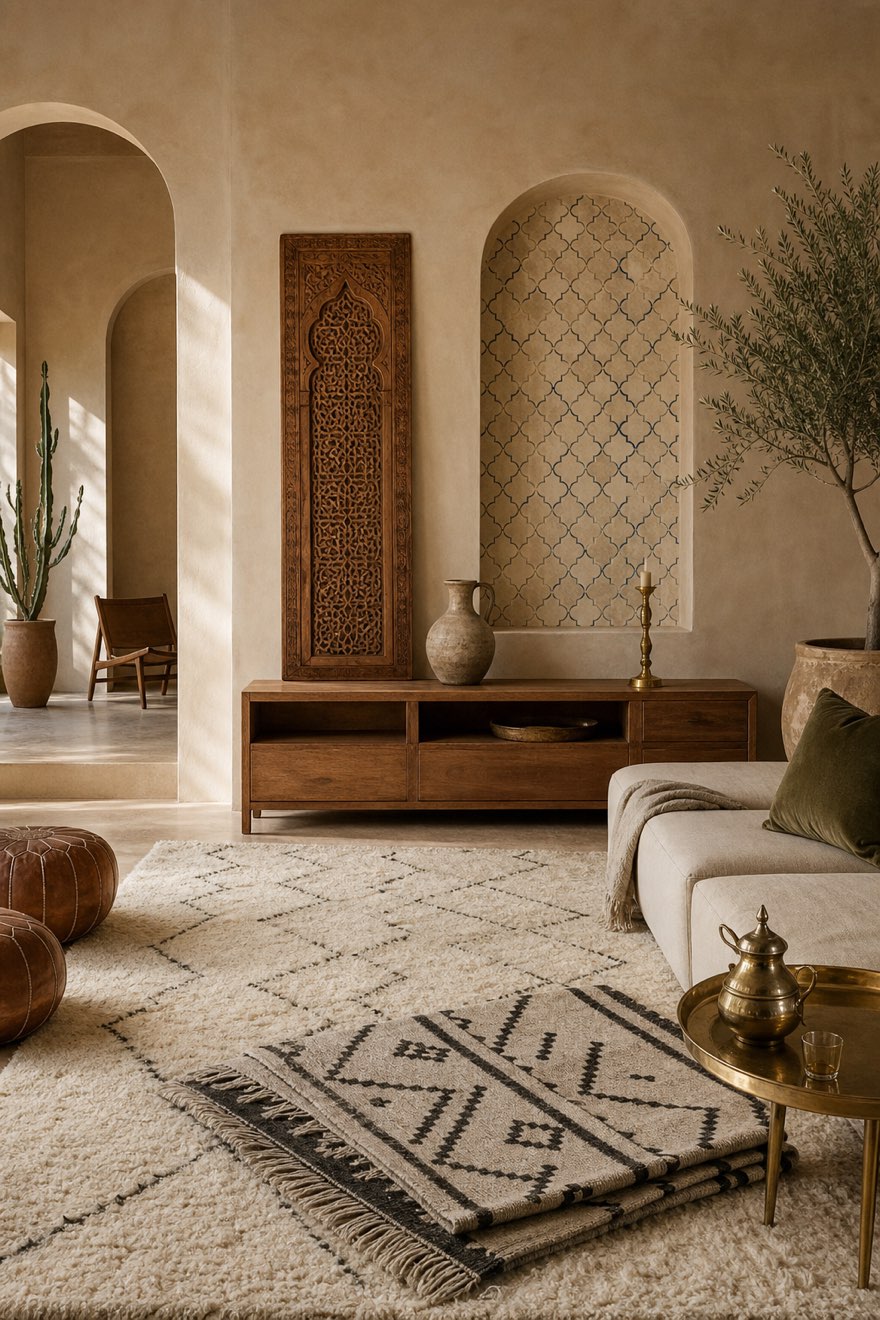
The single word “Moroccan” flattens two completely different traditions, and telling them apart is what keeps a room from turning to noise. Berber (Amazigh) work is geometric: the diamonds, zigzags and crosses hand-drawn into a Beni Ourain or a charcoal flat-weave. Arabic and Andalusian work is the flowing arabesque: the interlacing curves carved into cedar or set in zellige. They run on opposite instincts, straight lines versus curves, which is exactly why one of each holds a wall together. Pair a single bold geometric rug with one piece of arabesque, a carved panel or a tiled niche, and let the plaster between them stay bare. Two strong voices in conversation, not a choir.
15.Mix One Real Piece In; Don't Theme the Whole Room Out
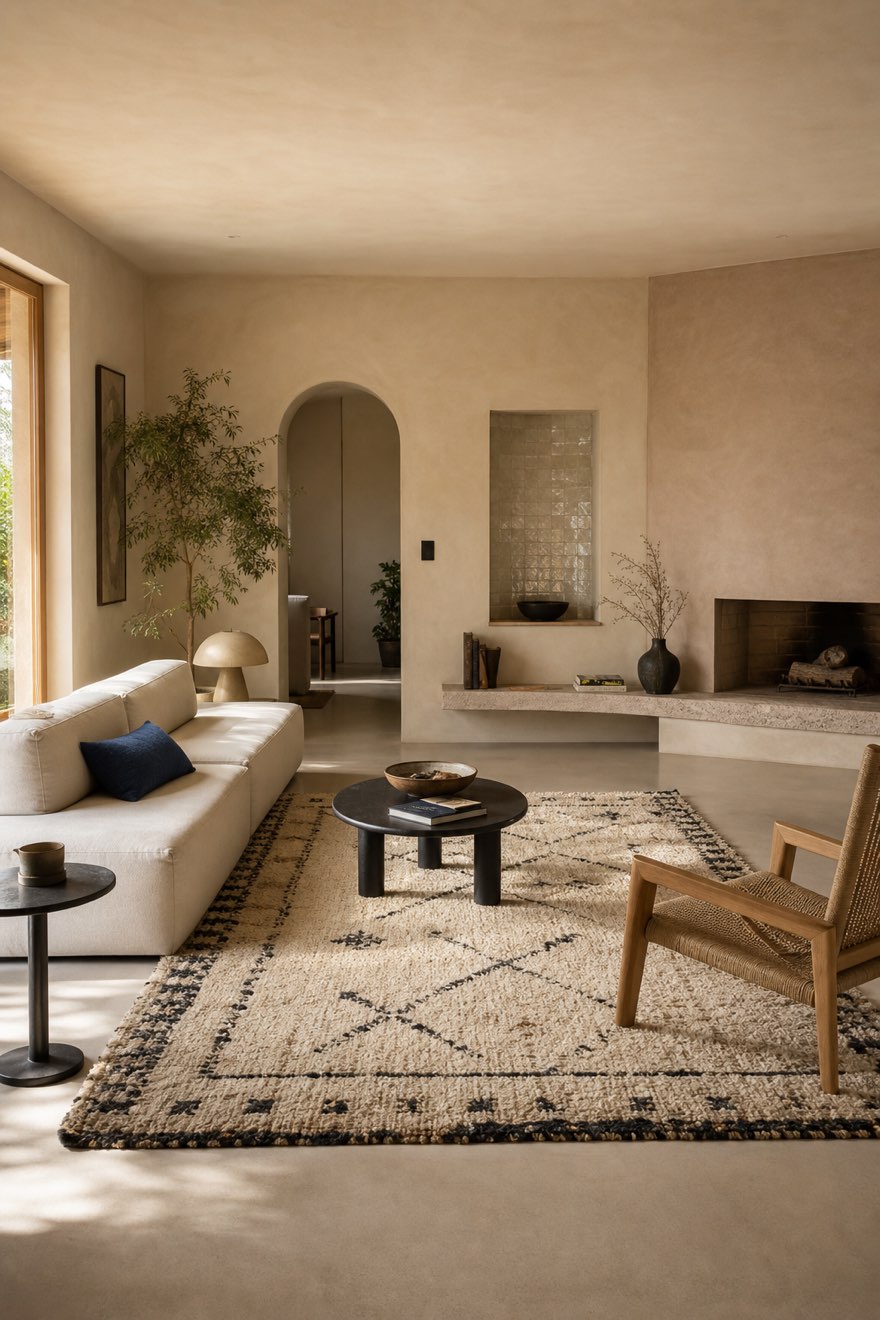
If you take one idea from all fifteen, take this one. A single genuinely good Moroccan piece in an otherwise modern, quiet space reads as collected and well-traveled; the same fifteen pieces crowded together read as a showroom floor. So choose the one thing you'd actually keep for twenty years — a vintage Berber rug, a hammered brass lantern, a carved door reborn as a headboard — give it real breathing room, and let everything around it stay calm and current. That restraint is how someone who lived in Marrakech actually furnishes a home back in the States: a few true things earned along the way, not a set bought in one afternoon. Start with one piece you love, and stop while you still want more.
Pulling It Together
Strip modern Moroccan back to one sentence and it's this: design from function, not theme. Get the warm plaster base and the light right, let one Berber rug or one brass lantern carry the room, and leave most of the wall alone. The warmth was never in the quantity of pattern — it's in the few honest, handmade things you choose to live with.
Keep: warm tadelakt and limewash, one vintage Berber rug, a single zellige moment, hammered brass, carved cedar, leather and sabra silk, one muted jewel tone.
Lose: the wall of lanterns, five competing jewel colors, dark heavy “bazaar” furniture, flat factory tile, pattern on every surface.
Start with the plaster and one piece you love, then add the rest slowly. When you want that same warmth turned all the way down to its quietest, that's Japandi — the minimalist cousin of everything here.
Frequently Asked Questions
The questions everyone asks before starting a Moroccan room.
What is the difference between modern and traditional Moroccan decor?
Traditional Moroccan layers pattern on pattern — carved everything, tile everywhere, deep saturated color. Modern Moroccan keeps the same materials but edits hard: warm plaster walls, one Berber rug, a single zellige moment, one muted jewel tone, and a lot of negative space. Same soul, far quieter volume.
How do I do Moroccan decor without it looking like a themed restaurant?
Mix it in, don't theme it out. Build the room in warm earth neutrals and modern furniture, then add one or two genuine Moroccan pieces — a vintage rug, a brass lantern, a carved screen. Restaurants cram ten of everything into one room; a real home shows a few good things with room to breathe.
Is real zellige worth it over cheap Moroccan-look tile?
Yes, anywhere you see it up close. Real zellige is hand-cut and hand-glazed, so every tile catches light a little differently and the wall looks alive. Factory “Moroccan-look” tile is flat and uniform — fine for a large floor, but on a backsplash or shower wall the handmade wobble is the entire point. Use the real thing in one small, high-impact spot.
What Moroccan colors actually work in American light?
Lead with warm earth — terracotta, sand, ochre, sienna — which glows under both bright US daylight and warm bulbs. Then add exactly one muted jewel accent: a dusty Chefchaouen blue, a saffron, a faded emerald. Skip the saturated multi-jewel palette; it reads heavy and dim in a normal-sized American room.
Can I do Moroccan decor on a budget?
Easily. Limewash-effect paint (about $50–60) gets the warm plaster look, a washable Berber-diamond rug runs around $300, and peel-and-stick zellige covers a small backsplash for under $15 a pack. Add one brass lantern and a leather pouffe (often sold unstuffed for ~$130) and you have the whole feeling for a few hundred dollars.
Shop the look
- Lime Wash plaster, gallon · Portola Paints$110
- Beni Ourain-style wool rug, 8×10 · Article$700
- Zellige backsplash tile, per sq ft · Clé$30
- Hammered-brass pendant lantern · World Market$130
- Carved cedar wall panel · Etsy$180
- Tadelakt DIY kit, one wall · Etsy$90
- Stonewashed linen duvet set · Quince$130
- Sabra-silk cushion · Etsy$40
- Tan leather pouffe · World Market$130
- Hammered-brass wall tap · Signature Hardware$210